IN Brief:
- Rocklyn has appointed Alex Begyinah as business development manager for industrial growth.
- The company supplies air domes, covered structures, padel courts, and specialist steelwork across the UK and Ireland.
- The appointment supports a wider push into rapid-install structures for manufacturing, warehousing, logistics, and facility upgrade work.
Rocklyn has appointed Alex Begyinah as business development manager as the alternative structures specialist expands its focus on industrial markets across the UK and Ireland.
Begyinah will be based in the company’s Birmingham office and brings more than ten years of sales and business development experience across construction supply chains and modular building solutions. His role will centre on developing key accounts, generating new business opportunities, and building long-term relationships with clients and partners in industrial sectors.
Rocklyn, part of McLaughlin & Harvey, provides design and build services for bespoke air domes, semi-permanent and permanent covered structures, padel courts, and specialist steelwork. The company serves sport, education, industrial, aviation, and defence clients, and has built a strong presence in the sports and padel market.
The appointment supports a more deliberate push into industrial work. Rocklyn’s industrial offer includes rapid-install structures for manufacturing, warehousing, and logistics operations that need temporary expansion during peak periods, weather-protected space during facility upgrades, or additional covered capacity without the programme and groundworks burden of a conventional permanent building.
That offer sits in a market where speed and adaptability are becoming more important. Industrial occupiers are dealing with fluctuating demand, changing inventory profiles, reshoring decisions, energy-efficiency upgrades, automation projects, and disruption to materials, labour, and transport. Not every capacity problem justifies a full warehouse extension or new permanent unit, particularly where demand is seasonal, transitional, or tied to a specific project phase.
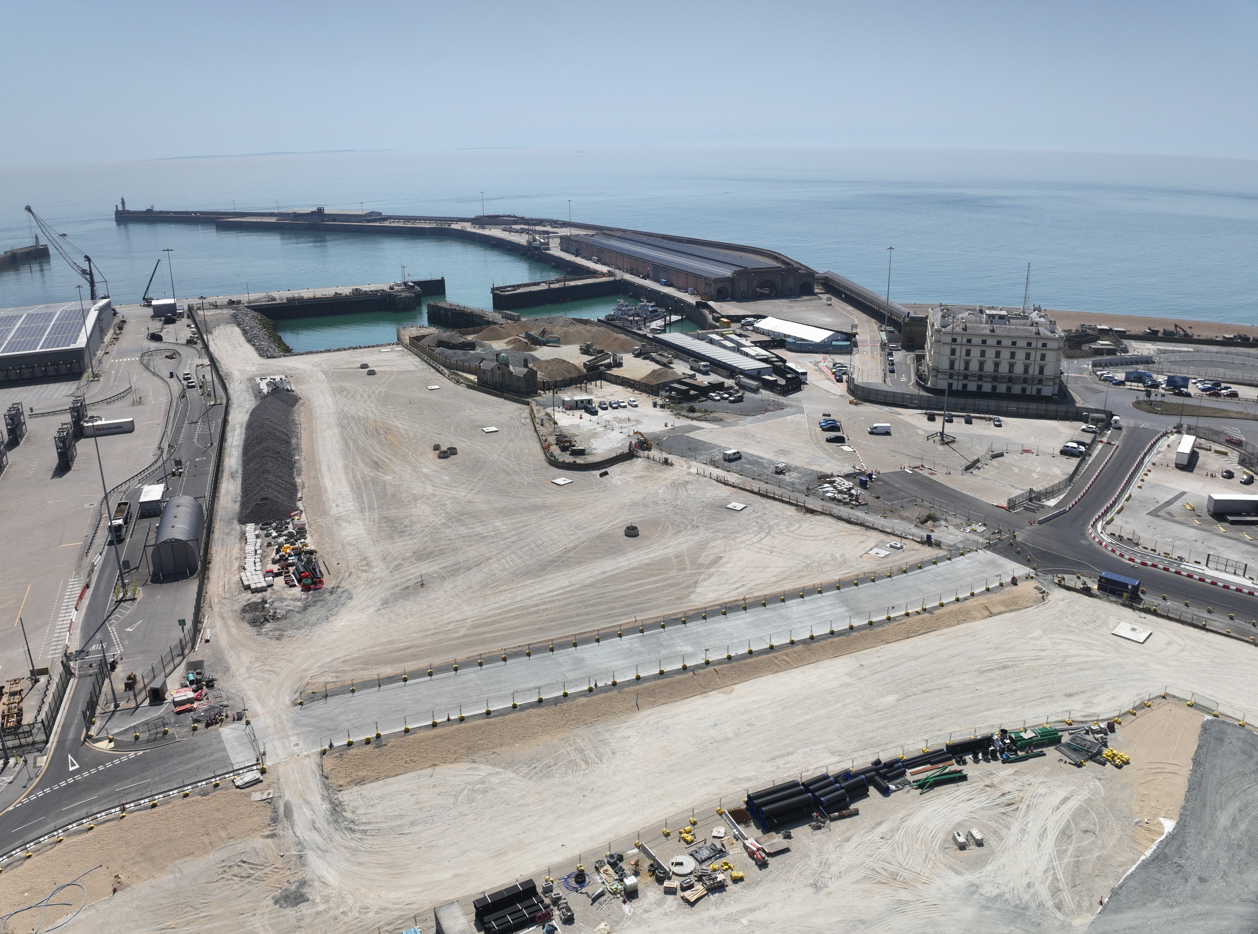
Rocklyn also has the backing of a wider construction and civil engineering group. McLaughlin & Harvey’s recent work includes the £107m Port Ellen terminal contract, showing the scale of delivery capability behind the specialist structures business.
Alternative structures occupy a practical space between temporary buildings, modular construction, and conventional permanent extensions. Their value comes from rapid deployment, lower-impact enabling works, weather protection, flexibility, and the ability to bring operational space under cover while larger capital decisions are still being developed.
For manufacturers, logistics operators, and warehouse users, that can provide useful resilience. A temporary or semi-permanent structure can support maintenance shutdowns, inbound goods peaks, production reconfiguration, storage overflow, decant space, or live-site phasing while a permanent scheme is designed, consented, procured, or delivered.
The industrial market is also increasingly conscious of downtime. Facility upgrades, automation installations, new production lines, and building fabric works can all create periods where covered space becomes a constraint. Rapid-install structures can reduce exposure to weather, protect materials, and keep operations moving while permanent works are carried out nearby.
Begyinah’s appointment suggests Rocklyn is looking to move that offer further into mainstream industrial construction conversations. As occupiers continue to look for quicker, lower-disruption ways to add operational capacity, rapid-install covered structures are likely to compete more directly with modular buildings, temporary warehousing, and phased conventional extensions.