IN Brief:
- Wagenborg transported a 235-tonne steel bascule leaf from Sumar to Amsterdam by barge and tug.
- Three cranes installed the deck as the second of four movable leaves in Wagenborg’s package.
- The wider bridge works support expansion of the A10 Zuid and its new parallel traffic system.
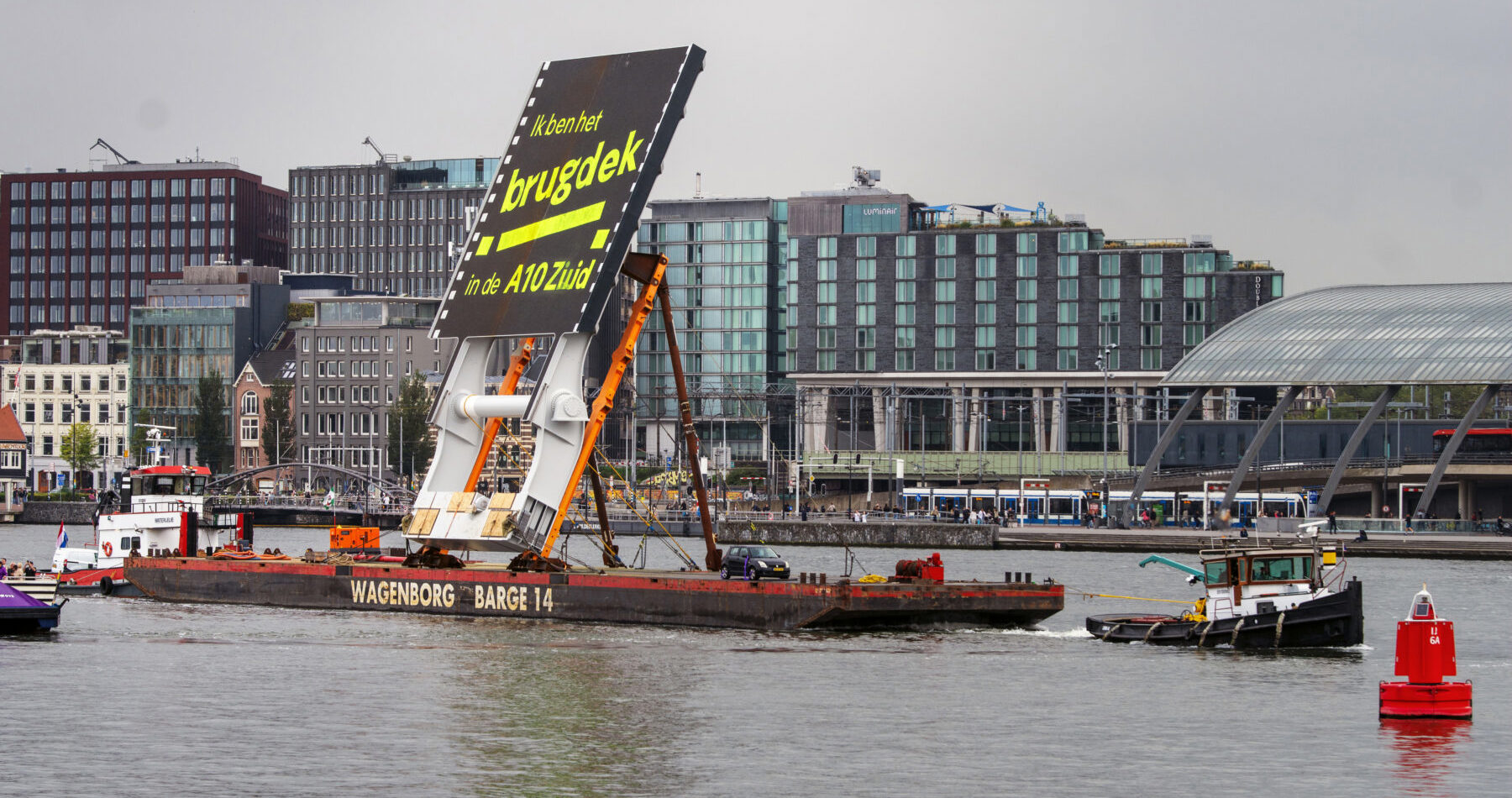
Royal Wagenborg has transported and installed the second movable bridge deck in its four-deck Schinkel Bridge package in Amsterdam, using waterborne transport and a coordinated three-crane lift to position the 235-tonne steel bascule leaf.
The deck travelled from Sumar in Friesland aboard Wagenborg Barge 14, towed by the tug Waterlelie, before passing through Amsterdam’s waterways to the Schinkel worksite. The final section of the journey took the convoy beneath or through 11 bridges, allowing a component too large for conventional road transport to reach a constrained urban infrastructure project.
An earlier attempt to complete the move was abandoned because of strong winds. The transport resumed once conditions improved, after which installation began at around 20:00 with three cranes lifting the steel leaf from the barge into its final position.
Wagenborg completed the lift ahead of the planned installation window. The operation followed placement of the first deck in its package earlier in 2026, while two further movable leaves are scheduled for the first quarter of 2029.
The Schinkel works form part of the wider reconstruction of the De Nieuwe Meer interchange and expansion of the A10 Zuid. The programme is increasing motorway capacity while separating through traffic from vehicles travelling to destinations within Amsterdam, requiring major changes to bridges, viaducts, junctions, and associated structures.
The A10 Zuid is being expanded from four to six lanes in each direction. Four lanes will ultimately carry through traffic while two will serve destination traffic, creating a parallel road system through a corridor already shared by motorway, rail, metro, waterways, local roads, and dense urban development.
The existing Schinkel crossing contains five movable bridges: two for motorway traffic, two for railway services, and one for the metro. The motorway programme will alter that arrangement by adding new road structures and replacing the oldest southern motorway crossing.
The southernmost existing road bridge is due to be demolished and replaced by two structures, while two additional bridges are being introduced for the new traffic configuration. The new southern bridge will also carry a cycle route.
The leaf installed by Wagenborg in September belongs to the new northern bridge. A similar operation earlier in the year placed the movable component for the southern bridge, demonstrating the project’s use of prefabricated steel structures and water transport to avoid moving exceptionally large loads through Amsterdam’s road network.
Transporting the leaf by barge removes some road constraints but creates others. Water levels, clearances, bridge openings, navigation, mooring arrangements, wind, and arrival timing all become part of the construction programme before the lifting operation can begin.
Wind is especially important because a bridge leaf presents a large surface area as well as substantial weight. The decision to abandon the earlier movement rather than force the operation in unsuitable conditions reduced the risk to the component, vessels, cranes, and surrounding infrastructure.
The three-crane lift then required the load to transfer from the floating transport arrangement into a fixed structural position. Crane configuration, ground capacity, rigging, load sharing, communication, and movement of the barge all had to be coordinated to maintain control during the installation.
Placement of the steel leaf does not complete the movable bridge. The deck must integrate with bearings, mechanical equipment, electrical systems, controls, counterweight and drive arrangements, barriers, surfacing, and the surrounding bridge structure before the crossing can carry traffic reliably.
Zuidasdok has been progressing those supporting works in parallel. The bascule mechanism is housed within a dedicated chamber, with large mechanical components operating the movable deck. Alignment tolerances are critical because errors between the steel leaf, bearings, machinery, and control system can affect both road operation and long-term reliability.
The first new northern and southern bridges are expected to enter service from around the middle of 2027. The southern structure will initially provide a temporary traffic route while the existing southern A10 bridge is demolished, creating the space needed for two further bridges on the old alignment.
That sequence explains why Wagenborg’s remaining bridge leaves are not due until 2029. The present pair supports the first new structures, while the later pair follows once demolition and reconstruction have opened the next work fronts. The completed Schinkel arrangement is expected to form part of the finished parallel road system by 2031.
The heavy lifting package is therefore a series of short, highly visible operations sitting inside a construction programme lasting several years. Manufacture, water transport, installation, mechanical integration, commissioning, traffic changes, demolition, and further bridge construction all have to follow the wider motorway staging.
Combining marine transport and heavy lifting within Wagenborg’s scope reduces the number of handovers between the factory and final bridge position. The September operation kept the 235-tonne leaf within one coordinated logistics sequence from Friesland to installation in Amsterdam.
With the second deck now installed, attention returns to completing and commissioning the first new bridges. The wider programme still includes demolition of an existing motorway crossing, two further movable deck installations, and the staged transfer of A10 traffic onto the expanded through and destination road system.