IN Brief:
- Meristem Design delivers sustainable drainage, urban planting and street furniture from design through maintenance.
- Its completed work includes almost 500 metres of rain gardens along Sutherland Road in Waltham Forest.
- RSK did not disclose the acquisition consideration or announce new public realm contracts as part of the deal.
RSK Group has acquired Meristem Design, adding specialist design, fabrication, installation and maintenance of urban green infrastructure to its environmental and engineering businesses. The London company delivers sustainable drainage features, planting systems, street furniture and public realm improvements for clients including local authorities and property owners. RSK confirmed the acquisition on 19 November without disclosing the price or other financial terms.
Meristem was founded in 2016 and has undertaken schemes in Greater London as well as locations including Bristol, Derby and Manchester. Its work crosses the boundary between landscape design and civil engineering: systems are developed and manufactured for a specific site, installed within streets or public space, then maintained as planted assets. RSK is acquiring that practical delivery capability alongside the company’s project portfolio and specialist workforce.
One example is Sutherland Road in Waltham Forest, where Meristem delivered almost 500 metres of continuous rain gardens. The installations were designed to manage surface water along a residential street while introducing planting and habitat. Rather than direct all runoff immediately into conventional highway drainage, a rain garden can receive water from adjacent hard surfaces and hold it within a planted growing medium before infiltration or controlled discharge, according to the specific design.
That type of system requires more than excavation and planting. Kerb openings must admit runoff without creating a hazard, the growing medium needs suitable permeability, and the finished arrangement must work with existing footways, road levels and buried infrastructure. The presence of a rain garden does not establish that water is infiltrating the ground: where soil conditions or nearby structures make infiltration unsuitable, drainage can instead be directed to an engineered outlet.
Meristem also supplied sustainable drainage planters for East Sussex County Council’s Blue Heart programme. The units combine fabricated containers with surface water capture and attenuation, an approach that can provide a controlled planted feature where conventional open ground is limited. The acquisition announcement describes the application but does not specify the design storm, storage volume or monitored hydraulic performance of the planters. Those figures would depend on the detailed engineering of each installation.
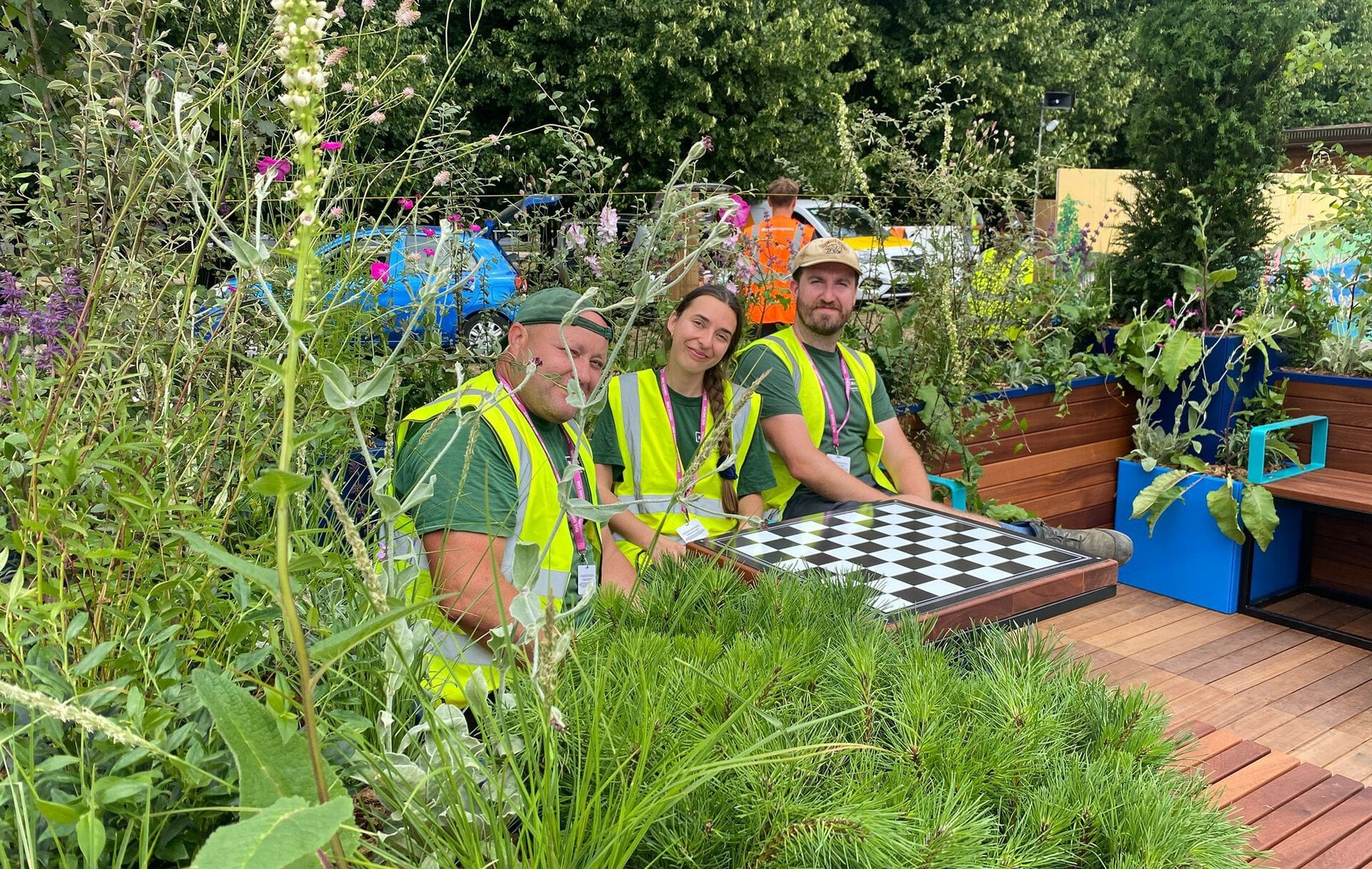
Its portfolio includes modular mobility hubs for the West of England Combined Authority, incorporating cycle infrastructure, seating, planting and drainage features. In Derby, the company has delivered bespoke planters and public realm work. The common construction requirement is integration: items must accommodate pedestrians, vehicles, maintenance access and the existing services beneath a street, often within compact construction footprints and with limited opportunities for lengthy closures.
Fabrication is part of Meristem’s own delivery model. Purpose-made planters and street elements can be manufactured to suit the available space, fixing arrangements and intended planting, then installed by teams familiar with the equipment. That does not remove the need for site checks or structural design; loading from retained water, soil, pedestrians and possible vehicle contact must still be considered. The company’s in-house maintenance service provides a route for managing the installed planting after practical completion.
Long-term performance is especially relevant to sustainable drainage. Sediment at inlets, accumulated litter and poorly maintained vegetation can restrict the flow of water into a system or reduce its available storage volume. Routine inspection and clearance therefore form part of maintaining the intended function. RSK has acquired a business that covers both construction and horticultural upkeep, although it has not announced any new group-wide maintenance contract as part of the transaction.
The company holds ISO 9001, ISO 14001 and ISO 45001 certifications, belongs to the British Association of Landscape Industries and is registered with Constructionline Gold. These accreditations describe its management and procurement credentials, while individual schemes remain subject to their own specifications, safety arrangements and performance requirements. RSK has not disclosed any change to Meristem’s current contracts, staffing or delivery locations following the acquisition.
RSK’s established activities include environmental assessment, engineering and other services used in urban development and infrastructure. Meristem adds the capacity to manufacture and install relatively small, distributed assets such as rain gardens and public realm systems and maintain them after handover. The acquired company’s existing schemes demonstrate the services involved; any expansion into new integrated contracts will depend on commissions secured after the acquisition. That includes the need to coordinate civil works with planted-system maintenance requirements, since responsibility for effective drainage extends beyond installation to inspection, removal of blockages and planned upkeep. Those services are already part of Meristem’s stated scope, independent of the transaction.