IN Brief:
- Steinzeug-Keramo will present its KERA.Drive vitrified clay jacking pipe system at Highways UK in Birmingham.
- The event focus covers DN 150 to DN 600 pipes for guided auger boring, microtunnelling and pipe jacking.
- Trenchless installation concentrates excavation around working shafts where continuous open-cut construction would disrupt surface infrastructure.
Steinzeug-Keramo will present its KERA.Drive vitrified clay jacking pipe system at Highways UK in Birmingham, focusing on sewer installation where continuous open excavation would create significant disruption around roads and other established infrastructure.
The wienerberger company will exhibit at the NEC on 14 and 15 October. Its event presentation will focus on KERA.Drive pipes from DN 150 to DN 600 and their use with guided auger boring, microtunnelling and pipe jacking methods.
KERA.Drive is an established trenchless pipe system rather than a new product launch. Steinzeug-Keramo’s current technical range provides vitrified clay jacking pipes and matched components for new sewer construction and targeted network renewal using methods that install the permanent pipeline through the ground between working shafts.
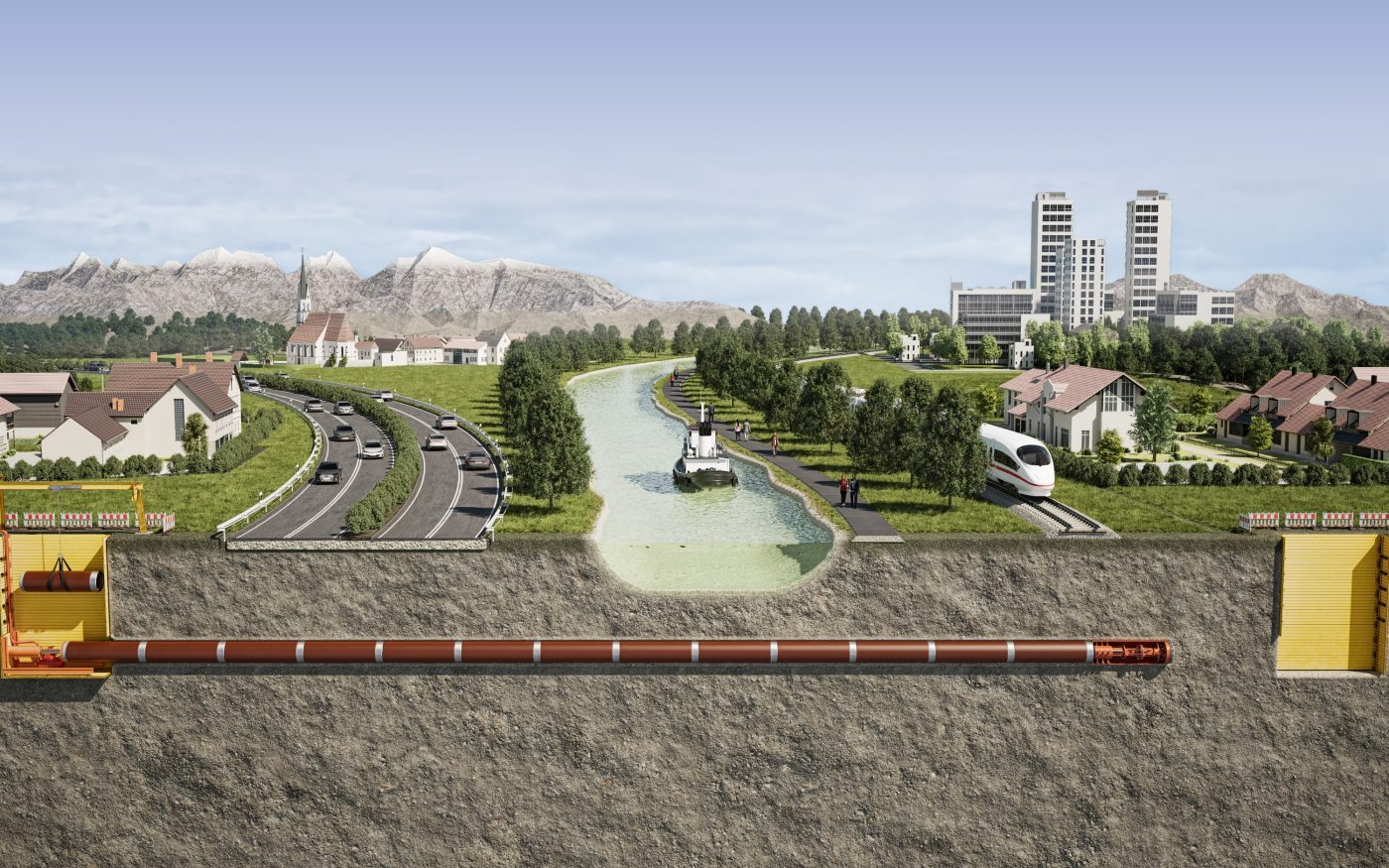
The approach changes the surface footprint of a sewer project. Open-cut construction requires excavation along much or all of the route, while pipe jacking and microtunnelling concentrate activity around launch and reception shafts and the areas required for plant, pipe handling and spoil removal.
That distinction can be particularly important beneath highways. Continuous excavation through a live road brings traffic management, temporary barriers, reinstatement and repeated interfaces with road users, while a suitable trenchless drive can pass below the carriageway with fewer points of surface intervention.
Roads are only one potential constraint. Railways, developed sites and other critical infrastructure can also limit access to a buried route, making the ability to install pipe from defined working areas useful where conventional trench construction would require extensive closures or possession time.
Trenchless work still depends on excavation and temporary works. Shafts have to be formed, equipment needs sufficient operating space and spoil must be removed from the drive, so the method transfers much of the construction activity to specific locations rather than eliminating it.
The ground between those locations becomes the principal engineering variable. Soil conditions, groundwater, alignment, cover depth, existing utilities, drive length and the condition of nearby infrastructure all influence whether a jacking method is suitable and which installation technique can be used.
The permanent pipe also performs a construction role during installation. Individual pipe sections are subjected to jacking forces as the string advances through the ground, placing demands on compressive strength, dimensional control, joints and the transmission of load between adjacent sections.
Steinzeug-Keramo’s technical material lists KERA.Drive products for microtunnelling and pilot pipe jacking, with system components and accessories designed around the jacking pipe range. For Highways UK, the company is concentrating on the DN 150 to DN 600 sizes identified in its UK event material.
Leon Woods, UK Country Manager at Steinzeug-Keramo, said: “Highways UK provides an excellent opportunity for us to speak directly with the people involved in designing, specifying and delivering road and infrastructure projects. Installing or extending sewer infrastructure beneath busy roads can present significant challenges, particularly where disruption needs to be kept to a minimum. We look forward to discussing how KERA.Drive and trenchless installation methods can support these projects, while providing the long-term performance required from the permanent sewer asset.”
The specification decision remains dependent on the individual project rather than the installation method alone. Ground conditions and required line and level determine what can be driven successfully, while shaft locations have to work with available land, road geometry, utilities and site access.
Jacking forces also have to be managed throughout the installation. Loads increase as a drive progresses and friction builds along the pipe string, making lubrication, monitoring and appropriate pipe selection important to keeping forces within permissible limits.
Survey control is equally important because the developing pipeline is not continuously accessible from above. Guidance systems, machine control and monitoring have to maintain the designed alignment through the drive so the pipe arrives at the reception point within the required tolerances.
Those requirements make trenchless construction a specialist civil engineering operation rather than simply a less disruptive alternative to excavation. Its surface advantages depend on accurate ground investigation, installation design and competent control of the drive below ground.
Where those conditions are met, concentrating excavation can reduce the amount of highway reinstatement required after pipeline installation. That can shorten the length of road affected by construction and reduce the number of temporary interfaces between traffic and open excavation.
The method can also change project logistics. Instead of moving excavation and reinstatement activity progressively along an entire route, materials, pipes, plant and spoil handling are concentrated around shafts, creating fewer but more intensive working areas.
Severn Trent’s current use of pipe bursting for AMP8 water main renewals illustrates a different trenchless technique but reflects the same pressure on utilities and contractors to renew buried networks while limiting excavation and disruption above ground.
Pipe bursting replaces an existing pipe along its route, whereas KERA.Drive is intended for jacked installation of a permanent vitrified clay pipeline. The methods should not be treated as interchangeable, but both depend on selecting applications where subsurface construction offers an advantage over continuous excavation.
Steinzeug-Keramo also supplies KERA.Base and KERA.Pro systems for conventional open-cut sewer construction. Their inclusion within the wider portfolio underlines that trenchless installation is one option within a broader drainage specification rather than a universal replacement for excavated construction.
Highways UK runs in Hall 5 at the NEC on 14 and 15 October, bringing together highway authorities, contractors, consultants, engineers and infrastructure suppliers. Steinzeug-Keramo is listed among the event’s exhibitors.
The KERA.Drive display gives the company a direct route to project teams dealing with the interface between buried drainage and surface transport infrastructure. The discussion is likely to centre less on whether trenchless work removes disruption entirely and more on where concentrating that disruption around controlled working areas produces a better construction solution.
For schemes crossing busy roads or other constrained corridors, that judgement begins with ground conditions, geometry and installation forces before extending to traffic management and reinstatement. Highways UK provides Steinzeug-Keramo with an appropriate setting to put those specification questions in front of the engineers and contractors responsible for making them.