IN Brief:
- Murphy has started construction of the new Golborne station on the West Coast Main Line.
- The project includes two accessible platforms, lifts, a footbridge, passenger systems, and improved local walking and cycling links.
- Train services are expected to begin in spring 2028, reconnecting Golborne to the rail network after more than 60 years.
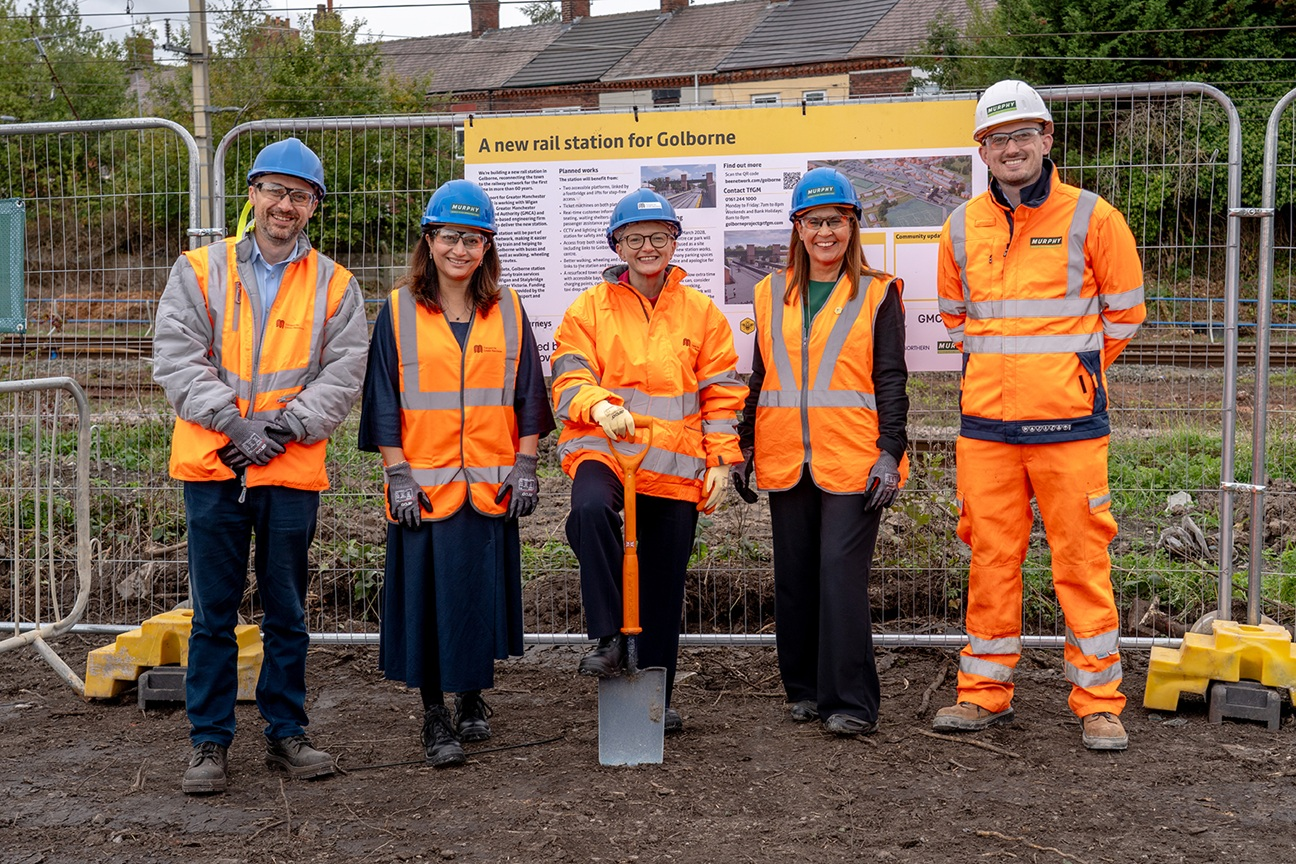
Murphy has started construction of the new railway station at Golborne, beginning a project that will reconnect the Greater Manchester town to passenger rail services for the first time in more than 60 years.
The station is being built on the West Coast Main Line near the site of Golborne’s former station and is expected to enter service in spring 2028. Transport for Greater Manchester is leading the project with Greater Manchester Combined Authority and Wigan Council.
Murphy will deliver two accessible platforms, lifts, and a new footbridge across the railway. The completed station will also include customer information screens, seating, shelters, passenger assistance intercoms, ticket machines, CCTV, and lighting.
Walking, wheeling, and cycling links are being improved around the site, while the adjacent town centre car park will be resurfaced and provided with upgraded lighting and CCTV. The footbridge will create a new connection across the tracks between parts of the town currently separated by the railway.
Passenger services are planned to run hourly between Wigan and Stalybridge through Manchester Victoria. Transport for Greater Manchester expects some journeys into Manchester city centre to be shortened by up to 30 minutes once the station becomes operational.
Construction brings the project into a different phase after planning, business case, and detailed design work. Murphy was previously appointed to develop the final station design, giving the contractor continuity as the scheme moves from engineering development into physical delivery.
That continuity reduces one interface but does not simplify the railway environment. Golborne sits on the West Coast Main Line, where platforms, foundations, lifting operations, and work close to the railway have to be undertaken while a nationally important route remains operational.
The two new platforms need to align precisely with existing track geometry, train clearances, stopping positions, drainage, and passenger routes. Their foundations must also accommodate lighting, communications, furniture, and other equipment without creating later conflicts around the platform edge.
The bridge and lifts form another significant package. Structural supports have to be constructed beside the existing tracks before the bridge can be installed, while lift shafts and landings must align with the platforms and bridge deck before mechanical and electrical fit out begins.
Large structural installation is likely to depend on planned railway possessions and carefully controlled lifting operations. Work that can be completed beforehand must therefore be advanced far enough to make those limited access periods productive rather than using possession time for unresolved preparatory activity.
Step free access also brings permanent systems that have to be maintained throughout the life of the station. Lift controls, power supplies, communications, emergency systems, and passenger assistance equipment have to be integrated with the wider railway rather than operating as standalone building services.
The station’s digital information screens, CCTV, ticketing equipment, lighting, and intercoms add further interfaces between civil engineering and operational technology. Cable routes and equipment bases need to be incorporated during construction so that commissioning does not become a series of late interventions into finished platforms.
Golborne has a particular connection with Murphy because the town has long been one of the contractor’s North West bases. That local presence gives the company an established workforce and operating footprint nearby, although the scheme still depends on specialist railway disciplines working to Network Rail standards and possession controls.
The local setting introduces its own logistics constraints. The project has to maintain access for residents, businesses, and road users around the station site while plant, materials, bridge components, and spoil are moved through a relatively confined urban area.
The adjacent car park improvements and active travel connections also have to be coordinated with station construction. Completing a platform while surrounding access routes remain unfinished would limit the value of the new infrastructure, so external works and railway packages have to converge towards the same opening programme.
The project is intended to do more than provide two new stopping platforms. Golborne currently lacks a direct train, tram, or bus service into Manchester, making the station a wider transport intervention within the Bee Network as well as a construction project on the national railway.
That wider role increases the importance of commissioning and operational readiness. Physical works have to be followed by inspections, testing, passenger information integration, safety assurance, and timetable preparations before the first scheduled service can stop.
Murphy’s work is therefore now measured against an operational target rather than another planning milestone. The principal structures, systems, public realm, and railway interfaces have to be completed and accepted in time for services expected to begin in spring 2028.
After years of development, the project has reached the stage where progress will become visible in foundations, platforms, bridge construction, and station systems. The engineering task is to deliver those assets around a live West Coast Main Line while turning a long-standing proposal for Golborne into an operating railway station.