IN Brief:
- VINCI Building's highways package starts 24 August and is scheduled through January 2027.
- Murraywood Construction will deliver drainage works before HA Civils begins public realm improvements.
- The works support the new transport interchange and a wider Phase One including a market hall, hotel, housing, and retail.
VINCI Building will begin a new package of drainage and public realm works in St Helens town centre on 24 August as the first phase of the wider regeneration programme advances. The highways work supports the new transport interchange and surrounding development, with phased road restrictions continuing into early 2027.
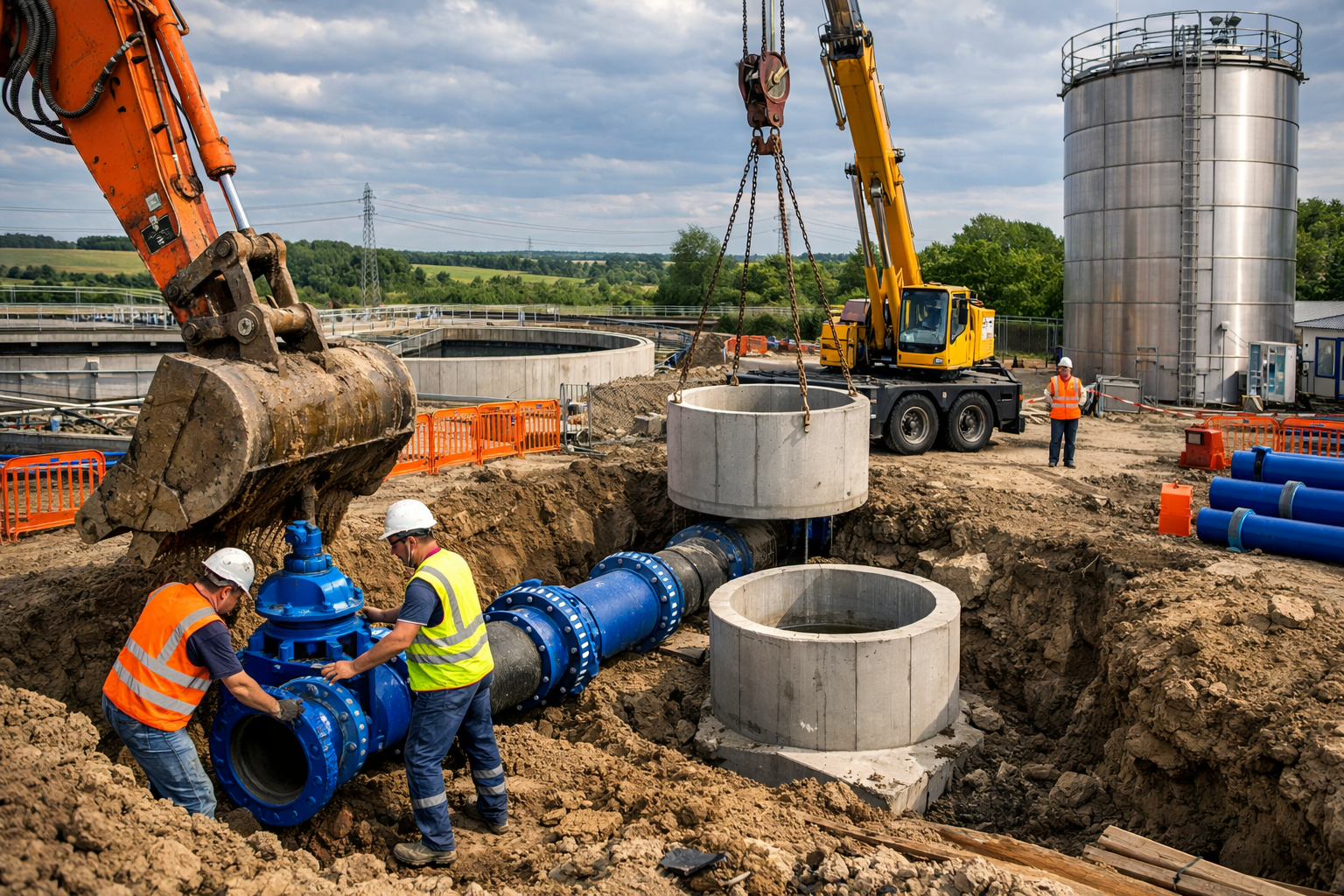
The first stage centres on Hall Street, where a new drainage system will be installed to serve the interchange and Phase One development. Existing infrastructure in the area dates from the Victorian period, and the replacement system is intended to separate highway surface water from the older network, reducing pressure on existing drainage and improving resilience.
St Helens-based Murraywood Construction will deliver the initial drainage works. A second phase will move into public realm construction across Hall Street, Haydock Street, Corporation Street, and Bickerstaffe Street, where HA Civils will install new paving, kerbs, and associated highway improvements.
Work is scheduled between 08:00 and 17:00, with the overall package expected to continue until January 2027. Traffic management will be introduced in phases to retain access where possible while excavation, drainage, highway, and surface works progress through the town centre.
Below-ground infrastructure is an unglamorous part of regeneration, but it establishes the conditions the visible development depends on. New buildings and public spaces can increase drainage demand substantially, and retaining an ageing combined system beneath newly completed streets would risk storing up disruption for later.
Separating highway surface water from the existing network also changes how rainfall is managed across the development. The work has to coordinate levels, connections, road construction, utilities, and future public realm before final paving is installed, making sequencing important across several contractor packages.
The drainage programme is tied directly to the new St Helens Transport Interchange, which is being delivered by VINCI Building UK for St Helens Borough Council and ECF. The facility will provide 11 bus stands, compared with nine previously, alongside enclosed concourses, a travel centre, level boarding, automatic doors, and accessible toilet provision.
Passenger infrastructure will include real-time bus and rail information, secure cycle storage, step-free access, solar panels, green roofs, landscaping, and adjustable lighting and acoustic systems. Construction completion of the interchange is currently scheduled for January 2027.
Funding for the transport element includes £32m through the Liverpool City Region Combined Authority’s City Region Sustainable Transport Settlement and £3.25m from the Towns Fund, alongside council contributions. The interchange sits within the wider first phase rather than operating as a standalone transport project.
That wider programme includes a new Market Hall, a 120-bedroom Hampton by Hilton hotel, 56 apartments, eight townhouses, more than 4,000 sq ft of retail space, and new public areas. The town-centre transformation is supported by a broader £69.2m funding package assembled from council, government, and development-partner investment.
Coordination between those elements will become more demanding as completion dates converge. Drainage and highway works have to be finished in time for transport commissioning and public realm, while neighbouring building packages continue to generate deliveries, plant movements, temporary access arrangements, and utility requirements.
The constrained urban environment leaves little tolerance for one package blocking another. Excavating streets too late can interfere with completed entrances or paving, while premature finishing work can be damaged by construction traffic still serving adjacent buildings. Programme control therefore depends on contractors sharing access and logistics information rather than managing each package in isolation.
The use of local civils subcontractors adds another layer to the delivery structure. A national main contractor and institutional development partnership may lead the programme, but much of the physical infrastructure is being built by businesses with an established regional workforce and knowledge of local highway conditions.
The drainage system will also remain in service long after the regeneration programme is forgotten as a construction project. Its capacity, maintainability, and relationship with the retained Victorian network will affect how the new district deals with rainfall and future development, making the below-ground package one of the scheme’s more durable pieces of infrastructure.
Public realm work follows the same logic. Kerbs, paving, crossings, levels, drainage channels, and street furniture have to function around transport movements, pedestrian routes, building entrances, accessibility requirements, and maintenance access rather than simply provide a visual finish.
With major buildings already progressing across Phase One, the August start marks the point at which more of the supporting infrastructure begins to connect with the vertical construction. Road restrictions will make that activity obvious to residents and businesses, even if much of the engineering itself disappears underground once the streets are reinstated.
By January, the programme is intended to bring drainage, highways, public realm, and transport construction to the same handover horizon. That coordination will determine whether the first phase opens as a functioning piece of town centre rather than a collection of completed buildings surrounded by unfinished infrastructure.