IN Brief:
- Dorset Council approved 328 homes, comprising 143 homes with detailed consent and 185 approved in outline.
- The scheme includes 115 affordable homes, land for a two-form-entry primary school, and the Central Avenue spine road.
- Homes are planned with air-source heat pumps, solar panels, and EV charging under Persimmon’s zero-carbon-ready specification.
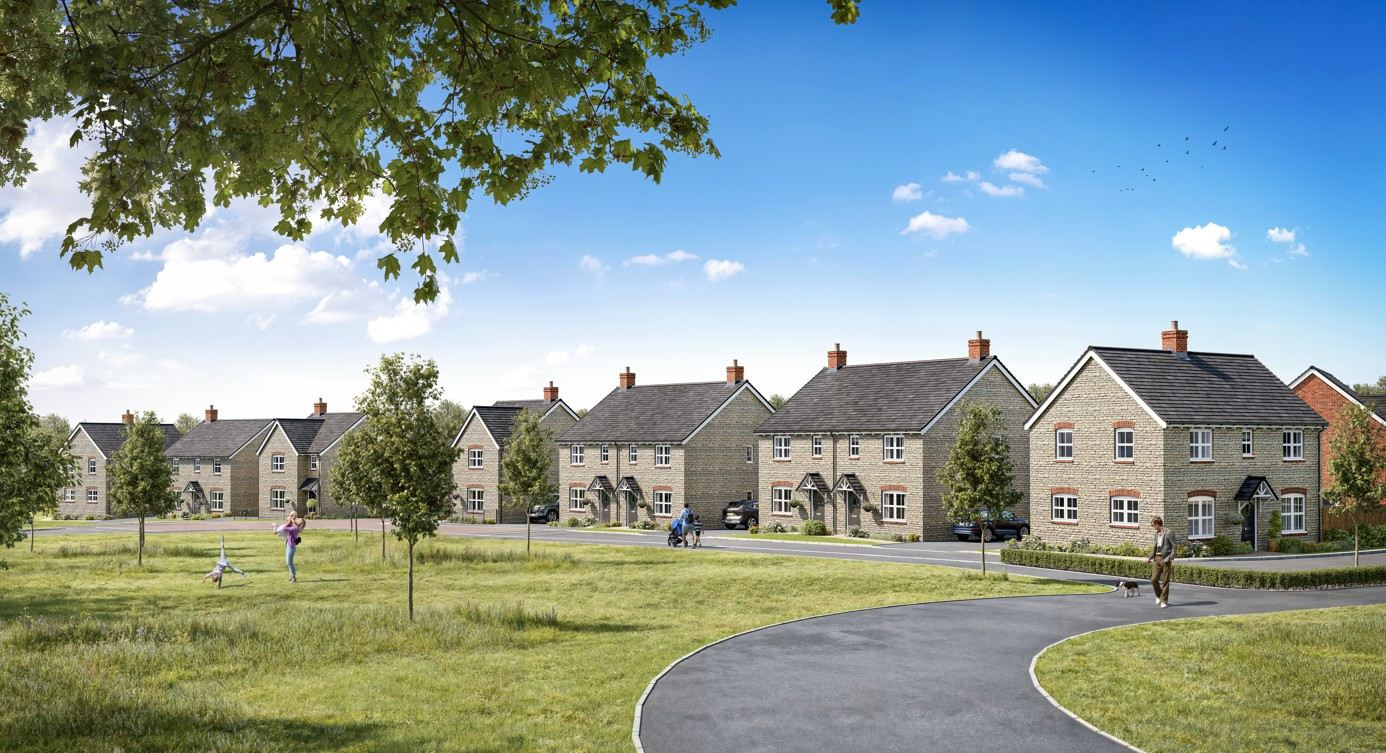
Persimmon Homes has secured planning approval for 328 homes at Chickerell in Dorset, combining residential development with school land, new road infrastructure, and a specification built around electric heating, solar generation, and vehicle charging.
Dorset Council approved a hybrid application covering 143 homes with detailed consent and a further 185 homes in outline. The development will include 115 affordable homes for social rent and shared ownership.
Land is also being provided for a new two-form-entry primary school, while the scheme will help deliver the Central Avenue spine road intended to improve traffic movement through Chickerell. Persimmon has committed more than £2m towards local services, facilities, and environmental measures.
Those contributions include education, healthcare, sports and play facilities, and environmental protections associated with the Chesil Beach and Fleet Special Area of Conservation. The planning permission therefore combines housing delivery with infrastructure and mitigation obligations that will have to be integrated into the phasing of the site.
The housing specification brings a separate construction challenge. Persimmon describes the development as zero-carbon ready and intends to use air-source heat pumps, solar photovoltaic panels, and electric vehicle charging points across the scheme.
Replacing conventional gas heating with electrically driven systems changes the coordination of every plot. Heat pumps require suitable external locations, correctly designed emitters and controls, condensate management, electrical connections, and commissioning capable of delivering the intended performance once residents move in.
Solar panels add another repeated interface between roofing and electrical trades. Roof orientation, penetrations, mounting systems, wiring, inverters, fire considerations, and access for future maintenance all need to be resolved consistently across different house types.
EV charging increases demand again, particularly where homes are fitted as standard rather than relying on later owner installation. Individual loads may be modest, but across hundreds of dwellings the cumulative electrical requirement becomes relevant to site network design and connection capacity.
The result is a housebuilding programme with more building-services content than a traditional development. That can improve repeatability once standard details are established, but early design errors can also be multiplied across large numbers of plots before the issue becomes apparent.
Infrastructure sequencing will determine how quickly the consent can translate into completed homes. Roads, drainage, utilities, plot access, and the Central Avenue works must progress far enough ahead of house construction to prevent individual phases becoming isolated from services or safe construction routes.
The hybrid consent creates two distinct planning positions within the same development. The 143 detailed homes have a more defined design basis, while the 185 outline homes will require further reserved-matters approvals before their final layout and appearance are fixed.
That gives Persimmon flexibility over later phases but means the whole 328-home scheme cannot simply move through one identical design and mobilisation sequence. Conditions, reserved matters, infrastructure triggers, and agreements with statutory bodies will determine the practical order of delivery.
Affordable housing introduces another interface. The 115 homes for social rent and shared ownership will have to be delivered against the requirements of the relevant affordable-housing arrangements, including tenure mix, specification, completion milestones, and handover.
The school land and road commitments also create points at which residential construction intersects with wider public infrastructure. Land may need to be serviced, transferred, or made accessible to agreed milestones, while road works can affect both existing communities and construction logistics.
Persimmon has also said it will apply a six-month Local Homes Guarantee, reserving 50% of the homes offered for private sale for local people during that initial period. The measure is commercial rather than technical, but sales rates influence construction output on volume housing schemes because developers tend to phase completions against demand and capital tied up in finished stock.
No construction start date was stated in the announcement, so planning approval should not be treated as evidence that work has already begun. Conditions, detailed design, procurement, utility coordination, and mobilisation still sit between permission and physical construction.
When work does start, the repeated low-carbon systems will be one of the scheme’s more significant delivery tests. Housebuilders can standardise products and details, but performance depends on hundreds of installations being completed, tested, and commissioned consistently rather than simply specified on drawings.
The Chickerell permission therefore provides Persimmon with a sizeable Dorset pipeline while tying housing output to road, school, environmental, and electrical infrastructure. Securing consent has resolved the planning principle; translating 328 approved homes into a functioning development will depend on how efficiently those interfaces are turned into buildable phases.