IN Brief:
- The further consultation on Standedge–Gledholt railway designs will run from 3 November to 2 December 2026.
- In-person events are scheduled in Slaithwaite on 10 November and Marsden on 11 November.
- Network Rail aims to submit a Transport and Works Act Order application in spring 2027.
Network Rail will reopen consultation on proposals for railway upgrades between Standedge and Gledholt, west of Huddersfield, following changes to designs considered earlier in 2026. The additional consultation will run from 3 November to 2 December and is intended to gather views on altered or newly proposed elements before a statutory application targeted for spring 2027.
The scheme forms part of the wider Transpennine Route Upgrade between Manchester and York through Huddersfield and Leeds. The Standedge–Gledholt works proposed for the section include alterations at Marsden and Slaithwaite stations, bridge and highway reconstruction, changes to track and signalling, overhead electrification equipment and temporary compounds needed to deliver construction along the route.
An initial consultation took place from February to April. Following feedback from residents, businesses and other stakeholders, Network Rail says it has revised elements of the design where possible. The forthcoming round will make all updated plans available for information and seek further responses particularly on the changes and new proposals, rather than asking the public to comment again on every element of the earlier scheme.
Detailed material is scheduled to appear in an online consultation room from 3 November. The October update sets out the types of work affected but does not publish a complete itemised comparison of revised drawings. Consequently, the scale and location of individual alterations should be checked against the new plans before any claims are made about a particular bridge, platform, road alignment or construction compound.
Network Rail has scheduled two in-person events. The first is at Slaithwaite Community Centre, Bank Gate, from 3.30pm to 6.30pm on Tuesday 10 November. The second will take place at Marsden Mechanics, Peel Street, from 3.30pm to 6.30pm on Wednesday 11 November. Project representatives are expected to present the proposals and answer questions about the designs and the consultation process.
Electrification creates physical demands along an existing railway beyond installing wires above the track. Overhead line equipment requires clearances around bridges, tunnels, adjacent structures and trackside electrical equipment. The location of foundations and support structures must also be coordinated with existing services, drainage, ground conditions and the route’s geometry. Design decisions can therefore affect neighbouring roads and structures even where the railway alignment is largely retained.
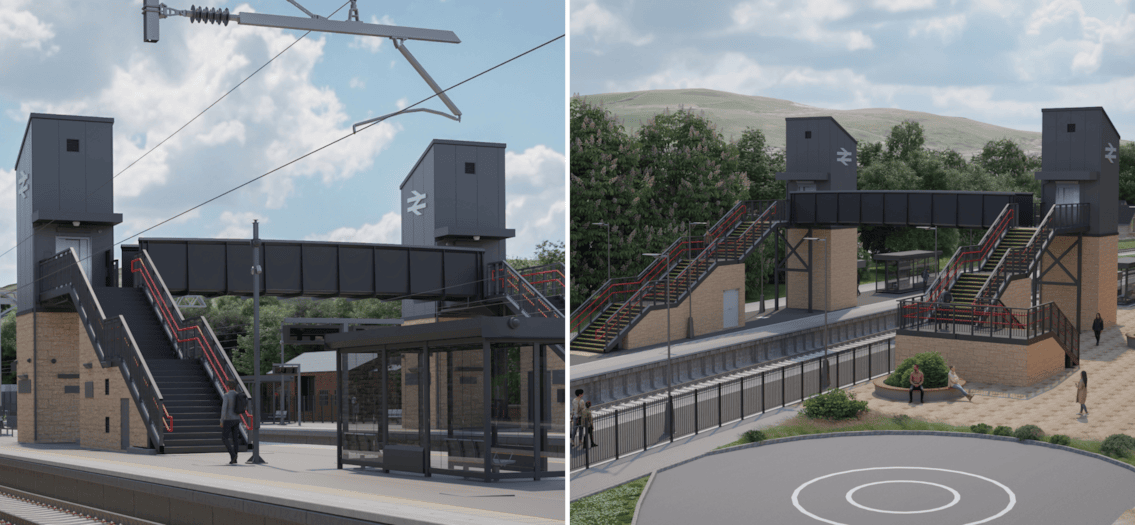
Station alterations can involve platform arrangements, passenger routes, lifts or ramps, as well as track levels and drainage. At Marsden and Slaithwaite, the proposed station improvements must interface with the route’s electrification and capacity works, but their final layouts remain subject to the relevant design and consent processes. No station completion or construction start is being announced by the October consultation update.
Temporary construction sites can also have substantial local effects. Rail works require materials storage, plant access, working space, welfare provision and routes for removing excavated material. Traffic movements, working hours, drainage and noise can change if a compound is relocated or expanded. These temporary requirements are part of the design that communities need to consider alongside permanent bridge, station and track changes.
The programme will need to maintain rail operations while carrying out works requiring access to constrained infrastructure in the Colne Valley. Depending on the final designs, individual activities may require railway possessions, traffic management and coordinated utility diversions. Such methods and possession dates are not yet fixed by the consultation; they will depend on detailed design, construction planning and the statutory powers ultimately obtained.
A Transport and Works Act Order is required for elements of the proposed scheme. Network Rail now intends to submit an application to the Secretary of State for Transport in spring 2027, following review of the latest feedback. Submission does not itself grant permission for construction, and the decision timetable will be separate from the consultation period.
Other sections of the Transpennine Route Upgrade are progressing through their own design, environmental, consent and delivery stages. The work west of Huddersfield must connect with those neighbouring packages, but completion milestones elsewhere do not determine whether the Standedge–Gledholt proposals have secured the powers necessary for implementation.
Responses to this second consultation close on 2 December. Network Rail will then consider the comments before finalising the planned application, with the first opportunity to assess the changed designs in detail arriving when the revised consultation documents are made public on 3 November.