IN Brief:
- More than 8,000 K-BRIQ units have been installed across the rebuilt Yard Theatre's façade in Hackney Wick.
- Kenoteq says the installation repurposes around 17 tonnes of construction and demolition waste and avoids about 3.6 tonnes of CO2e compared with average clay brick.
- The 220-seat theatre uses the unfired masonry product as part of a broader material strategy centred on reuse, low-carbon construction, and natural ventilation.
More than 8,000 recycled-content masonry units from Kenoteq have been used across the rebuilt Yard Theatre in Hackney Wick, taking the K-BRIQ product from demonstration projects into a prominent completed cultural building.
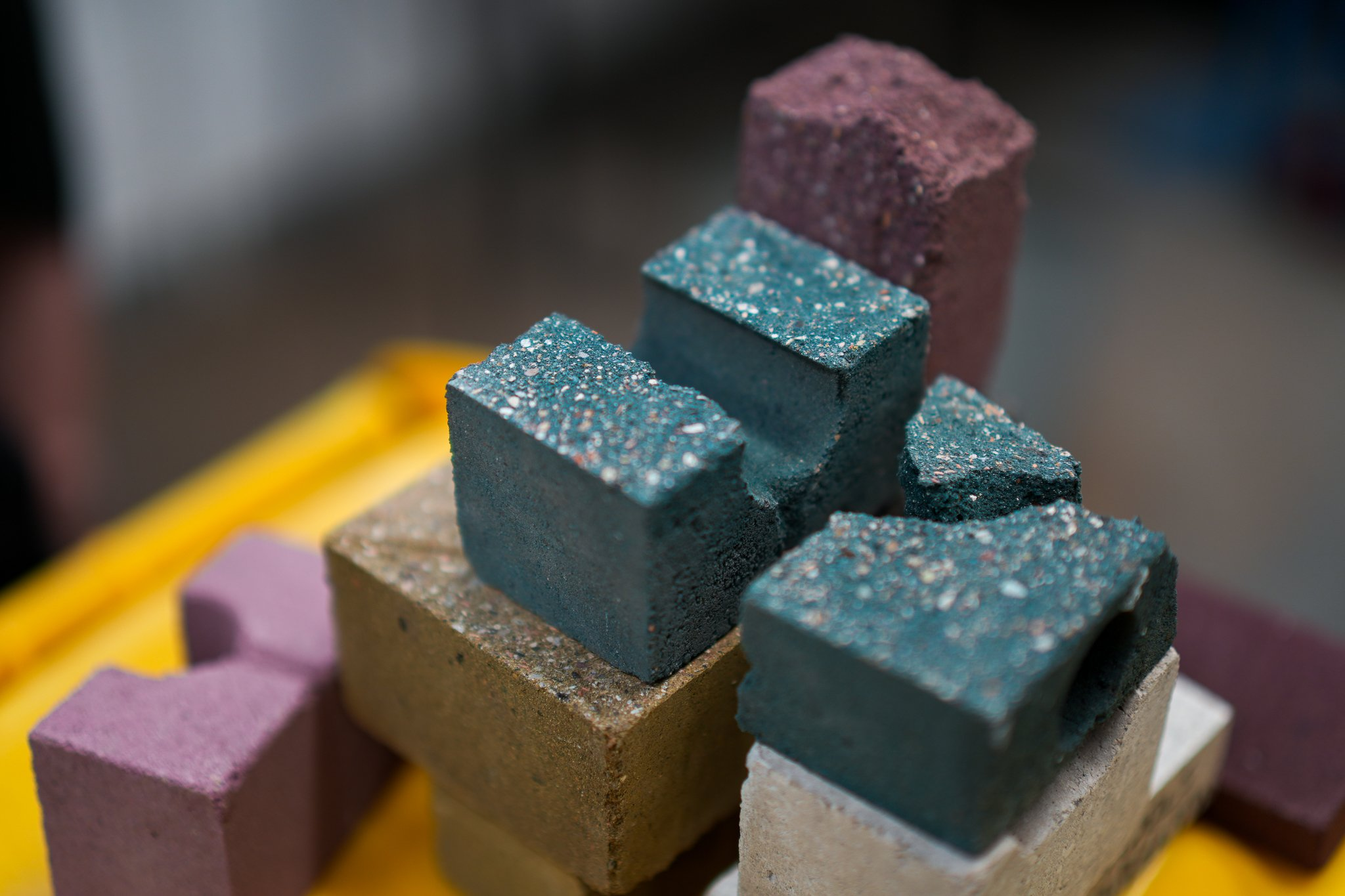
The 220-seat theatre, designed by Takero Shimazaki Architects, replaces The Yard’s original venue and more than doubles its capacity. K-BRIQ units form a substantial part of the patterned façade, with four colours used across the exterior. Kenoteq says the installation has repurposed around 17 tonnes of construction and demolition waste and saved more than 3.6 tonnes of carbon dioxide equivalent compared with an average conventional clay-brick benchmark.
K-BRIQ is manufactured from recycled construction, demolition, and excavation material and is produced without firing. Kenoteq’s current technical material describes the product as containing more than 95% recycled material, with low-temperature curing used in place of the energy-intensive firing stage associated with conventional clay brick production.
The manufacturer states that the product contains less than 20g CO2e per unit and around 1kg CO2e per square metre, and claims at least 95% lower embodied carbon than the traditional clay-brick comparison used in its published methodology. The company also holds BBA certification for the UK market, moving the product beyond prototype status and into a specification route that designers and contractors can assess alongside conventional façade materials.
At The Yard, the material decision is closely tied to the architecture. The façade uses magenta, blue, yellow, and other tones to create a deliberately graphic elevation reflecting the visual character of Hackney Wick. That makes the low-carbon product visible as part of the building’s identity, rather than treating reduced embodied carbon as an invisible back-of-house specification change.
The wider project follows the resource-conscious approach of the original Yard Theatre, which was established in 2011 in a converted warehouse using reclaimed materials. The permanent replacement continues that thread with reused and lower-impact materials, natural ventilation, and an architectural strategy shaped around the existing industrial setting in Queen’s Yard.
The project also exposes the practical requirements facing circular construction products. A façade brick is specified on more than carbon figures: architects and contractors also need dimensional consistency, durability, weathering performance, certification, installation compatibility, colour control, supply certainty, and a clear route for replacement or maintenance over the building’s life.
Kenoteq has spent more than a decade developing and testing K-BRIQ and now positions it as a like-for-like alternative for façade and interior applications. The product is compressed rather than fired, allowing waste mineral streams such as old brick, stone, rubble, mortar, and plasterboard to be returned to construction instead of becoming disposal material or low-value fill.
The production route tackles both the carbon associated with manufacturing new mineral products and the volume of demolition material leaving sites. The Yard installation is modest beside the brick demand of a large housing programme, but it shows a certified recycled product being used at meaningful architectural scale, with thousands of units incorporated into a completed building.
The embodied-carbon calculation also illustrates the importance of stating comparisons precisely. Kenoteq’s project figure is a quantified saving against an average traditional clay-brick reference rather than a claim that the façade itself is carbon free. Product comparisons depend on declared lifecycle boundaries, reference products, transport assumptions, and installation conditions, so project teams still need to use the applicable environmental data within whole-building assessments.
Theatre projects can be particularly demanding material showcases because public areas, façades, acoustics, circulation, and durability all carry strong design requirements while budgets remain constrained. The Yard has reportedly been delivered with a project budget of around £4m, making the use of a newer material notable in a setting where specification risk and procurement certainty would normally favour established products.
For Kenoteq, the theatre adds to installations at the National Retrofit Centre in Scotland, Oaklands College in St Albans, retail interiors, and European projects. The company has also been raising capital to increase production capacity, a necessary step if recycled-content masonry is to move from individual reference projects into larger repeat programmes.
The Yard reopened this month and is now operating from the rebuilt venue, moving the K-BRIQ installation from specification to an in-service building. Wider adoption will depend on manufacturing scale, cost, certification across further markets, and repeat specification, but the project provides a completed reference for circular masonry carrying both a technical and architectural role.