
IN Brief:
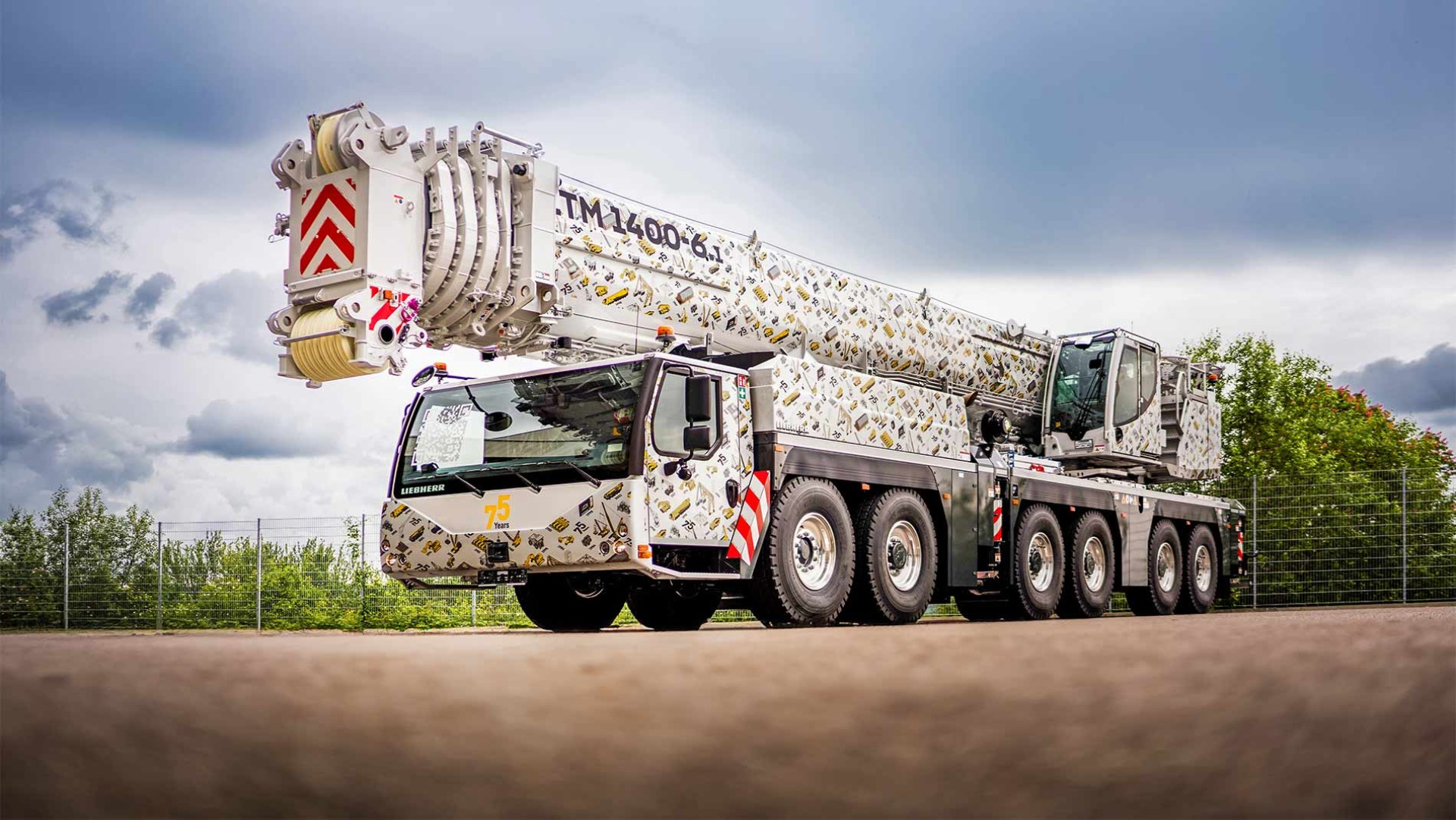
- Wick-based Hugh Simpson Contractors has taken delivery of Scotland's first Liebherr LTM 1400-6.1 six-axle mobile crane.
- The machine has a 70m telescopic boom, Y-guying and an optional 80.5m luffing jib, with a manufacturer-specified maximum capacity of 450t under defined load-chart conditions.
- Interchangeable ballast with the operator's LTM 1650-8.1 and transport arrangements are intended to support lifting work at constrained Scottish ports and industrial sites.
Hugh Simpson Contractors has taken delivery of Scotland’s first Liebherr LTM 1400-6.1, adding a six-axle mobile crane to its heavy lifting fleet in Wick. The company expects the machine to support ship unloading and construction lifts where working room is restricted, including movements of wind turbine components through northern Scottish ports.
The crane is widely described as a 400-tonne-class model, a designation also used by Liebherr when introducing it. Its current technical data gives a maximum lifting capacity of 450 tonnes at a working radius of three metres. That rating applies to a defined load-chart configuration; capacity reduces or changes with radius, boom extension, jib selection, ballast and outrigger arrangement. The distinction is material on quaysides, where a load may have to be reached beyond the vessel’s side rather than lifted close to the crane.
Hugh Simpson has specified an 80.5 metre luffing lattice jib for the machine, alongside a telescopic boom extending to 70 metres and the Y-guying equipment used to support it. Liebherr quotes a maximum hoist height of 120 metres and a maximum operating radius of 97 metres for the model, but these are separate limits within its overall range of configurations. The available load at the longest radius is much lower than the maximum capacity quoted for a short lift.
The operator has identified wind turbine cargo as an important application. Operations director David Simpson said the combination of a six-axle chassis and Y-guying was attractive because a substantial share of the company’s work involves unloading turbine components from vessels. Crane selection for that work depends on the load’s weight and centre of gravity, the position of the vessel alongside the quay, available outrigger space and the bearing capacity of the surface beneath the crane.
Y-guying supports the telescopic boom using bracing frames and tension elements, improving the boom’s resistance to deflection during certain lifting configurations. The LTM 1400-6.1 is the smallest model in Liebherr’s mobile crane range equipped with this system. The additional support expands the usable lifting duties for specified boom lengths, but does not remove the need for a lift plan accounting for radius, ground conditions and weather.
Liebherr designed the guying assembly for relatively rapid installation. In the manufacturer’s sequence, the crane lifts the system onto its own chassis, secures it, then lowers the boom between the supporting frames. A hydraulic quick coupling connects automatically, followed by an electrical connection. This can reduce some set-up operations compared with assembling a separate bracing arrangement, although the overall time required for a lift still includes ballast delivery, crane positioning, exclusion areas and rigging.
At the supporting end of the machine, VarioBase allows the outriggers to be extended according to the available footprint. Liebherr specifies pinned positions at 0%, 25%, 50%, 75% and 100%, with continuous adjustment possible between 0% and 50%. The crane’s control system uses the actual support configuration in determining permissible duties. Uneven deployment can accommodate nearby obstructions, but a smaller footprint may also restrict capacity, and each support still imposes loads that the quay, road or temporary foundation must withstand.
The separate VarioBallast system changes the radius of the counterweight behind the slewing superstructure. With the full 140-tonne ballast arrangement, Liebherr specifies a counterweight radius adjustable from 5.6 to 7.7 metres. A smaller swing radius can help where equipment or structures restrict movement behind the crane; the larger setting is available where additional lifting performance is required and clearance permits. Ballast adjustment and outrigger positioning solve different space constraints and must both be represented in the approved lifting configuration.
Fleet compatibility is another reason for the purchase. The contractor says the new machine’s counterweight plates are interchangeable with those of its existing LTM 1650-8.1, potentially reducing the amount of dedicated ballast needed at each depot or project. The 140 tonnes of available counterweight should not be confused with the weight the crane transports as a self-propelled road vehicle. Under the UK travel arrangement reported for this delivery, the LTM 1400-6.1 can move with ten tonnes of ballast, its hook block and Y-guying equipment at a 16.5-tonne axle-load configuration; other items require separate transport planning.
The LTM 1400-6.1 succeeds Liebherr’s LTM 1350-6.1 and uses a single engine to drive the carrier and power the superstructure mechanically. Its eight-cylinder diesel engine is rated at 455kW, while the six-axle chassis incorporates steering and driver assistance equipment. Liebherr also provides differing load charts for specified wind conditions. These operating limits are tied to the selected crane arrangement and cannot be interpreted as blanket permission to lift whenever wind remains below a single published threshold.
Hugh Simpson’s crane hire and heavy haulage work covers industrial and maritime operations, where a heavy component may need to be lifted above an obstruction or transferred between vessel and land transport. Adding a crane with a long boom, a substantial luffing jib and variable support and ballast arrangements creates an additional configuration option. It does not establish that the machine can substitute for larger cranes on every lift: transport access, lifting duty and the available site footprint still determine the equipment required.
Neither a first customer job nor a purchase price has been disclosed for the new machine. Its arrival is therefore the confirmed development, rather than any claimed improvement in fleet utilisation or a completed turbine handling contract. The specific benefits will be demonstrated on lifts where the load chart and restricted working space favour this six-axle configuration.