IN Brief:
- The first 30 homes are ready on the 17-acre former British Steel and Crane Foundry site.
- Canalside South will ultimately provide 533 homes, commercial space, seven acres of green space, and new pedestrian links.
- All 153 homes in the first phase are expected to be completed and occupied by the end of 2027.
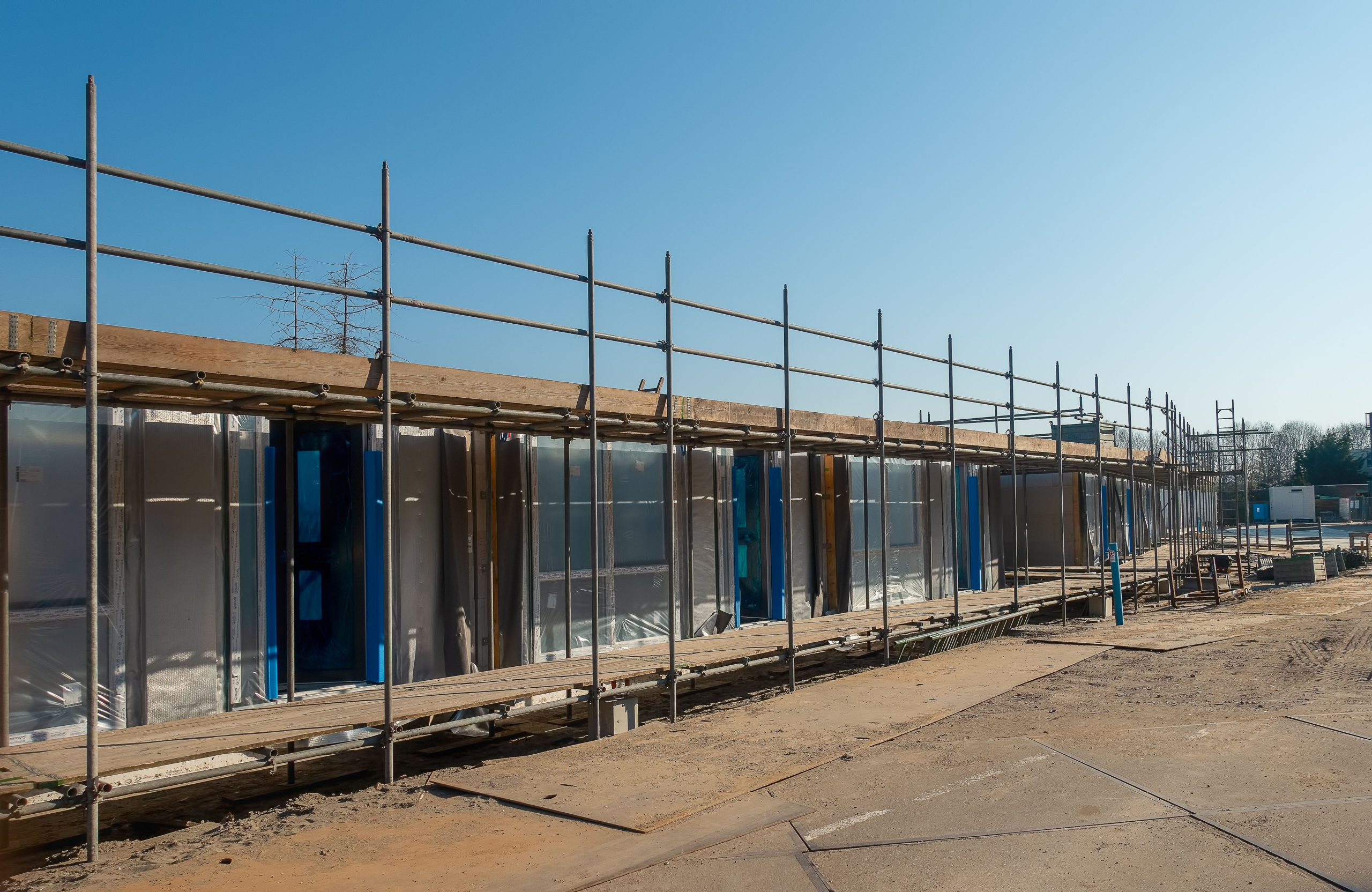
The first 30 homes at Wolverhampton’s £150m Canalside South regeneration are ready for occupation, marking the point at which a heavily remediated former industrial site begins functioning as a residential neighbourhood rather than remaining primarily a construction project.
Wavensmere Homes is delivering the 17-acre development on the former British Steel site and Crane Foundry off Qualcast Road, close to Wolverhampton’s city-centre transport interchange. The completed scheme is planned to provide 533 homes alongside commercial space, public realm, green infrastructure, and new pedestrian connections.
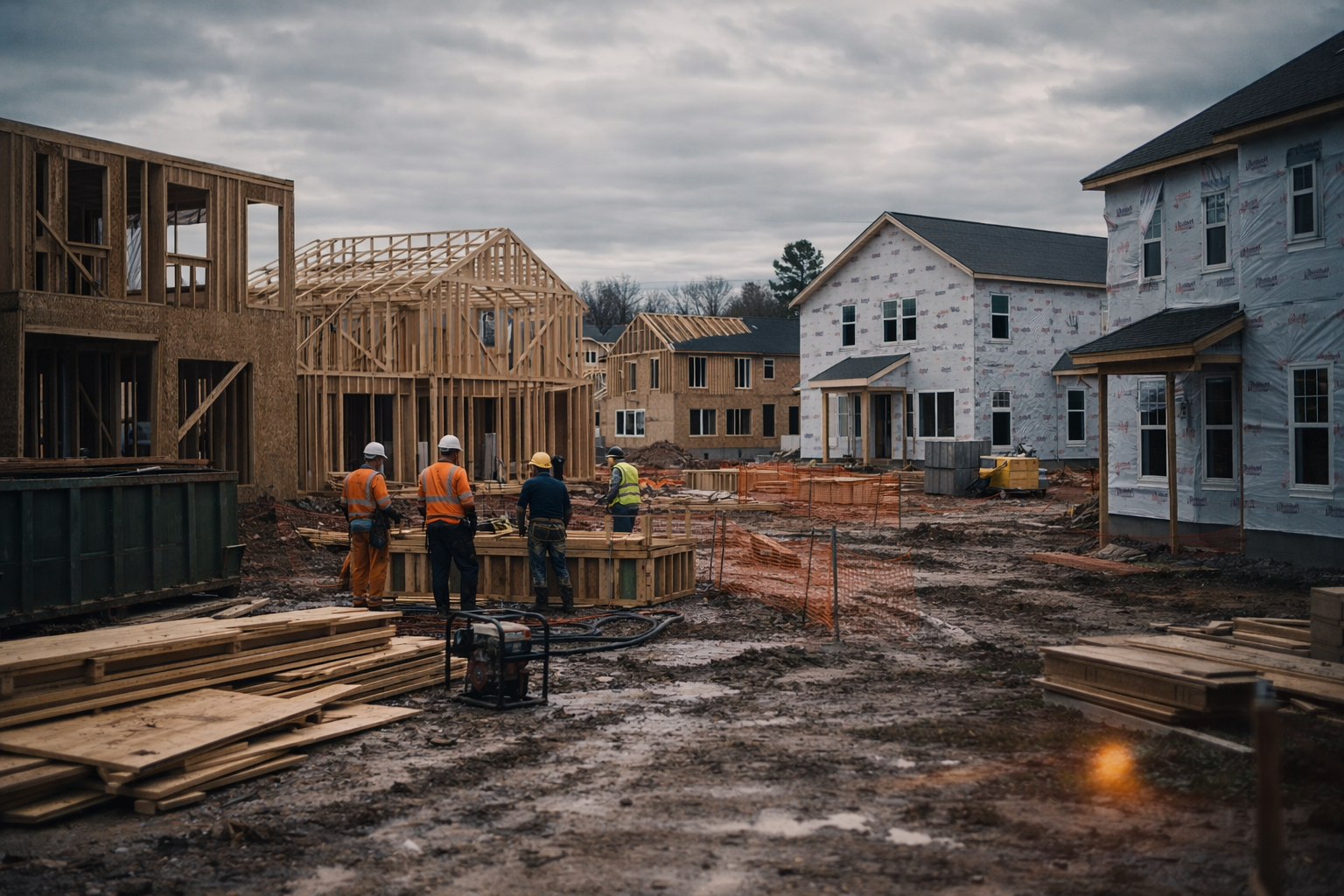
The first 30 properties form part of an initial phase of 153 houses. Construction began in early 2025 after a substantial programme of land assembly, remediation, enabling works, and ground preparation, with more than £25m invested in the site to date.
That early expenditure reflects the less visible cost of bringing former heavy-industrial land back into productive use. Before housebuilding could proceed at scale, the development team had to prepare the ground, establish roads and utilities, resolve drainage and site levels, and create infrastructure capable of supporting successive residential phases.
Road and service infrastructure for the first phase is now in place, while more than 100 construction tradespeople are reported to be working on the development during the week. Wavensmere expects all 153 phase-one houses to be completed and occupied by the end of 2027, with the wider programme progressing from east to west.
The completed masterplan will comprise 378 townhouses, 145 one- and two-bedroom apartments, and 60 co-living apartments. Disused railway arches are also intended to be brought back into use as approximately 1,338m² of commercial space, introducing employment and service activity alongside the residential development.
Energy performance has been built into the housing specification, with the townhouses targeting EPC A. The development strategy includes electric-only heating, air-source heat pumps, photovoltaic panels, mechanical ventilation with heat recovery, and electric-vehicle charging infrastructure.
Those systems increase the building-services content of what might otherwise appear to be a conventional housing scheme. Electrical capacity, controls, ventilation, renewable generation, and commissioning all become more important where homes are expected to operate without mains-gas heating.
The harder engineering problem, however, has been the site itself. Former industrial land can carry contamination, redundant foundations, buried obstructions, undocumented services, abnormal ground conditions, and complex drainage requirements long after the original factories have disappeared.
Those conditions make brownfield housing fundamentally different from building on a serviced greenfield parcel. Capital is committed before any saleable structure appears above ground, and unexpected conditions discovered during remediation can affect programme, cost, sequencing, and foundation design.
Canalside South also has a wider regeneration role because the waterfront site has historically been poorly connected to the city centre despite its proximity to Wolverhampton station and transport interchange. The completed development is intended to create a new pedestrian route through the site and reduce walking time between the canalside area and the centre.
Around seven acres of green space are planned across the masterplan, while the low-rise design by Glancy Nicholls Architects is intended to respond to the surrounding conservation area rather than rely on a predominantly high-rise residential form.
Commercially, the first occupation milestone gives the construction programme a degree of validation. A substantial proportion of the family housing has already been sold off plan, while institutional investment has also supported part of the rental component.
That mix can reduce dependence on a single sales route as later phases progress. Owner-occupier demand, investor purchases, and professionally managed rental housing each create different cash-flow and specification requirements, but together they can support a broader delivery programme than one market segment alone.
The scheme has already experienced a change in development route. Wolverhampton originally selected another preferred developer before that company’s modular housing operation closed, after which Wavensmere was appointed to take the site forward. Detailed planning approval followed and construction began in 2025.
The underlying regeneration objective survived that disruption, but the delivery model had to change around it. That is a recurring characteristic of large brownfield programmes: land remediation, infrastructure need, planning policy, and housing demand often endure longer than the business structures originally assembled to address them.
Thirty completed homes do not finish the Canalside programme, which is expected to remain under construction for several years. They do, however, mark a significant shift in project status. Wolverhampton now has residents preparing to move into a site that, until recently, was defined by industrial legacy, demolition, and groundworks rather than finished streets and occupied homes.