IN Brief:
- Esh completed a 15-day piling operation using three rigs, installing an average of eight concrete piles per day.
- Piles measuring 400mm to 500mm extended up to 19 metres below ground, with reinforced concrete pile caps constructed afterwards.
- The Elland Access Package will provide two pedestrian and cycle bridges and improve routes towards the proposed railway station.
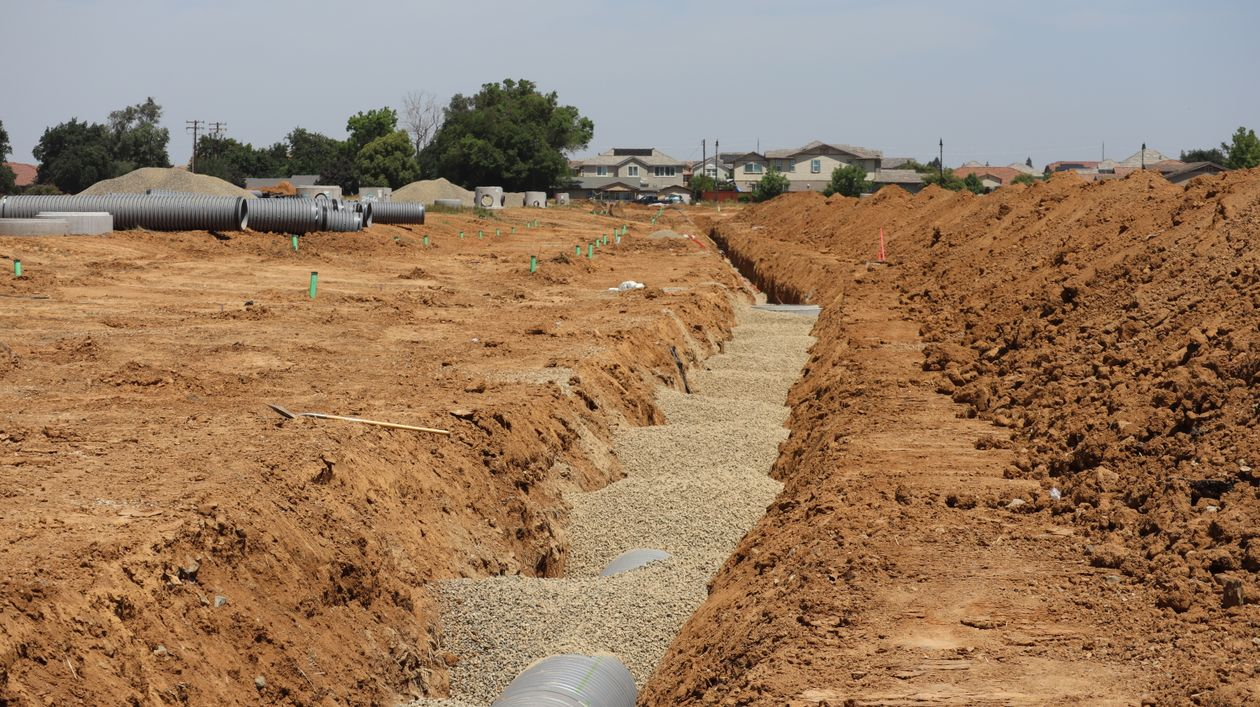
Esh Construction has completed a 15-day piling operation for the Elland Access Package in West Yorkshire, progressing foundation works for new pedestrian and cycle bridges in Elland and West Vale. Three piling rigs were deployed, including a compact machine lifted across the River Calder by a 300-tonne crane to reach a constrained working area. The project is being delivered for Calderdale Council and will improve walking and cycling connections between local communities and the planned Elland railway station.
The piling programme achieved an average installation rate of eight concrete piles per day. The piles ranged from 400mm to 500mm and extended up to 19 metres below ground level. Esh has not published a reconciled total pile count, so the reported average and duration should not be treated as confirmation of an exact number of completed foundations.
Deep piling provides structural support where foundation loads need to be transferred into ground beneath the surface. The appropriate pile dimensions and embedment depths depend on the ground conditions, the supported structure and the requirements of the foundation design. In a bridge application, groups of piles can be connected by reinforced concrete caps that transfer loads from the supported structure into the individual foundation elements.
The Elland operation required equipment to reach positions close to the River Calder and the Calder and Hebble Navigation. Access constraints made conventional movement of a piling rig to every working location impractical, prompting the use of a compact machine that could be lifted across the river. Esh employed a crane rated in the 300-tonne capacity class for the operation, although the company has not disclosed the rig’s lifting weight or the detailed crane configuration.
The crane lift formed part of a wider foundation installation programme involving three rigs. Using different machines enabled the contractor to work across locations with varying access constraints, while the completed piling provided support for the subsequent concrete works. The reported equipment deployment describes the construction method used, rather than a forecast of future activity.
After piling, the construction team excavated around each pile group to the required foundation level. The upper sections of the piles were cropped to remove excess concrete before reinforced concrete pile caps were constructed. Cropping exposes the prepared pile heads so that the piles can be connected into the cap arrangement, allowing the foundation group to support the structural elements above.
The installation of pile caps represents a further construction step beyond drilling or forming the piles themselves. Their purpose is to connect the foundation elements and distribute the loads transferred from the bridge supports. Esh has confirmed that the pile caps were constructed following the piling operation, but has not published the detailed reinforcement arrangement, cap dimensions or concrete specification.
The Elland Access Package includes a pedestrian and cycle bridge crossing both the Calder and Hebble Navigation and the River Calder. The proposed route will link Park Road, Gas Works Lane and Riverside Park, supported by improvements to existing pedestrian routes and the canal towpath. The scheme also includes landscaping and a new children’s play area, extending the project beyond the principal bridge structures.
At West Vale, a second bridge will cross the River Calder to provide another route between West Vale and Elland through the canal corridor. A connection from Stainland Road will follow a new access route running parallel to Black Brook. The bridges and associated paths are intended to improve the continuity of the local walking and cycling network, with the new crossings providing links where the existing route arrangement is less direct.
Calderdale Council secured planning approval for the scheme in November 2024, and Esh was appointed in January 2025 to progress detailed design with engineering partner Fairhurst. Preparatory construction began during summer 2026, including work required to establish access for the main civil engineering activities. The initial mobilisation covered preparatory works for the bridge programme, while the latest announcement confirms completion of the subsequent deep foundation operation.
The project is being procured through YORhub’s YORcivil3 framework. Funding has been approved through the West Yorkshire Combined Authority, with the wider investment supporting the local access improvements associated with the proposed Elland station. The Combined Authority approved £22.67m for the access package in March 2026, distinct from the separate funding and development approval arrangements for the railway station.
The access and station projects remain related but separate delivery programmes. The bridges and paths can improve connections across Elland and West Vale, while the intended rail interchange benefits depend on the railway station progressing through its own development and construction stages. The completion of piling does not establish a completion or opening date for either the bridges or the proposed station.
Construction beside rivers and canals imposes constraints on access, working platforms and the positioning of plant. Equipment must reach foundation locations without compromising surrounding structures or the stability of the working area. The crane operation and use of a compact rig illustrate the access measures employed at Elland, although detailed temporary works designs and ground investigation findings have not been released.
The remaining bridge construction activities will depend on progression from the completed foundations towards the support structures and eventual installation of the bridge spans. The route improvements and landscaping will also need to connect the finished crossings to the existing paths. Esh has not announced a bridge opening date or provided a detailed programme for the outstanding works.
Paul Allen, contract manager at Esh Construction, welcomed completion of the piling milestone, highlighting the civil engineering demands of the project. Calderdale Council has linked the development to its plans for improving access between communities and providing connections towards the proposed railway station.
With the piling and reported pile-cap works complete, the project has reached a defined structural milestone beyond its earlier mobilisation phase. Further progress will be demonstrated by construction of the bridge supports and spans, followed by completion of the connecting routes and public spaces that form the wider Elland Access Package.