IN Brief:
- The Department for Infrastructure will begin a £790,000 flood alleviation scheme at Ballycolman Estate on 19 October.
- New carriageway drainage and stormwater storage will be installed alongside resurfacing of affected roads.
- Substantial completion is targeted for 31 March 2027, subject to favourable weather conditions.
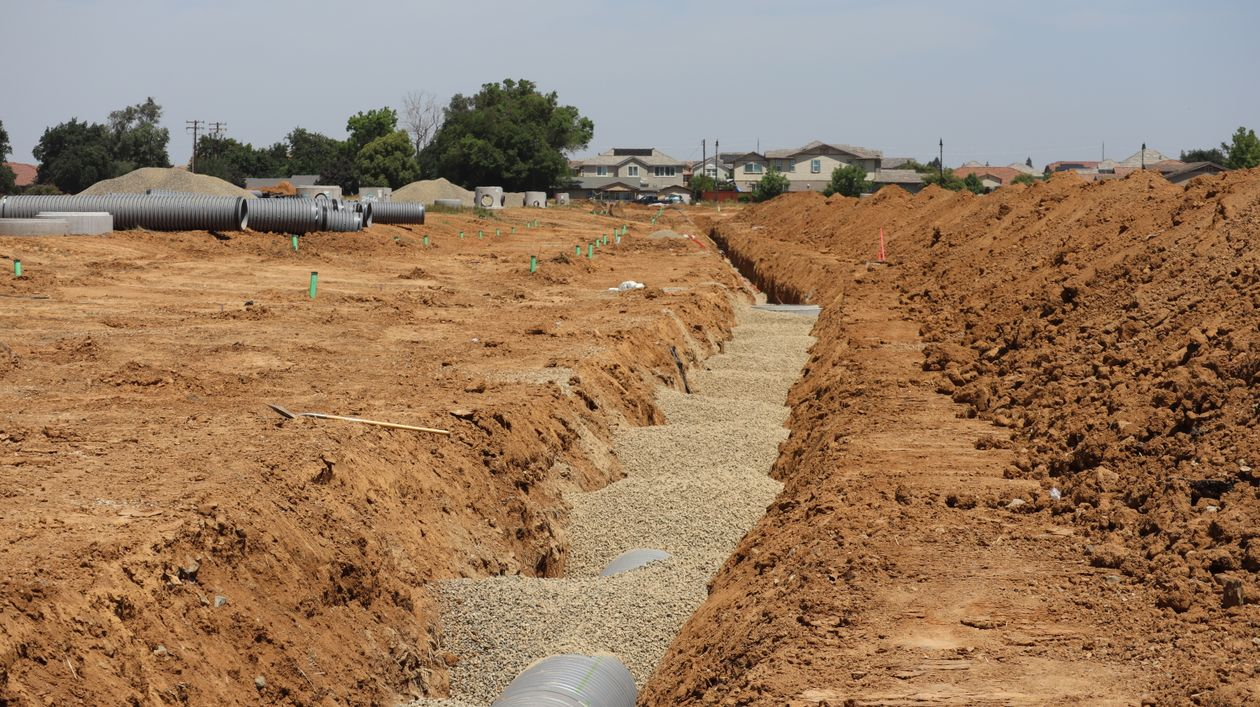
Northern Ireland’s Department for Infrastructure has announced a £790,000 flood alleviation scheme at Ballycolman Estate in Strabane, with construction scheduled to begin on 19 October. The programme will introduce a new carriageway drainage system and stormwater storage facility, alongside resurfacing of affected roads, to address flooding that has previously affected residential properties. Substantial completion is expected by 31 March 2027, subject to favourable weather conditions.
The works will combine drainage infrastructure with additional storage for surface water, addressing the movement and accumulation of runoff within the estate. The department has confirmed the principal elements of the scheme but has not disclosed the proposed storage volume, pipe dimensions, drainage layout or the precise roads that will be resurfaced. The £790,000 investment covers the announced programme, rather than a separately identified contract awarded to a named construction company.
Ballycolman has experienced repeated flooding problems over several years, prompting investigations into the causes and possible solutions. The department previously commissioned a detailed study that identified short and longer-term measures, with an interim intervention subsequently introduced in 2022. The latest announcement concerns a further programme of drainage and highway works, rather than the original investigation or the commencement of that earlier temporary scheme.
The interim works began in August 2022 after further flooding affected the area. They involved reprofiling a road outside vulnerable properties so that surface water could discharge towards an adjacent sports field and running track. The arrangement was intended to provide temporary storage away from homes and reduce the risk of water accumulating around residential buildings.
That intervention required arrangements with other public bodies because the proposed temporary storage area extended beyond the road itself. The department described the works as a short-term response while longer-term solutions were being considered. It has not explicitly confirmed that the October 2026 programme completes every recommendation from the earlier study, so the relationship between the two schemes should not be overstated.
The new investment includes carriageway drainage capable of collecting surface water from the affected highway areas and conveying it towards the proposed storage facility. A drainage system must provide a route for runoff to leave the road surface, while storage can accommodate water during periods when incoming flows exceed the rate at which the receiving system can accept it. The arrangement is intended to reduce the accumulation of surface water, although its effectiveness will depend on the completed design and the conditions experienced during rainfall events.
Storage facilities can be configured in different ways, including surface basins and buried tanks or structures. Their capacities, discharge arrangements and maintenance requirements depend on the intended hydraulic performance and the constraints of the site. The department has not specified which configuration has been selected at Ballycolman, and no particular storage technology or discharge mechanism can therefore be attributed to the scheme.
Similarly, the announcement does not establish a numerical flood protection standard, the number of properties expected to benefit or the size of the rainfall event used in the design. These details would require the project’s hydraulic calculations and engineering specification. The confirmed objective is to improve drainage resilience and reduce the effects of flooding on homes and surrounding infrastructure.
Carriageway resurfacing forms the third component of the works. Installation of drainage infrastructure within existing roads can require excavation and subsequent reinstatement of the affected surfaces. The department has confirmed resurfacing as part of the programme but has not published the construction sequence, pavement specification or the lengths of road involved. The resurfacing should therefore be treated as a defined element of the investment without assuming the extent of excavation beneath it.
Construction will require temporary road and lane closures across the affected working areas. The department has said traffic restrictions and signage will be implemented to protect road workers and other road users, with arrangements intended to accommodate local access where possible. Residents, businesses and commuters have been warned to expect delays and allow additional time when travelling near the works.
The construction programme will extend through autumn and winter, when rainfall can affect excavation and drainage operations. Working on infrastructure intended to manage surface water can involve additional difficulties if heavy rainfall occurs before the new drainage system is complete. The department has expressly qualified its completion target by reference to weather conditions, although it has not published a detailed programme identifying individual construction phases or contingency arrangements.
Infrastructure Minister Liz Kimmins said the scheme was intended to improve the local road network and provide more resilient drainage to protect homes and other built infrastructure. She acknowledged the disruption associated with the works and thanked residents, businesses and commuters for their patience. The department has not reported an independently measured reduction in flood risk arising from the new investment, which remains a proposed engineering outcome.
The history of the Ballycolman project distinguishes the immediate relief provided by the 2022 road reprofiling from the new drainage and storage construction. Both programmes address surface water affecting the estate, but the latest works will introduce infrastructure not described as part of the original interim arrangement. The department has not identified the principal contractor or provided a breakdown of costs between drainage, storage and resurfacing.
Work is due to commence on Monday 19 October, with traffic management introduced as necessary throughout the programme. The next construction milestones will be the installation of the drainage and storage infrastructure and reinstatement of the affected roads. Substantial completion remains targeted for 31 March 2027, with the department undertaking to inform the public if the planned arrangements change.