IN Brief:
- The new Glenfield development will create 51,500 sq ft of industrial floorspace in units of approximately 3,000–20,000 sq ft.
- Kilmac is the main contractor, and CRT Property expects the project to finish in autumn 2027.
- The identified £2.5m UK Government contribution remains subject to business-case approval.
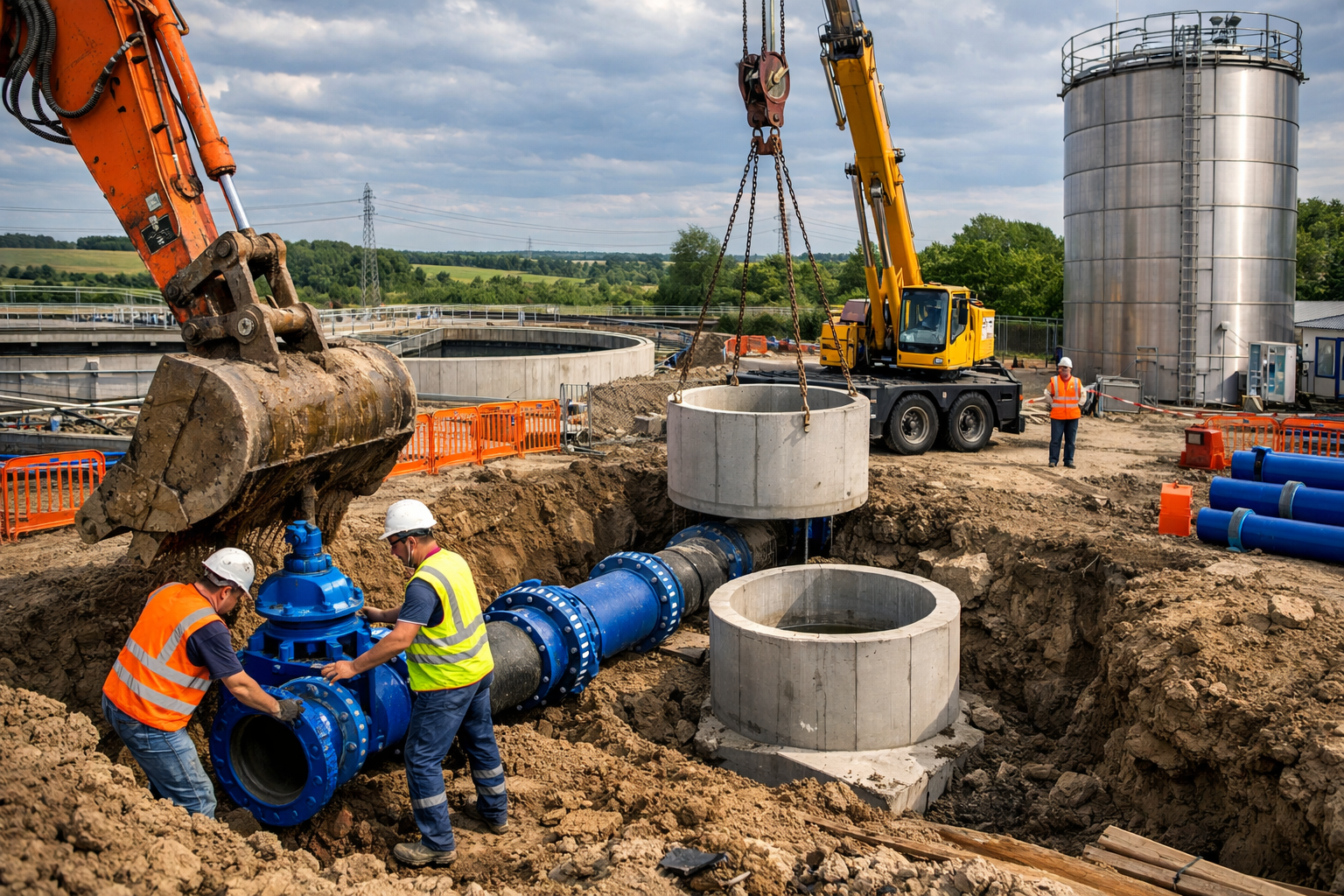
Construction has begun on a £7.5m industrial development at Glenfield Industrial Estate in Cowdenbeath, where CRT Property is commissioning 51,500 sq ft of new commercial accommodation. Kilmac has been appointed principal contractor for the scheme, which is planned to reach completion in autumn 2027. The project will provide industrial units of approximately 3,000 to 20,000 sq ft, allowing businesses of different sizes to occupy space within the expanded estate.
CRT Property is part of the Coalfields Regeneration Trust, and the Fife project represents its first industrial development in Scotland. The trust intends to use commercial property investment to support employment opportunities and generate income for its activities in former coalfield communities. The new buildings will be delivered on land at the existing Glenfield estate rather than as a stand-alone business park. The location sits off Perth Road and near the A909, giving occupiers access towards the M90, Edinburgh, Perth and other parts of Fife.
The funding combines Scottish regeneration support, a proposed UK Government contribution and the developer’s own resources. Fife Council secured £3.757m through the Scottish Government’s Regeneration Capital Grant Fund. A further £2.5m has been identified through the UK Government’s Growth Mission Fund, but remains subject to business-case approval. CRT Property is providing the balance of the £7.5m cost. Construction has begun, although the conditional UK funding component should not be treated as having completed all approval stages.
Fife Council’s InvestFife team supported the transaction by helping CRT Property acquire land at Glenfield and is expected to assist with efforts to attract occupiers. Earlier planning material places the site at approximately 4.4 acres and describes modern industrial buildings with cycle storage, landscaping and photovoltaic equipment. No detailed structural design, installed generation capacity or signed occupier list accompanied the construction-start announcement. The final allocation of individual spaces will depend on demand for different unit sizes as the scheme develops.
Building within an existing industrial estate requires Kilmac to organise access, construction traffic and connections to the surrounding utilities and road network while other premises continue operating. The separate industrial units will also need appropriate servicing arrangements for their eventual users. Neither a detailed traffic management plan nor a phased programme of individual building completions has been published, leaving autumn 2027 as the stated completion target for the scheme as a whole.
The size range is designed to accommodate smaller manufacturing, storage, service and industrial occupiers that may not require a large single-user warehouse. Units around 3,000 sq ft can suit businesses at an earlier stage of expansion, while larger spaces provide scope for established operators with greater production, handling or storage requirements. The developer has not specified which activities will occupy each unit, and the flexible accommodation should not be described as pre-let. Its commercial purpose is to create a new supply of premises that firms can assess against their operating needs once the scheme is ready.
Alongside its property activity, the Coalfields Regeneration Trust reports supporting 268 people through training courses in Cowdenbeath and elsewhere in Fife since 2023. It has also awarded 13 community grants totalling £23,730 since April 2026. That activity predates completion of the Glenfield buildings and is separate from employment generated by prospective tenants. CRT Property intends the development to establish a commercial income stream for its continuing regeneration work, although neither rental returns nor confirmed future tenant employment has been quantified.
Cowdenbeath’s mining and industrial history is central to the project’s stated regeneration objectives. Redeveloping available land within an established estate can reuse existing employment allocations and transport connections, avoiding the need to identify an entirely new employment site. The final economic effect will depend on occupancy, lease terms and the types of businesses that move in. The investment therefore provides a physically defined expansion of industrial capacity, but job creation should remain an aspiration until businesses and headcounts are confirmed.
Kilmac’s construction programme will run towards the announced autumn 2027 completion, with the outcome of the outstanding funding approval and future lettings providing further milestones. Once ready, the development will add 51,500 sq ft of industrial accommodation to Glenfield and establish CRT Property’s first industrial development in Scotland. Its longer-term regeneration contribution will depend on occupier take-up and the income available to support the trust’s work in former coalfield communities.