IN Brief:
- Both the Advanced Technology Centre and Barry Waterfront Campus have reached the topping out milestone.
- The 13,000 sq m technology centre will provide engineering workshops, specialist laboratories and training for nearly 2,000 learners.
- The two facilities are designed for net zero carbon in operation and form part of the Welsh Government’s education investment programme.
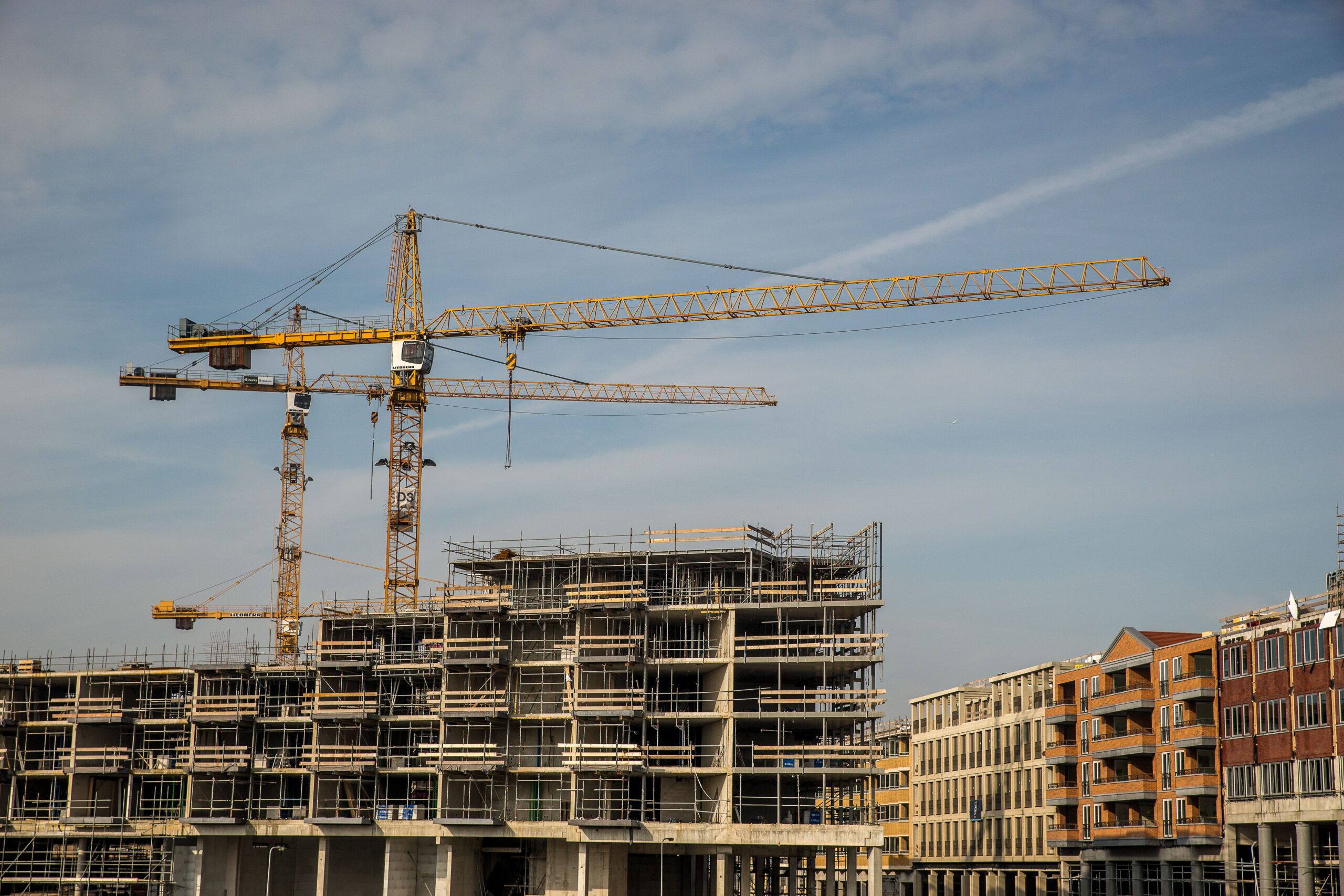
Bouygues UK has completed the main structural frames of two new Cardiff and Vale College campuses in the Vale of Glamorgan, bringing the £119m building programme to the topping out stage. The milestone applies to both the Advanced Technology Centre near Cardiff Airport and the Barry Waterfront Campus, where the contractor will now progress towards enclosure, internal construction and the remaining building services works before the planned 2027 opening.
The two sites form a single investment programme delivered for Cardiff and Vale College through the Welsh Government’s Sustainable Communities for Learning initiative. Representatives of the college, Welsh Government and the Welsh Education Partnership Company visited the Advanced Technology Centre for a ceremony marking the completion of the structures to their highest points. A topping out records progress in the structural build; it does not indicate that the buildings have been fitted out, commissioned or handed over.
Bouygues is delivering the colleges through the Welsh Education Partnership Company (WEPCo) under the Welsh Government’s Mutual Investment Model. The procurement combines construction with a long-term facilities commitment: Robertson FM is contracted to maintain and operate the campuses for 25 years after completion. Building services, durable finishes and maintenance access consequently have to be considered alongside the immediate construction programme, rather than left entirely to the operator after handover.
At the Advanced Technology Centre, a planned 13,000 sq m teaching complex will sit alongside the college’s International Centre for Aerospace Training. The new facility is designed to accommodate close to 2,000 full- and part-time learners, with flexible teaching space alongside specialist practical areas. Its published specification includes an advanced composites manufacturing hub, robotics and mechatronics laboratories, workshops and a higher education business centre. A dedicated green skills house will support training associated with low-carbon technologies.
Equipment-intensive teaching places different demands on buildings from general classrooms. The workshops and laboratories identified in the design will need appropriate power, ventilation, movement space and service access as teaching equipment is installed. Their arrangements also have to support changing course requirements, from advanced manufacturing and rapid prototyping to electronics and robotics. The contract announcement identifies the intended subjects and spaces, but the final equipment schedule and commissioning results have not been disclosed.
The second building, the 6,000 sq m Barry Waterfront Campus, is being built on a brownfield site in the town’s Waterfront Innovation Quarter. Its courses will cover a different mix of activity, including hospitality, health and care, hair and beauty, art and design, and independent living. The campus includes spaces intended for services accessible to the public, such as student-operated hospitality and salon facilities, giving the project a public-facing frontage as well as its educational accommodation.
The campuses have different site settings and teaching functions. The Advanced Technology Centre adjoins the established aerospace training operation near Cardiff Airport, whereas Barry Waterfront brings educational facilities to a former industrial area undergoing regeneration. Each building will need its own access, service installations, specialist-room testing and handover, even though both are delivered through the same investment and procurement arrangements.
The two campuses are designed to achieve net zero carbon in operation, with the construction programme also subject to Welsh Government embodied carbon targets. Those objectives depend on the installed building fabric, mechanical and electrical services, controls and eventual energy use. Completion of the structural frames is an important construction milestone, but it provides no measured evidence yet of annual energy consumption or the buildings’ whole-life carbon performance.
Enclosure work will now establish weather protection before internal finishes and complex building services can progress. The specialist teaching areas must be fitted out and their ventilation, power and digital systems tested before the college can accept them for use. That sequence is particularly important for laboratories and workshops, where the services must work with the teaching equipment rather than being commissioned independently of it.
The project was awarded to Bouygues in 2025, with construction formally marked at the Barry Waterfront site in February 2026. Architects Sheppard Robson and multidisciplinary engineer Arup are identified in the original delivery announcement. The two-site scope makes interfaces among the contractor, the education client, facilities manager, design team and public partners a continuing part of completion planning.
The construction teams have undertaken engagement with schools and training providers, including activity intended to connect learners with site work and future employment. This is associated with, but separate from, the development’s later education offer. The campuses cannot begin delivering their planned courses until their buildings and specialist spaces are ready for occupation.
The college expects the campuses to welcome students in 2027, with September intake plans following completion and handover. Before then, the outstanding work includes closing the building envelopes, fitting out technical areas, integrating building services and completing the necessary inspections. Both sites remain active construction projects, despite the completion of their primary structures.