IN Brief:
- Network Rail has invested more than £800,000 in completed flood resilience measures at Draycott on the Midland Main Line.
- The work includes raising a vulnerable section of track by six centimetres, installing permanent pumps, clearing drainage and adding water-level monitoring.
- A further £5m drainage upgrade is planned during a railway closure from 28 August to 7 September 2027.
Network Rail has completed more than £800,000 of flood resilience measures at Draycott in Derbyshire, lifting a vulnerable section of the Midland Main Line by six centimetres and installing permanent pumps, drainage improvements and water-level sensors. Cameras and live monitoring now support decisions before floodwater reaches the track. A further £5m drainage renewal is planned for summer 2027.
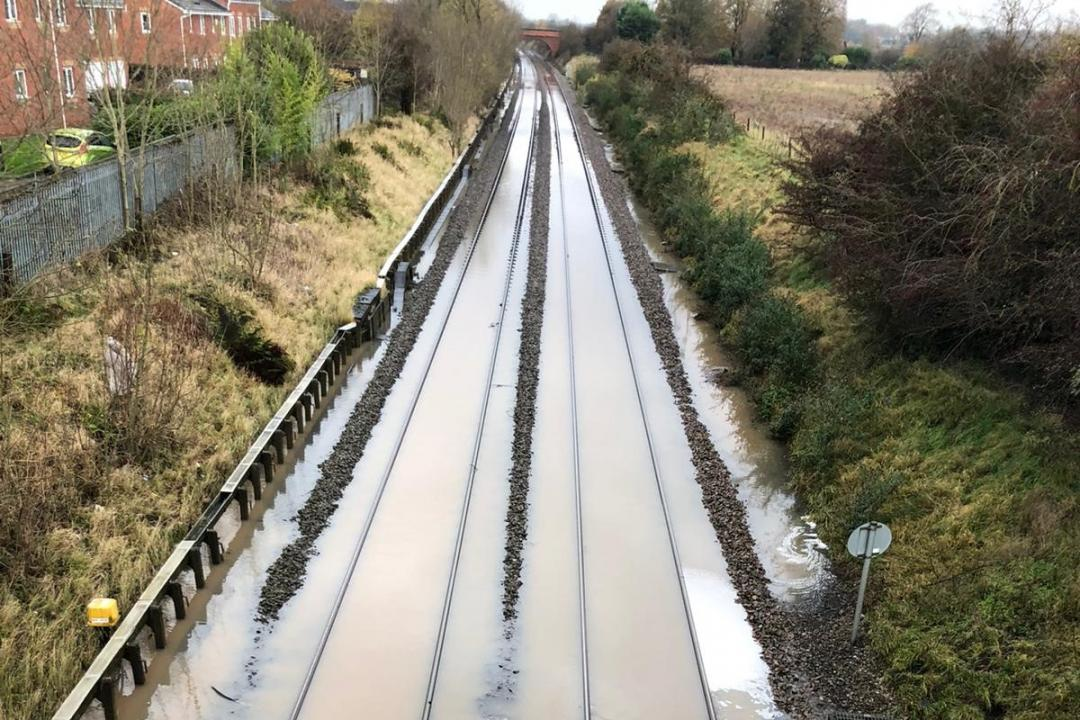
Flooding has affected the location for more than 50 years. Storms Babet and Henk contributed to disruption affecting 983 trains during autumn and winter 2023–24, with train delay costs exceeding £1.5m. Water can flow towards the track from the surrounding catchment, particularly when soil is saturated and the nearby River Derwent is high. The difficulty is therefore not confined to rainwater falling on the railway itself: inflows may exceed the existing drainage network’s ability to carry water away.
By raising part of the railway six centimetres, engineers have increased the vertical separation between the vulnerable track and water that collects nearby. That adjustment is one part of the completed package rather than a guarantee against a repeat of severe flooding. The precise length of track altered and the method used to change its level have not been stated. Track geometry and connections to adjacent infrastructure must remain suitable for trains, but no special alignment arrangement has been specified for Draycott.
The installed permanent pumps give engineers a means of drawing water away before it reaches critical levels. Network Rail says they can be switched on in advance of heavy rainfall when monitoring indicates rising risk. Their effective capacity depends on the incoming water volume and the drainage route available, neither of which has been quantified in the announcement. The stated operational improvement is the ability to intervene before inundation, rather than relying only on emergency pumping after the track has flooded.
Repairs and clearance to existing drainage were undertaken alongside the pumping installation. Blocked channels or damaged drains can restrict flows even when rainfall is not exceptional, so restoring those routes contributes to the same flood response as the pumps. Network Rail has given a combined value of more than £800,000 for the measures already completed, without a cost breakdown for each element. That investment is separate from the larger drainage renewal due next year.
Monitoring brings together images from cameras, readings from water-level sensors, local rainfall and river conditions. Control teams can use this information to identify the approach of floodwater and start pumps earlier when severe weather is forecast. The equipment provides warning and operational evidence; it does not remove the need for the railway’s normal safety decisions about whether trains can use a line affected by water.
The arrangement is designed around the relationship between rainfall, ground saturation and the River Derwent. Even after a storm begins to ease, runoff from surrounding land can continue reaching low points in the railway corridor. High river levels may also make it harder for water to drain away. Advance pumping can improve local conditions before the worst inflow arrives, but Network Rail has explicitly said it cannot guarantee the line will never flood.
Since the severe flooding of 2023–24, Network Rail says the works and revised response arrangements have helped maintain services through further heavy rainfall. The company has not published a quantified reduction in annual flood risk or a new design protection standard, and the result should not be presented as proof that Draycott can withstand a storm identical to Babet or Henk. The observed benefit is improved preparedness and a better ability to manage water when levels begin rising.
A second, larger engineering phase is planned for 28 August to 7 September 2027, when the railway through Draycott is scheduled to close for a £5m track drainage upgrade. The eleven-day period is intended to allow the more substantial drainage work to be carried out without normal train movements through the site. Network Rail has not yet released pipe dimensions, excavation quantities or the detailed construction specification for that renewal.
The longer closure provides a different kind of access from the maintenance and monitoring interventions already in service. Track drainage renewal can require work beneath or beside the railway formation, while a short possession limits the amount of excavation and reinstatement that can be completed. The company has announced the dates ahead of time but says full travel advice and alternative arrangements will follow nearer the work. No substitute service plan has yet been confirmed.
Elsewhere on the East Midlands route, railway teams are checking drainage, controlling vegetation, monitoring vulnerable infrastructure and preparing responses to adverse weather. At Draycott these activities are concentrated around a known flood site with a documented history of severe disruption. The equipment now in place combines physical drainage capacity with earlier information about changing water levels, and allows earlier operational decisions at a site where flooding cannot be eliminated.
The completed £800,000-plus package is operating ahead of the 2026–27 winter, with the next major construction phase scheduled for late summer 2027. Network Rail expects the further £5m works to improve track drainage through Draycott during the closure from 28 August to 7 September. Until then, the permanent pumps, repaired drains and live monitoring will remain the principal measures reported for managing flood conditions at the site.