IN Brief:
- West Sussex recorded more than 15,000 potholes repaired and 110,200m² of patching in the first six months of the financial year.
- A newly purchased thermal unit reheats and reworks asphalt in place; the authority had already tested thermal patching earlier in 2026.
- Drainage improvements and equipment to pre-wet gritting salt form part of the wider winter maintenance programme.
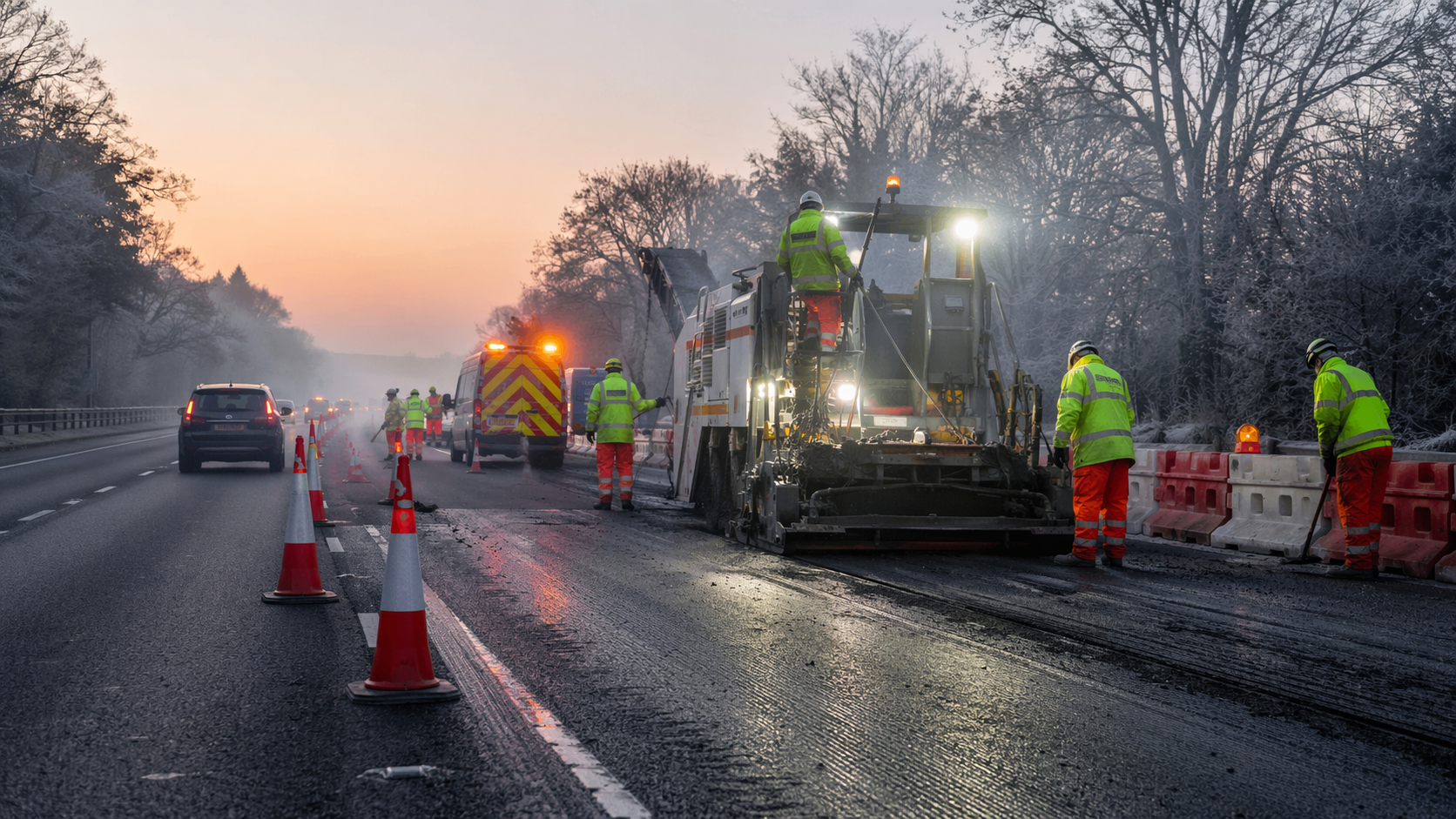
West Sussex County Council has invested in a new thermal road repair unit that heats, rejuvenates and reworks existing asphalt rather than routinely excavating damaged areas. The equipment forms part of its preparations for winter following heavy rainfall and prolonged summer heat that left defects across its highways network.
In its 23 October update, the authority recorded more than 15,000 potholes repaired and over 110,200 square metres of carriageway patched during the first six months of the financial year. Those figures describe maintenance activity already undertaken across the network, not repairs completed using the new unit. The council has not supplied a commissioning date, an equipment manufacturer or a measured production rate for the investment.
Thermal repair applies heat to the existing surface so it can be reworked, with a small quantity of new material added where required. Treating several nearby defects together can reduce cutting and excavation, haulage of removed asphalt and the amount of replacement mix needed at the repair site. The council expects the method to extend the service life of repaired surfaces and improve repair productivity, although it has published no comparative trial results for the newly purchased unit.
A cut-out repair normally involves marking the damaged area, excavating material, preparing the exposed repair surface and compacting new asphalt into place. Reworking existing material changes that sequence, but it does not remove the need to assess the pavement beneath. Damage caused by a failed base, poor drainage or widespread structural weakness may still require larger patching or resurfacing. The thermal equipment is consequently one option within the maintenance programme rather than a replacement for every repair method.
The surface condition has been shaped by contrasting weather. Heavy winter rainfall increased the number of potholes and road defects, while sustained summer heat softened some carriageways. Once those surfaces cooled and hardened again, new areas of weakness could develop under vehicle loads. Those mechanisms explain why the authority is combining repairs to existing defects with inspections and preventive measures ahead of the next winter.
Crushed granite was applied to affected roads during the summer to help stabilise the softened surfaces, and highways teams are now inspecting the treated stretches. Some areas require further patching; others with damage too extensive for local repairs will be scheduled for hydro-blasting or resurfacing. West Sussex had already reported tests of thermal patching in March 2026. The October development is its investment in a new dedicated unit, rather than the first time the authority has explored the technique.
Reusing asphalt in place should reduce the quantities of virgin or replacement material and the amount of spoil removed from smaller repairs. West Sussex also anticipates lower emissions and maintenance costs, but the latest announcement contains no measured carbon saving, cost per square metre, or verified improvement in service life. Those outcomes will depend on the condition of the existing carriageway, the repairs undertaken, and the resources required to operate the heating equipment.
Road drainage forms another part of the winter programme. Since 1 April, teams have cleansed 29,645 drainage assets and completed 75 drainage repair and improvement schemes. Nine further larger improvements are scheduled for completion by 31 March 2027, while 63 flood-prone locations are due to receive proactive cleansing over the eight weeks following the October announcement. These activities address water accumulation separately from the choice of asphalt repair method.
When gullies, culverts or drainage channels cannot discharge effectively, water remains on or beside a road for longer and can contribute to deterioration of damaged surfaces. At Shripney, where flooding was particularly severe last winter, the council has undertaken drainage cleansing and is working with the Environment Agency to remove silt from river outlets. Investigations into longer-term flood resilience measures continue, with no completed scheme or measured improvement claimed in the current update.
Winter service equipment has also been changed at highway depots and on gritting vehicles to allow salt to be pre-wetted as it is spread. The moisture helps salt particles adhere to the road rather than being displaced by traffic, improving the efficiency with which stocks are used across priority routes. This investment concerns treatment in freezing conditions, distinct from the thermal unit used to repair already damaged asphalt.
The thermal unit, drainage programme and modified gritting systems address different elements of highway maintenance. Repairing defects can restore the working surface, while drainage work aims to reduce water-related damage and pre-wetted salt supports winter treatment. Performance figures for the new repair unit remain outstanding; the immediate verified change is the council’s acquisition of equipment alongside the reported six-month maintenance totals and forthcoming drainage programme.