IN Brief:
- Sheffield City Council proposes energy efficiency measures for about 9,850 homes by April 2030, subject to committee approval.
- The proposed approach includes up to 5,250 homes under an Energy as a Service model, approximately 4,000 fabric upgrades and about 600 solar installations.
- The council estimates £29.6m of direct Housing Revenue Account investment and prospective annual household bill savings, not guaranteed outcomes.
Sheffield City Council has proposed a programme of energy efficiency improvements affecting approximately 9,850 council homes by April 2030, combining building fabric work with potential installation of solar photovoltaic panels and battery systems. The Housing Policy Committee is due to consider the proposals on Thursday 22 October. No approval of the full programme or award of its construction contracts has yet been established.
The proposed delivery model divides homes into three broad groups. Up to 5,250 could be considered for an Energy as a Service arrangement, in which third-party investment would support rooftop solar and battery installation rather than requiring the council to fund the entire upfront cost. A further 4,000 properties could receive improvements to the building fabric, while approximately 600 homes could benefit from solar installations. The allocations are indicative and subject to property suitability and approval.
Sheffield estimates £29.6m of direct investment from its Housing Revenue Account under the preferred approach, alongside external finance and other delivery arrangements. The council has not described that sum as the all-in installed cost of the 9,850-home programme. Its Energy as a Service proposal envisages third-party funding for solar panels and batteries at up to 5,250 properties, creating a different funding and contractual exposure from works paid directly by the council.
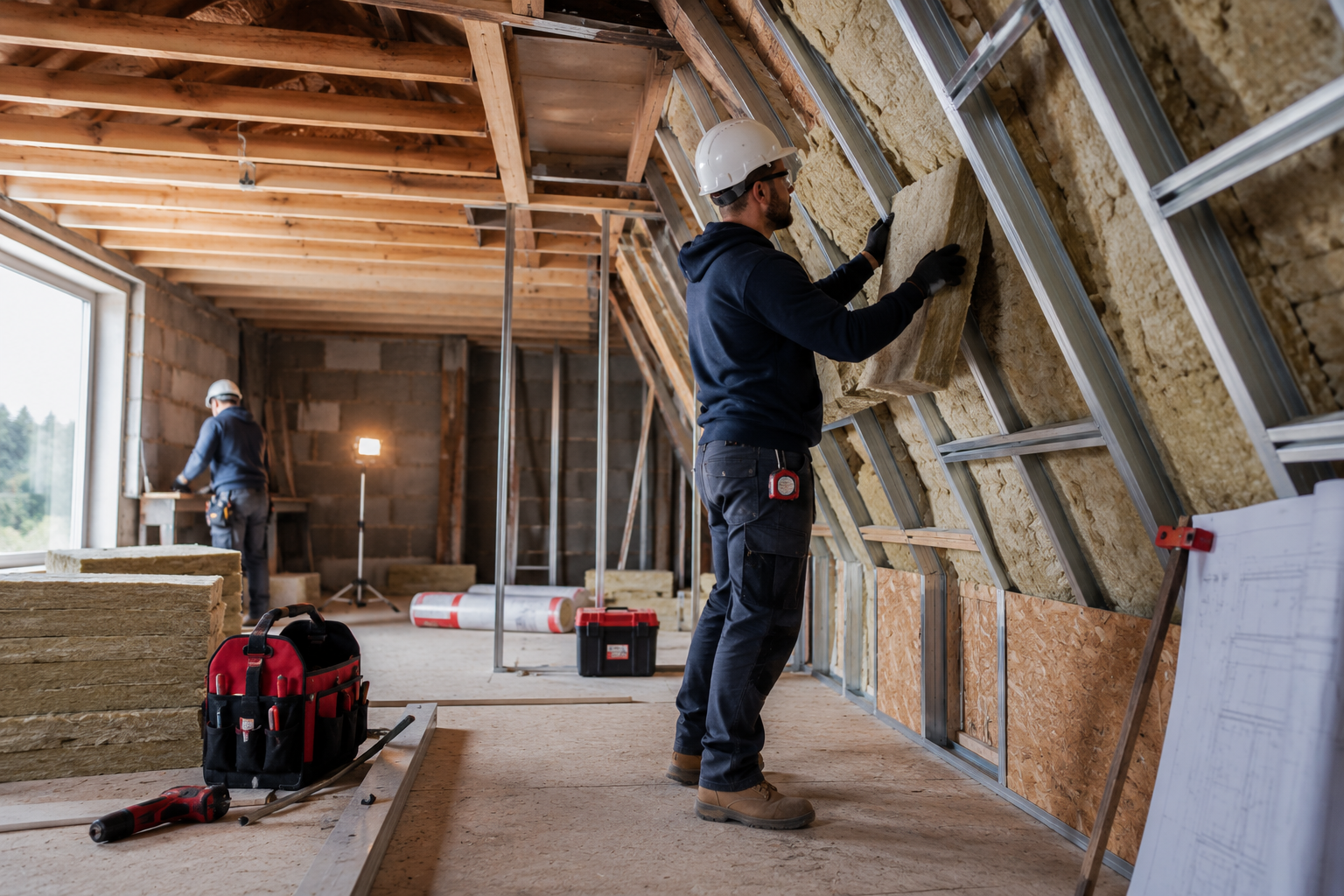
A fabric-led package can include insulation and other improvements selected according to a home’s current condition. A building survey would need to establish the existing wall, roof and floor arrangements, thermal defects, ventilation provision and moisture risks before a specification is appropriate. Simply adding insulation without considering ventilation and the movement of moisture can shift problems rather than solve them. The council has not published final property-by-property designs or material selections in its October announcement.
Those surveys also determine whether measures can be carried out efficiently with existing maintenance work. Roof condition matters where photovoltaic panels are contemplated, because the roof covering and structure need to remain serviceable and capable of supporting the equipment and its attachment system. Electrical installations require consideration of consumer units, cabling, metering, protection and suitable placement of batteries. None of those details has been presented as a confirmed specification for the 9,850-home programme.
Under an Energy as a Service arrangement, a third party would fund equipment and recover its costs through an agreed commercial model, rather than receiving all of its money as an upfront council capital payment. The commercial agreement would have to settle ownership, maintenance, energy benefits, performance responsibilities and the position at the end of the term. The council has not named a supplier, negotiated a final tariff or announced that tenants have signed up to the model.
Sheffield estimates that successful delivery could save tenants collectively between £2.4m and £3.5m in fuel costs each year, equivalent to roughly £250 for each property benefiting from work. The council explicitly describes these as strategic estimates, based on national evidence and assumptions about its own stock. Actual savings would depend on the measures installed, energy prices, household consumption and whether a particular home has been included in the programme.
The plans are framed around the forthcoming requirement for social rented housing to reach the equivalent of Energy Performance Certificate band C by April 2030. EPC ratings are modelled assessments rather than direct measurements of residents’ bills. An improvement in that rating can indicate a better-performing dwelling, but it does not by itself confirm a particular reduction in energy demand or costs for every household.
A separate Sheffield proposal would provide £1.67m for solar photovoltaic panels and batteries at 212 houses and bungalows when roofs are replaced over a three-year period. The proposed finance is £1m from Sheffield Climate Investment and £671,500 from the Housing Revenue Account. That item was scheduled for the Finance and Performance Policy Committee on Monday 19 October; no outcome of that meeting has been verified for this edition. The 212 homes are not an independently confirmed addition to the 9,850-home headline total.
The 212-home scheme illustrates how retrofitting can be coordinated with planned building maintenance. The council’s earlier roofing contract contained £320,000 for solar installations at an estimated 20–30 properties; the proposed additional funding would extend the work to 212 suitable homes below EPC band C. Installing panels and batteries while roofing is already under way can avoid duplicate scaffolding, surveys and household visits. That practical opportunity does not mean the broader 9,850-home programme already has matching roof schedules or approved designs.
Other elements of Sheffield’s current housing climate programme include £2.9m of proposed work affecting 344 homes in 2026/27, a separate £380,000 allocation for solar and batteries, and possible trials involving clean heating and heat networks. They belong to the council’s broader activity and should not be conflated with a single approved £29.6m construction contract. The different funding and programme lines will need to be reconciled during detailed implementation.
Resident access and building condition are among the practical delivery constraints. Occupied homes may need staged surveys, temporary disruption to services and follow-up inspections. A fabric intervention can also expose defects that were not apparent in initial planning. The council says tenants would receive further information and opportunities to influence work if the proposed approach is approved; it has not confirmed individual installation dates.
Any property-level retrofit specification will have to balance thermal improvement with ventilation, moisture control, available roof structure and safe electrical installation. The council expects the programme to reduce cold, damp, emissions and fuel costs, but these benefits will depend on the homes selected, measures actually installed and subsequent use. An EPC assessment supplies a modelled energy rating; measured consumption and bills will also reflect residents’ behaviour and changing energy tariffs.
The Housing Policy Committee is due to consider the wider 9,850-home strategy on 22 October. Approval would allow Sheffield to develop investment and delivery arrangements, engage tenants and determine which measures suit each property. No completed contracts, individual installation schedule or verified annual savings are yet established for that proposed multi-year programme.