IN Brief:
- The final 307-home phase completes a regeneration programme that has delivered 658 homes at St John’s Hill.
- The wider scheme includes social rent, shared ownership, extra-care housing, commercial space and a new community centre.
- Phase three combines three principal residential buildings with new public space, pedestrian and cycling routes and landscaping.
Peabody has completed the regeneration of its St John’s Hill estate opposite Clapham Junction station, bringing a 14-year redevelopment programme to a close after delivery of 658 homes across three phases.
The third and final phase has added 307 homes alongside landscaped public space and new routes through the site. Peabody delivered the last stage in partnership with Mount Anvil, following completion of the first two phases by 2023.
Planning permission for comprehensive redevelopment was first secured in 2012. The project replaced and reorganised a residential estate originally built by Peabody in 1936, where earlier blocks had themselves undergone substantial modernisation during the 1960s and 1970s.
The completed regeneration combines several housing tenures rather than operating as a single private residential development. Homes have been provided for social rent, shared ownership, private sale and extra-care accommodation, with the latter designed for older residents who require more support while remaining in their own homes.
The first two stages included 242 social rent homes and 48 shared ownership properties, while the final phase increased the overall development to 658 homes. Planning work on phase three raised the number of homes by 59 compared with an earlier layout, using changes to residential layouts, building massing and footprints to accommodate the additional capacity.
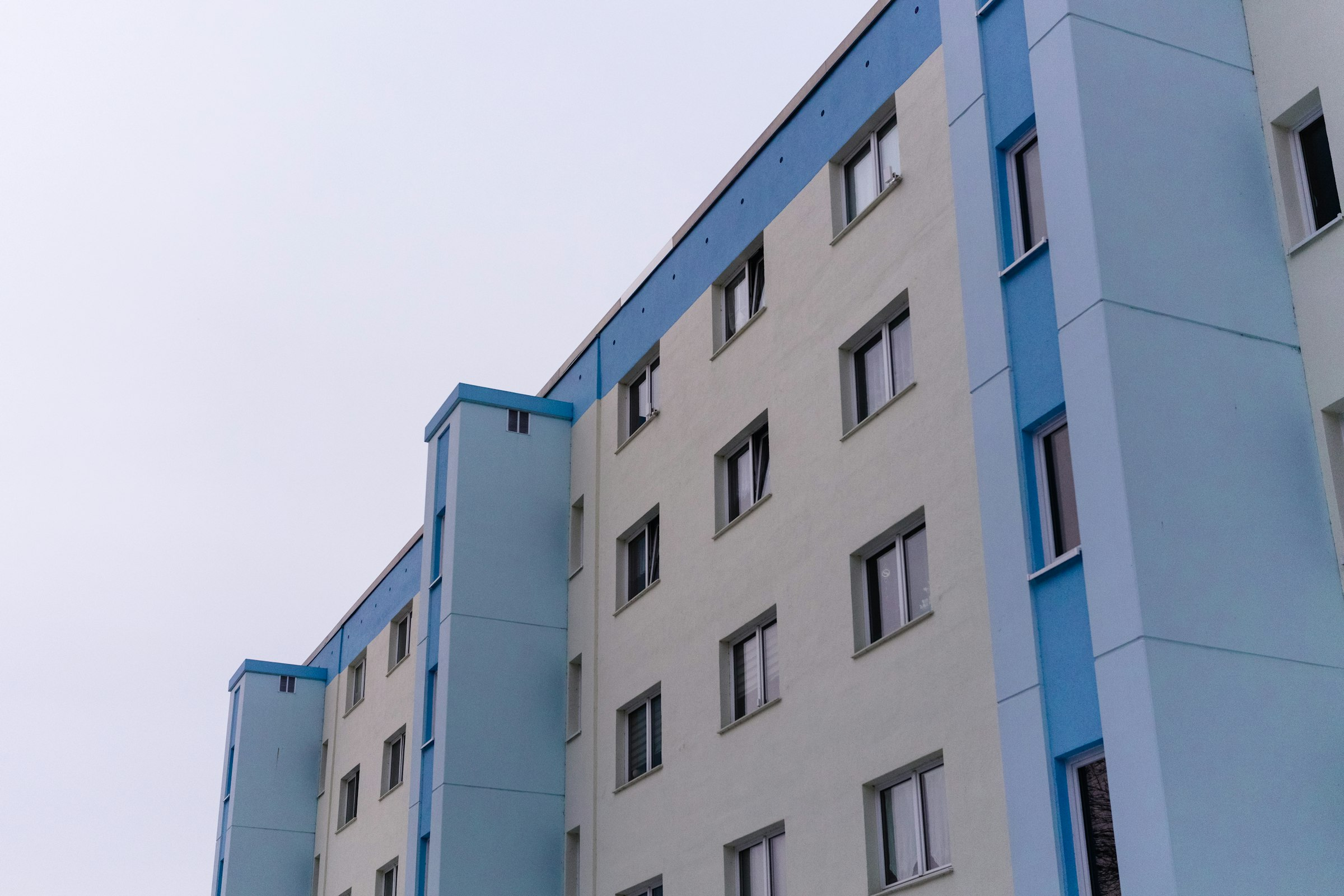
Phase three comprises three principal residential buildings ranging from four to 12 storeys, with one-, two-, three- and four-bedroom homes. Planning consultant Rolfe Judd records affordable housing provision of 53.5% across the site, while the final phase also introduces revised landscaped areas and public routes.
The physical regeneration extends beyond replacement housing. The development includes a new community centre, extra-care accommodation, commercial units and a large public square, together with pedestrian and cycling connections intended to open the estate more clearly towards the surrounding Clapham Junction neighbourhood.
Landscaping around the final buildings incorporates public, communal and private areas, with planting and drainage measures forming part of the later approvals. Subsequent applications have dealt with play areas, tree planting, ventilation, building materials, cycle parking and whole-life carbon requirements as individual blocks moved through construction.
Large phased housing schemes continue to require detailed approvals after the main residential permission is secured. Materials, landscaping, energy performance, servicing and Section 106 obligations can all progress on different timescales, while individual buildings reach practical completion separately rather than as one estate-wide handover.
St John’s Hill has also been delivered on a constrained urban site beside one of London’s busiest transport interchanges. Maintaining residential activity around a phased redevelopment requires construction logistics, access and public realm work to be sequenced alongside occupied parts of the estate.
Later phases also have to connect into infrastructure and spaces delivered earlier in the programme. Drainage, utilities, pedestrian routes and landscape therefore develop cumulatively as each construction phase is completed.
The completed layout now provides a substantially different density and tenure mix from the pre-regeneration estate. Peabody’s social housing presence remains central, while private sale and shared ownership have been incorporated alongside social rent and specialist extra-care accommodation to support delivery of the wider masterplan.
Wandsworth Council marked completion on 5 October, 14 years after the original planning consent was granted. Peabody described the milestone as the completion of a neighbourhood shaped over several phases with resident involvement.
For Mount Anvil and Peabody, the milestone moves the remaining phase three construction, landscaping and public realm elements from active development into occupation and estate management. What began as replacement of a 1930s housing estate now leaves 658 homes, community facilities and a reorganised network of public space directly beside Clapham Junction.