IN Brief:
- Three international joint ventures will compete for the £5.7bn White Horse Reservoir main works contract.
- The winning contractor will design, build, test, and commission the proposed 150 billion litre Oxfordshire reservoir.
- Detailed bids are due in spring 2027, with Thames Water targeting contract award in autumn 2027.
Thames Water has shortlisted three international joint ventures to compete for the £5.7 billion main works contract for its proposed White Horse Reservoir in Oxfordshire, moving one of the UK’s largest planned water infrastructure projects into detailed tendering.
WFH JV brings together Webuild, Hyundai Engineering & Construction, and FCC Construcción, with Webuild acting as lead partner. BMV+ combines Bouygues Travaux Publics, J Murphy & Sons, and VolkerFitzpatrick, while BBV pairs Balfour Beatty Civil Engineering with Vinci Construction Grands Projets.
The three teams are being invited to prepare detailed bids for submission in spring 2027, ahead of a planned contract award in autumn 2027. The selected consortium would become the Main Works Contractor, responsible for design, construction, testing, and commissioning of the proposed reservoir near Abingdon.
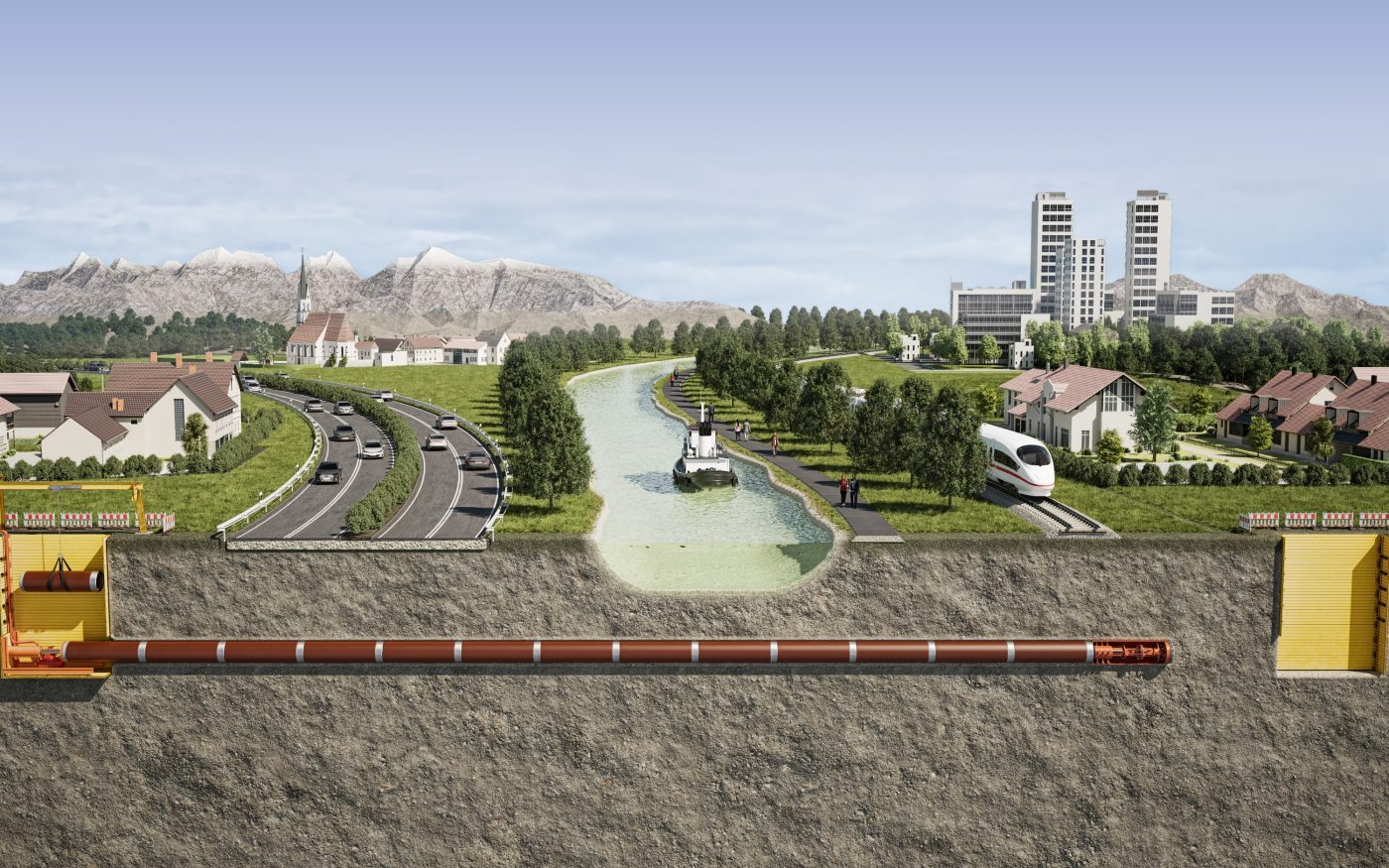
The construction scope will extend well beyond excavation of the reservoir basin. Major earthworks, embankments, tunnelling, pipelines, intake and outfall infrastructure, pumping assets, access roads, temporary works, and associated environmental measures will all have to be coordinated across a programme expected to run for around a decade.
White Horse Reservoir is planned to hold about 150 billion litres of water and would become the UK’s second largest reservoir once completed. Thames Water expects the scheme to support water supplies for around 15 million people across the South East, including customers served by Thames Water, Affinity Water, and Southern Water, with water currently expected to become available from 2040.
The shortlist follows the procurement process opened earlier this year, when potential contractors were asked to demonstrate technical and financial capability for a scheme requiring substantial tunnelling, earthworks, structures, and programme management expertise. The resulting consortia combine major UK and international contractors with experience of delivering complex civil engineering work over extended construction periods.
That scale will place significant demands on the construction supply chain. A project running across much of the next decade will require sustained availability of earthmoving plant, tunnelling specialists, structural contractors, designers, mechanical and electrical engineering teams, materials suppliers, and skilled site labour rather than a short mobilisation around a single peak construction phase.
Ground conditions and material management will have a major influence on the programme. Thames Water has already undertaken trial embankment and clay compaction work to improve its understanding of excavated material and establish how suitable clay could be reused within permanent engineered fill.
Reusing material on site could reduce imported fill and road haulage, but it places greater emphasis on geotechnical testing and construction control. Moisture content, compaction, layer thickness, and consistency will have to be managed across earthworks undertaken at a scale far beyond that of a conventional development project.
The earlier trial work will give bidders data for developing construction methodologies, plant strategies, quality controls, and programme assumptions. Embankment construction is likely to be one of the dominant site activities, making the behaviour and availability of suitable excavated material central to both cost and construction sequencing.
The reservoir is being developed as a nationally significant infrastructure project and must still progress through the planning and regulatory process. Further consultation and a Development Consent Order will be required before full construction can proceed, while Ofwat has been considering the scheme through the specified infrastructure project regime used for exceptionally large water sector investments.
The proposed commercial structure is based on the model used for the Thames Tideway Tunnel. An independent infrastructure provider would finance and deliver the project with the Main Works Contractor, separating the delivery vehicle from Thames Water’s conventional regulated investment programme.
That structure creates another interface for bidders because engineering proposals have to sit alongside the financing, risk allocation, governance, and performance requirements established for the eventual infrastructure provider. Programme risk on a reservoir of this duration cannot be separated neatly from construction methodology, particularly where planning, environmental, ground, and supply chain risks interact.
The £5.7 billion main works package is expected to support more than 1,000 construction jobs directly, with additional demand flowing into specialist suppliers and subcontractors. Earthworks, tunnelling, structures, pipelines, mechanical and electrical installation, temporary infrastructure, and environmental works will create a broad range of packages beneath the principal contract.
Detailed tendering will now determine how the three teams propose to manage those interfaces and convert the outline delivery strategy into buildable sequences. Thames Water intends to evaluate bids after their spring 2027 submission before making the main works appointment in autumn 2027.
The selected consortium will then inherit a project in which early technical decisions on excavation, material reuse, temporary works, logistics, and tunnelling will shape activity for years. The contract award remains some distance away, but the shortlist has narrowed responsibility for one of the UK’s largest proposed civil engineering programmes to three delivery teams.