IN Brief:
- Shetland’s long-term transport route map places a Mainland-to-Yell fixed link first, followed by Yell-to-Unst.
- Scottish Government support of £23m will fund business-case and pre-construction development over the next three years.
- Construction remains dependent on technical development, statutory processes, procurement and a substantially larger long-term funding settlement.
Shetland Islands Council has approved an implementation route map that places a fixed link across Yell Sound first in its long-term inter-island transport programme, backed by £23m of Scottish Government support for business-case and pre-construction development.
The decision moves the Yell Sound tunnel into a more defined development sequence but does not approve construction. The route map establishes how potential tunnel and ferry investments could be phased over roughly 30 years, with a fixed link between Mainland Shetland and Yell progressing first and a Yell-to-Unst tunnel following later, subject to funding and further approvals.
Longer-term fixed links remain part of the council’s direction for Bressay and Whalsay, while other island routes continue to depend on ferry investment. Even if the first tunnels proceed, parts of the network will still require vessels and associated infrastructure.
The £23m commitment is intended to fund development of the Yell Sound project over the next three years. Work is expected to cover the business case and pre-construction activity required to turn a preferred concept into a project capable of procurement. The allocation does not meet the cost of constructing the tunnel itself.
The programme follows several years of technical and commercial assessment. Stantec was appointed to lead the Inter-island Transport Connectivity Programme with COWI and Mott MacDonald, covering strategic and outline business cases, stakeholder engagement and development of the implementation route map.
Yell Sound was subsequently used as the test case for a Fixed Link Model because it presented a broad range of engineering, operational and commercial variables. COWI and Stantec also engaged with LNS, BEMO Tunnelling and STRABAG to review the reference design, construction issues, contractor appetite, procurement and funding considerations.
The development work has therefore moved beyond establishing whether a subsea tunnel is technically possible. The council also needs to determine whether the project can be procured competitively, financed on acceptable terms and integrated into a transport network that will continue to use ferries elsewhere.
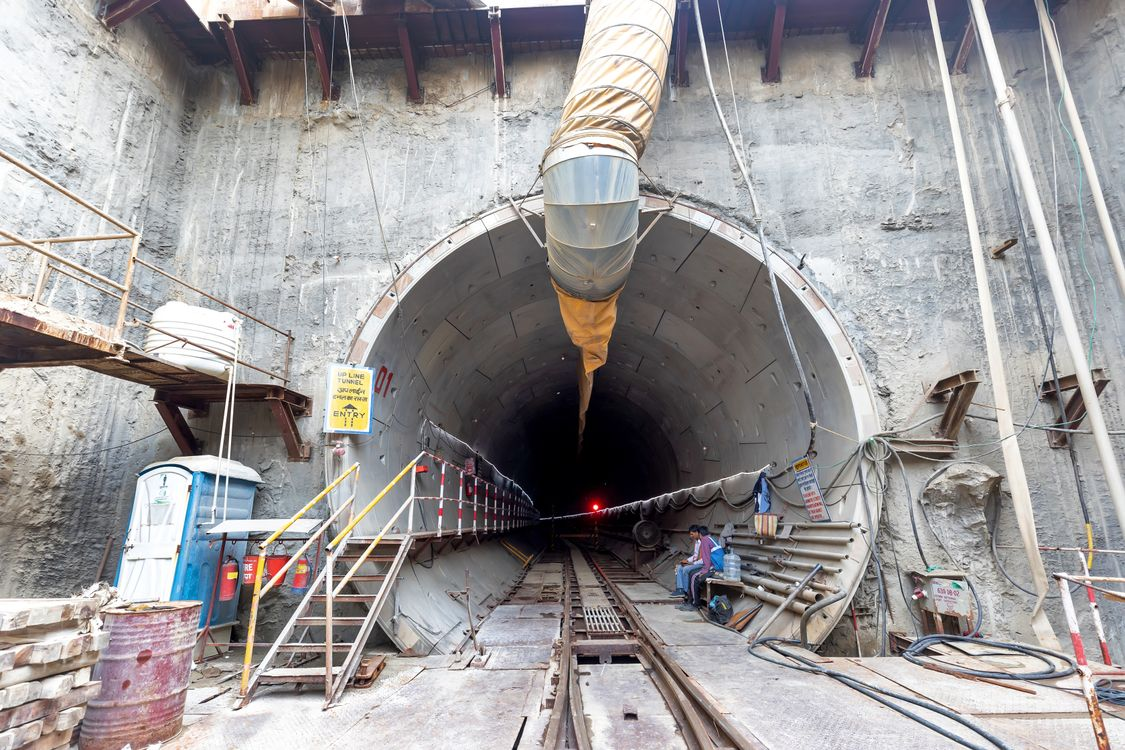
Subsea road tunnelling carries extensive pre-construction requirements. Geological and geotechnical investigation has to establish the rock conditions along the alignment, while portal design, groundwater control, ventilation, drainage, fire and life safety systems, power and communications all need to be developed before construction risk can be priced with confidence.
Island logistics add another layer. Mobilisation of tunnelling plant, workforce accommodation, spoil handling, concrete and material supply and the reliability of marine and road transport all influence the programme. Construction planning cannot assume the same supply conditions available on a mainland project close to established tunnelling markets.
Ground investigation will be particularly important to procurement. Uncertainty that remains unresolved at tender can appear in contractor contingencies, risk allowances or contractual exclusions. Better geological information before procurement gives both the council and bidders a stronger basis for deciding which risks can be transferred and which should remain with the client.
The business case must also compare tunnel investment with the continuing cost of ferries. Council reporting earlier in 2026 put inter-island ferry operating expenditure at £25m in 2024/25 and the average vessel age at 32.5 years. Crew recruitment, retention and vehicle capacity have also been identified as constraints.
Continuing with the existing model therefore carries its own capital requirements. Vessels have to be renewed, terminals maintained and services staffed, while tunnels require a much larger initial construction commitment followed by different maintenance and operational costs.
The £23m development allocation gives the council greater scope to examine those alternatives through engineering evidence rather than strategic comparison alone. Surveys, environmental assessment, route development, statutory work and procurement planning can now proceed with a clearer funding base.
Environmental and planning work will extend beyond the tunnel bore itself. Portals, approach roads, construction compounds and spoil disposal areas all require land and can create landscape, ecology and traffic effects that need to be understood before a final alignment is promoted.
The approved route map also provides the supply chain with a clearer sequence of potential work. Yell Sound is first, Unst follows and other island decisions sit behind them, allowing consultants and contractors to assess the programme as a pipeline rather than as a series of unrelated studies.
Construction remains a later decision. Statutory approvals, procurement strategy and the long-term capital settlement will determine whether the pre-construction programme ultimately produces a live tunnelling contract. The immediate phase is intended to define that proposition closely enough for government, council and industry to know what would actually have to be funded and built.