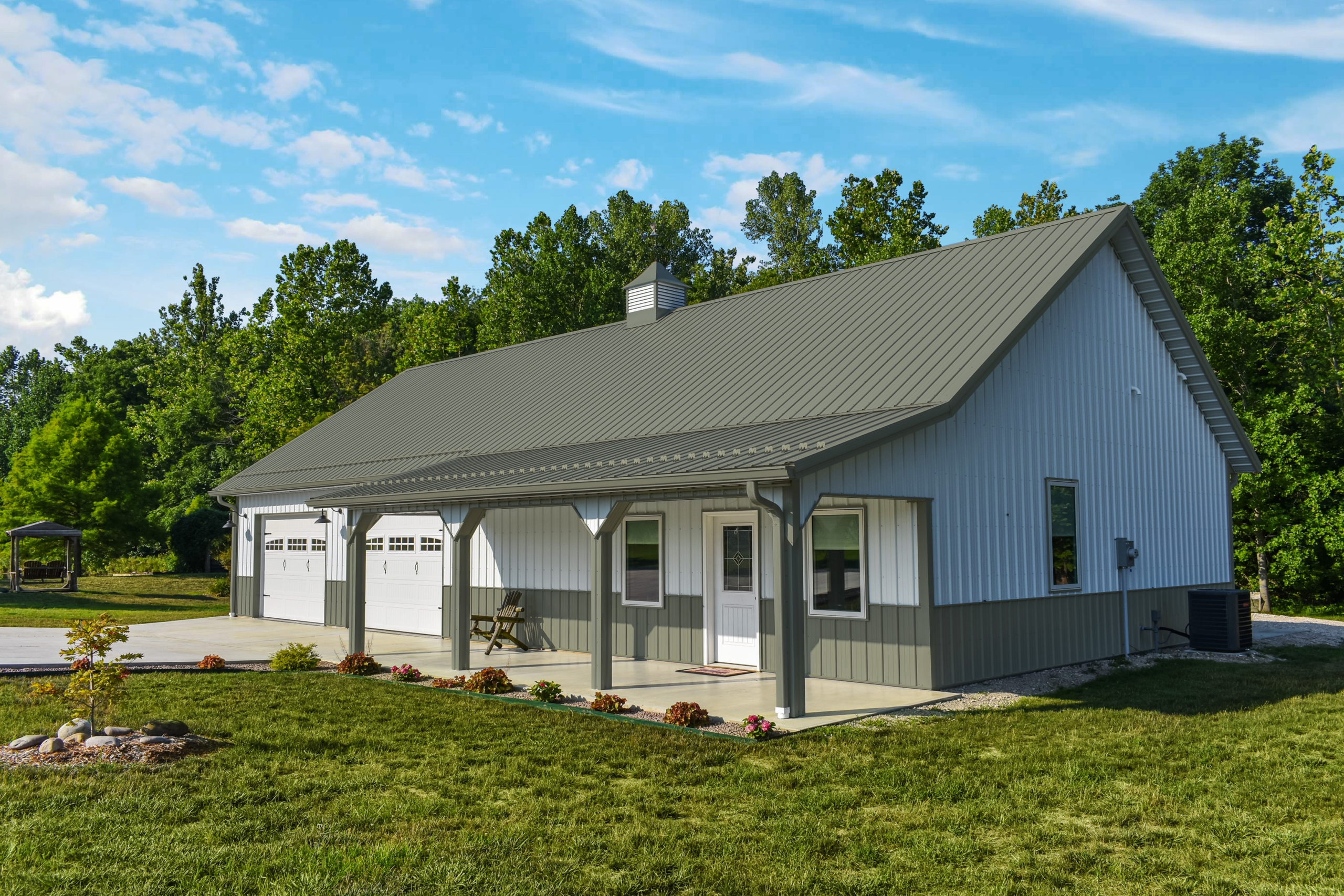
IN Brief:
- Soulful Sage is AkzoNobel’s soft silvery-green 2027 Color of the Year and anchors three palettes called Glow, Light and Lift.
- The coil and extrusion programme targets architectural and building-envelope applications alongside domestic appliances.
- AkzoNobel says colour selection for prepainted metal must work through specification, coating production and final use.
AkzoNobel Coil and Extrusion Coatings has brought its 2027 Soulful Sage colour direction into the prepainted metal market, targeting architectural applications where appearance has to remain compatible with specification, industrial coating and long-term building-envelope performance.
Soulful Sage is a soft, silvery green selected as AkzoNobel’s 2027 Color of the Year. It sits at the centre of three wider colour stories — Glow, Light and Lift — developed through the company’s annual trend research.
Glow uses warmer earth tones, Light combines pale and darker shades, while Lift introduces more positive and brighter colours. AkzoNobel is translating the three palettes into its coil and extrusion coatings business for architectural and domestic appliance applications.
The construction relevance lies primarily in prepainted steel and aluminium used for building-envelope products. Coil coatings can be used across roofing, cladding, façade panels and architectural components where colour forms part of a factory-applied finish rather than being added after installation.
That production route changes the role of colour specification. Coated metal has to survive forming, cutting and fabrication before the finished component reaches site, so appearance cannot be separated from adhesion, flexibility and the other properties required during manufacture.
Henri Bijsterbosch, Color Product Marketing Manager for AkzoNobel’s Industrial Coatings business, said colour in coil and extrusion products has to operate across specification, production and end use rather than simply respond to a design trend.
Consistency is one of the practical issues. Building-envelope components may be manufactured in large quantities, supplied from several production runs or installed over an extended construction programme, increasing the importance of controlled colour difference, gloss and surface appearance.
AkzoNobel’s current EMEA testing guidance places those aesthetic measurements alongside a much broader set of performance tests. European coil coating methods cover paint-layer thickness, gloss and colour difference as well as hardness, adhesion, flexibility, abrasion, water resistance and weathering.
The relationship matters because a colour can match the architectural intention at the factory and still be unsuitable if the coating cracks during forming, loses adhesion or performs poorly during long-term exposure.
Colour selection is therefore one stage within the broader specification of the coating system. The intended substrate, building location, exposure conditions and fabrication process all influence which coating construction is appropriate.
AkzoNobel’s FIDURA systems, for example, are positioned across roofing, cladding and other architectural applications with different performance levels available for varying environmental demands. The company describes primer layers as an important part of long-term corrosion protection and adhesion.
More demanding systems are intended for environments where ultraviolet exposure, salt, moisture or industrial conditions increase the load on the coating. Flexibility and scratch resistance also matter where coated material will be profiled or formed before installation.
Soulful Sage itself is not being presented as a new coating chemistry. The 2027 announcement is a colour programme intended to give architects, fabricators and coaters a current design direction that can be translated into the appropriate existing or future coating system.
That distinction prevents the annual colour forecast from becoming a performance claim. A shade can provide the aesthetic starting point for an elevation, but the finished specification still has to define the coating required for the environment in which the roof or façade will operate.
Prepainted metal also puts more of the finishing process inside controlled manufacturing conditions rather than on the construction site. The substrate is coated before fabrication, allowing repeatable industrial application but requiring manufacturers to maintain consistency as the material passes through later forming and handling operations.
For architects, digital and physical colour tools increasingly connect that manufacturing process with the design stage. AkzoNobel provides BIM colour libraries for its architectural coil systems, allowing finishes to be incorporated into digital project models before specification is finalised.
Those tools can improve coordination, but samples remain important because colour is affected by surface finish, gloss, lighting and viewing angle. A digital representation cannot completely reproduce the appearance of a coated metal panel at full building scale.
The annual palette therefore works as an input to specification rather than a substitute for it. Soulful Sage and the wider Glow, Light and Lift collections give designers a defined group of colours to consider while technical selection determines how those colours are delivered on the final product.
That longer technical timetable is significant for construction because façades and roofs are expected to remain in service for decades. Annual colour forecasts move much faster than building-envelope replacement cycles, placing greater emphasis on whether a selected finish remains acceptable after the trend that introduced it has passed.
AkzoNobel’s current testing programme addresses that durability through laboratory methods and outdoor exposure. Its EMEA guidance includes accelerated weathering alongside natural exposure assessment, while coating systems are tested for issues including colour retention, chalking, water resistance and corrosion.
The 2027 palette does not alter those requirements. Its construction value lies in giving architects and manufacturers another aesthetic direction that can be carried through an established specification and industrial production process rather than applied as a purely decorative afterthought.
Soulful Sage may begin as a trend-led colour choice, but on a roof or façade it ultimately has to behave like any other construction finish: remain manufacturable, consistent and suitable for the conditions it will face after installation.