IN Brief:
- The upper section of Glasgow Cathedral’s 225ft stone spire will be dismantled and rebuilt during a three-year conservation programme.
- Corrosion affecting bolts in an internal steel frame has caused cracking and movement in the medieval masonry.
- HES stonemasons are carving replacement stone while conservation teams retain and reinstate viable historic fabric.
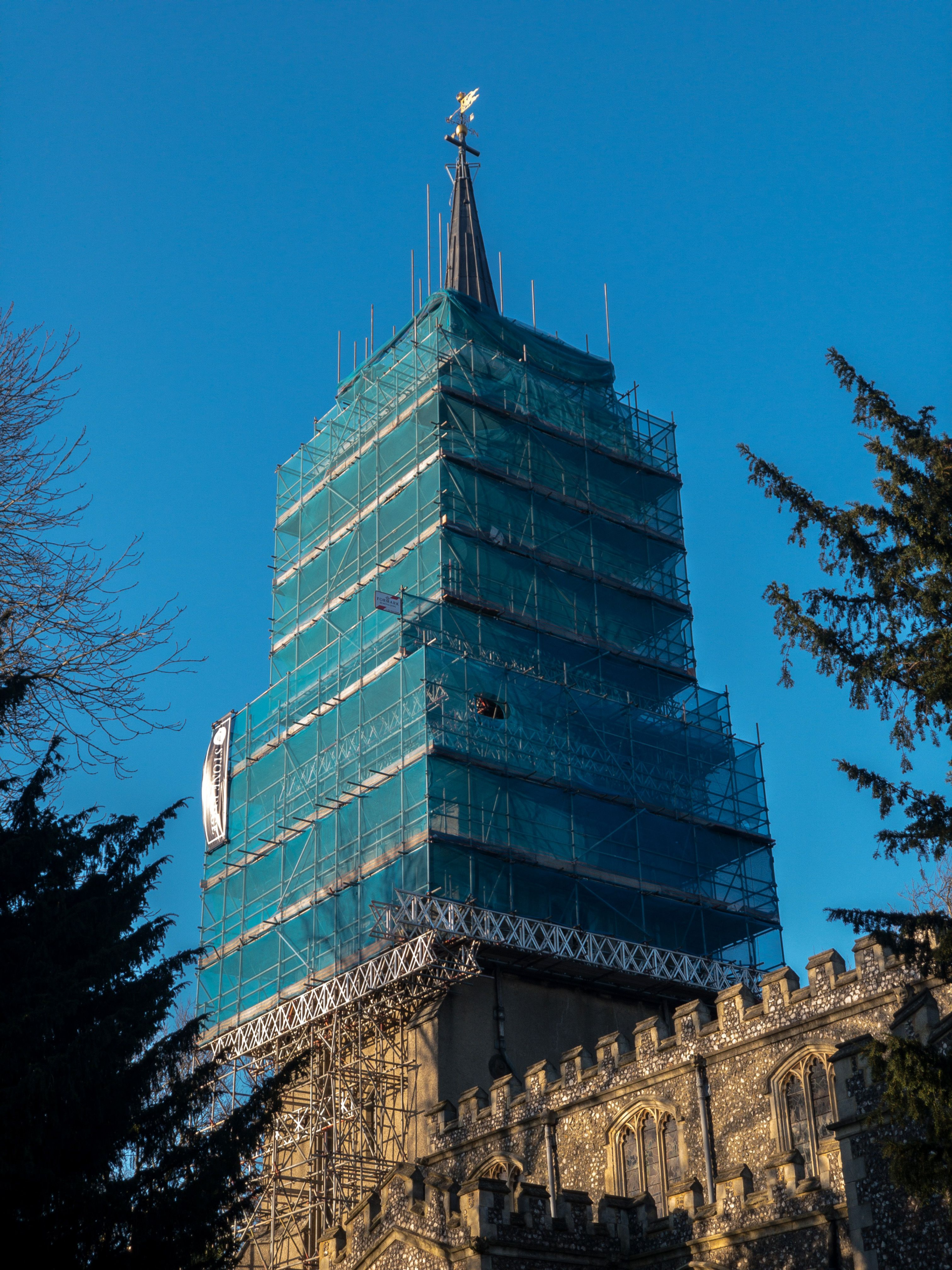
Historic Environment Scotland has begun a three-year reconstruction programme at Glasgow Cathedral that will see the upper section of its 225ft medieval spire dismantled and rebuilt after corrosion within a later steel support system damaged the surrounding stonework.
The work follows detailed surveys of the cathedral spire, where a steel frame installed in 1970 has developed problems that were not anticipated when the reinforcement was added. Bolts securing the frame have corroded and expanded, exerting pressure against the historic masonry and causing cracking and movement in the stone.
Historic Environment Scotland has also linked the deterioration to increased rainfall, which has worsened corrosion within the structure. The repair therefore combines the challenge of correcting a later intervention with the need to protect medieval masonry against environmental conditions that continue to change.
The chosen response goes substantially beyond local stone repair. The head of the spire will be dismantled in a controlled sequence before damaged elements are repaired or replaced and the structure is rebuilt. HES stonemasons have begun carving replacement masonry, while the conservation team intends to retain and reinstate as much original fabric as its condition allows.
Each stone removed from the spire has to be recorded and assessed so that viable material can return to its correct position. Replacement masonry must match the physical behaviour and appearance of the existing stone closely enough to work within the original structure without introducing another incompatible intervention.
The location complicates every stage of that process. Work is taking place high above the cathedral roofline on a slender masonry structure where access, lifting, temporary support and workforce safety govern the sequence. Delivery will proceed in carefully planned phases around suitable weather conditions and the requirements of working at height.
Temporary works carry particular importance because removal changes the way loads pass through the remaining masonry. Before individual sections can be taken down, the project team needs to understand how the spire will behave without them and how the exposed structure will remain stable until reconstruction reaches the same level.
The steel frame that contributed to the present damage illustrates the risks created when materials with different physical properties are introduced into historic construction. Ferrous components can expand significantly as corrosion develops. Where an embedded bolt is restrained by surrounding stone, that expansion can generate enough pressure to fracture masonry that may otherwise have survived for centuries.
Moisture is central to the mechanism. Traditional stone structures routinely accommodate a degree of water movement, but later metalwork creates another deterioration route when water reaches concealed fixings. Increased exposure can accelerate corrosion while leaving relatively little visible evidence until cracking begins at the surrounding stone.
The reconstruction therefore requires decisions to be made stone by stone. Removing too little damaged material could leave weaknesses within the rebuilt spire, while replacing sound medieval masonry unnecessarily would reduce the surviving historic fabric. Survey information, condition assessment and craft judgement have to guide each intervention rather than a standard replacement specification.
Glasgow Cathedral adds another layer of sensitivity because it remains one of Scotland’s most important surviving medieval buildings. The present cathedral originated in the 12th century, with much of the standing structure dating from major rebuilding in the 13th century. The stone spire dates from the 15th century and replaced an earlier timber spire destroyed by lightning in 1406.
The building survived the Reformation largely intact and remains in use as a parish church. Construction activity therefore has to protect a nationally significant monument while accommodating the practical requirements of a functioning public building.
The three-year programme also illustrates why major masonry conservation can move more slowly than conventional replacement work. Progress depends on surveying, recording, carving, temporary support and suitable weather, with access arrangements designed to protect both the workforce and people below.
Traditional craft capacity is consequently part of the critical path. New stones have to reproduce the geometry and interfaces of the historic masonry while performing structurally within the rebuilt spire. Off-the-shelf components provide little assistance where individual pieces have unique shapes and load paths.
The programme will also test how conservation practice responds to changing climate exposure. A structural intervention installed more than half a century ago has become part of the current defect, while higher rainfall is accelerating the mechanism causing the damage. The reconstructed spire has to protect the surviving medieval fabric without repeating the stresses that led to its dismantling.
For the next three years, the scaffolded cathedral will make that work unusually visible. The more important measure will come after the scaffold is removed, when retained stone, new masonry and the revised structural arrangement have to perform together through decades of weather exposure.