IN Brief:
- The first main works agreement covers 39 furnished and serviced homes for workers delivering energy infrastructure upgrades.
- Springfield's wider programme covers 293 homes across six sites in the Highlands, Moray, and Aberdeenshire.
- The commercial model combines payment at handover with recurring lease income, with further build and lease agreements expected.
Springfield Properties has signed the first main works agreement under a build-to-lease housing partnership that will provide accommodation for workers delivering major energy infrastructure upgrades in the North of Scotland.
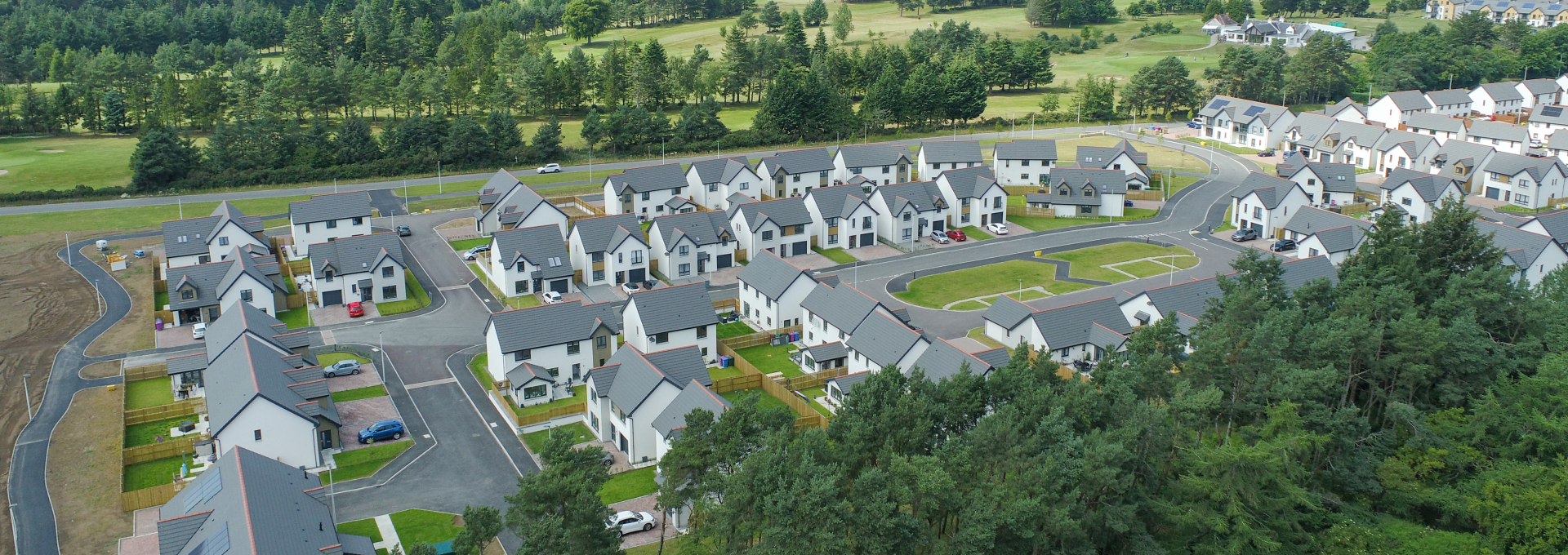
The agreement covers 39 furnished and serviced homes at the first site within a wider programme of 293 homes across six locations in the Highlands, Moray, and Aberdeenshire. Springfield expects a separate lease agreement for the first site to follow shortly, after which the homes will be occupied by workers involved in the infrastructure partner’s energy upgrade projects.
The identity of the partner is not stated in the 18 September announcement, although Springfield’s earlier reporting identifies SSEN Transmission as the counterparty to the original 293-home agreement. That earlier arrangement covered enabling works across selected sites, with the intention of progressing to build-and-lease contracts as individual packages became ready.
The first 39-home agreement marks that transition. Springfield will receive a significant payment when the completed homes are handed over, followed by monthly rental income for the duration of the lease. The company expects further build and lease agreements for other sites to follow once the contractual model established for the first package has been repeated.
The arrangement links housebuilding directly to the construction programme for energy infrastructure. Grid reinforcement and renewable-energy projects in northern Scotland are creating demand for large numbers of temporary and medium-term workers, often in communities where rental supply and hotel capacity are limited. Providing dedicated housing therefore becomes part of the logistics needed to mobilise and retain the construction workforce.
Springfield’s model differs from conventional contractor accommodation because the homes are intended as permanent residential assets. During the infrastructure programme they will operate as furnished and serviced accommodation, but Springfield has identified several options for their eventual use once the leases end, including private sale, transfer to private rented sector providers, or disposal to affordable housing organisations.
That creates a longer life for the investment than temporary camps or modular accommodation designed solely around a construction programme. Roads, utilities, foundations, drainage, and building fabric still have to satisfy normal residential standards, while the sites also need to be positioned where they can serve the infrastructure workforce without creating assets that are difficult to use once the immediate project demand falls away.
The first package also gives Springfield a defined customer and occupation route before the homes are completed. That changes part of the commercial risk normally associated with speculative private development, where sales rates and buyer demand determine how quickly phases are released. Here, the initial occupier requirement is linked to an infrastructure delivery programme, while the value of the homes after the lease period remains tied to the underlying housing market.
Programme coordination will be critical. Energy infrastructure projects can move as consents, procurement, land access, and construction sequencing change, while housing schemes have their own lead times for site opening, roads, services, timber kits, building envelopes, fit-out, and commissioning. The housing has to become available at the point the workforce demand materialises rather than simply when the developer’s residential programme would normally complete.
Springfield has already received initial funding that allowed work to progress on multiple sites while the main agreements were negotiated. Its results for the year to 31 May 2026 state that the group had 4,104 owned and contracted plots in the North of Scotland, giving it a substantial land position close to areas expected to see infrastructure-led employment growth.
The wider strategy is built around that geography. Springfield has shifted its development focus towards the Highlands, Moray, and Aberdeenshire, where power-network investment and other large projects are expected to increase both temporary workforce requirements and longer-term housing demand. The company also retains a wider strategic land bank in the region, creating options for further sites if infrastructure-linked agreements expand beyond the initial six.
For the energy partner, permanent housing can reduce reliance on short-term accommodation markets during periods of peak construction. It also creates the possibility of leaving additional homes in communities after the workforce requirement has passed, provided the locations, tenure arrangements, and final ownership structure suit local demand.
The construction implications are more immediate. A programme of 293 homes spread across six sites requires repeated procurement of infrastructure, timber frames, roofing, building services, kitchens, bathrooms, external works, and finishing packages, with delivery dates coordinated against separate workforce mobilisation plans. Standardisation can help, but site conditions, planning requirements, and local utility constraints will still vary.
The 39-home contract is consequently a relatively small package within the overall agreement, but it is the first to move from enabling works into a defined main works commitment. It gives Springfield and its infrastructure partner a live test of the commercial structure, handover process, servicing model, and lease mechanism before the remaining sites are committed.
If those later agreements follow as planned, the housing programme will run alongside one of the largest periods of electricity-network investment in northern Scotland for decades. The first site will show whether a permanent build-to-lease model can keep pace with that infrastructure programme while leaving homes with a viable use after the construction workforce moves on.