IN Brief:
- Flannery Plant Hire has deployed the UK's first Cat 320 battery-electric medium excavator on HS2 works at Euston.
- Caterpillar lists a 387kWh battery, 25.6–27.3t operating weight, and up to eight hours of operation depending on application.
- The deployment will test how charging, site power, operator familiarisation, and utilisation affect electric plant at infrastructure scale.
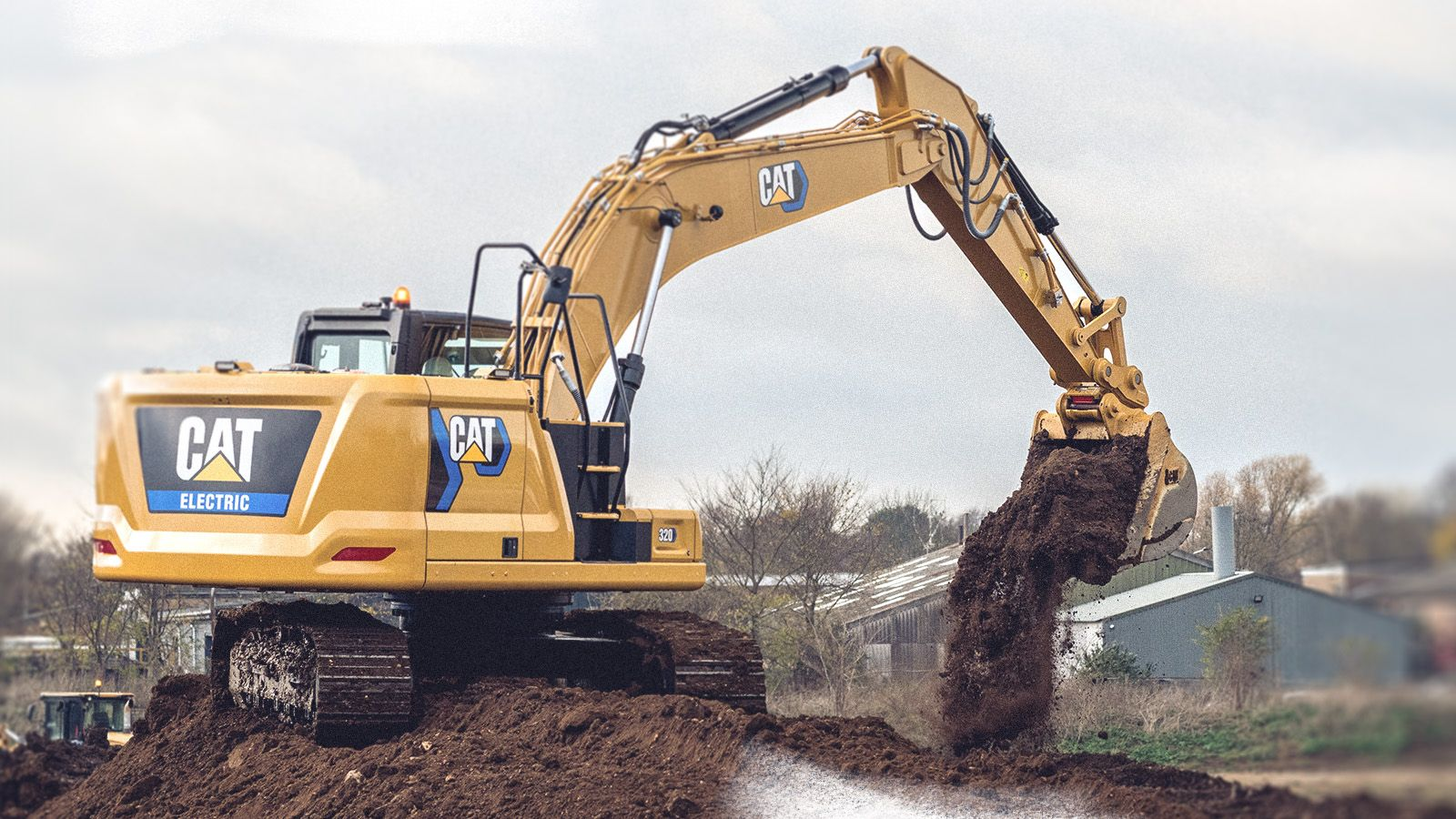
Flannery Plant Hire has put the UK’s first Cat 320 battery-electric medium excavator into operation on HS2 works at Euston with Skanska Costain Strabag.
The 320 was supplied by Finning UK & Ireland and provides a live-site test of battery-electric plant in a machine class normally associated with sustained excavation, loading, and infrastructure work. Flannery says the excavator is operating with a 387kWh battery and is being supported on site by a 40kW Kempower charging unit.
Caterpillar’s published specification for the electric 320 lists a 750V, 387kWh battery, an operating weight between 25.6 and 27.3 tonnes, and a 1.3m³ bucket. The manufacturer states that the machine can operate for up to eight hours on a single charge depending on use and application, or work continuously when tethered. Its published charging options include dedicated AC and DC fast-charging configurations.
Those figures move battery-electric construction plant beyond the compact equipment already seen on many urban projects. A medium excavator has to support higher hydraulic loads, longer duty cycles, and more variable work patterns, often while moving between tasks and work areas. Electrifying that class of machine therefore shifts part of site planning from fuel logistics towards the relationship between utilisation, charging access, electrical capacity, and the programme.
Finning and Caterpillar provided operator familiarisation during the handover, including electric-machinery safety, the user interface, and a full machine walkaround. The powertrain changes without removing the basic operating demands of a conventional excavator: operators still need predictable hydraulic response, familiar control behaviour, and sufficient energy availability to complete productive shifts without charging becoming the dominant constraint.
Rory Gregory, key account manager at Finning UK & Ireland, said: “Operators from Flannery have reported that the Cat 320 delivers like-for-like machine operation and hydraulic performance when compared to diesel machines.” The Euston deployment now gives the project team an opportunity to compare that initial feedback with actual utilisation over repeated shifts.
Large infrastructure sites combine heavy plant activity with constrained logistics, temporary electrical systems, changing workfaces, and coordination between multiple contractors. Electric excavators remove tailpipe emissions at the point of use and reduce engine noise and vibration, but they also add a dependency on power availability, charger positioning, and planned charging time.
Once several electric machines share a site, charging becomes an operational resource rather than an isolated equipment issue. Excavators, telehandlers, access equipment, and smaller plant can create overlapping electrical demand, requiring sufficient connection capacity and charging points to keep machines productive without forcing unplanned downtime.
The Cat 320 also shows how manufacturers are trying to retain familiar machine architecture while changing the energy source. Caterpillar first showed battery-electric construction prototypes including the 320 at Bauma in 2022 and has continued developing the platform alongside smaller electric machines and charging options. The electric model is intended to perform the same core excavation tasks as the diesel machine rather than being confined to light-duty work.
Hire-fleet deployment adds another set of constraints because utilisation determines whether new equipment can move beyond a showcase project. Contractors hiring plant expect known performance, attachment compatibility, operator support, and service arrangements. Electric models add questions around charger provision, transport between sites, battery state at handover, and whether the receiving project has enough electrical infrastructure.
Flannery’s Euston deployment puts those questions into a working construction environment rather than an isolated demonstration. The machine is operating alongside conventional site activity, allowing the hire company, dealer, and project team to track the interaction between charging, operator behaviour, shift planning, and productivity.
The next measure will be repeatability across different sites and duty cycles. Battery-electric plant has to deliver predictable performance without creating an impractical charging burden as workloads change. The Euston 320 provides a first UK reference at medium-excavator scale, and its longer-term value will come from the operating data gathered as much as from the absence of a diesel engine.
Caterpillar lists two higher-power charging arrangements for the 320: a 76kVA dedicated AC connector and a 125kVA option using AC tethering and a DC fast charger. Those configurations underline the site-infrastructure requirement behind the machine itself. A medium excavator may be electrically capable of a full shift, but maintaining that duty cycle depends on whether the project can provide the connection capacity and charging window needed between periods of heavy use.