IN Brief:
- CITB expects construction to need 206,000 recruits between 2026 and 2030, while near-term output remains weak.
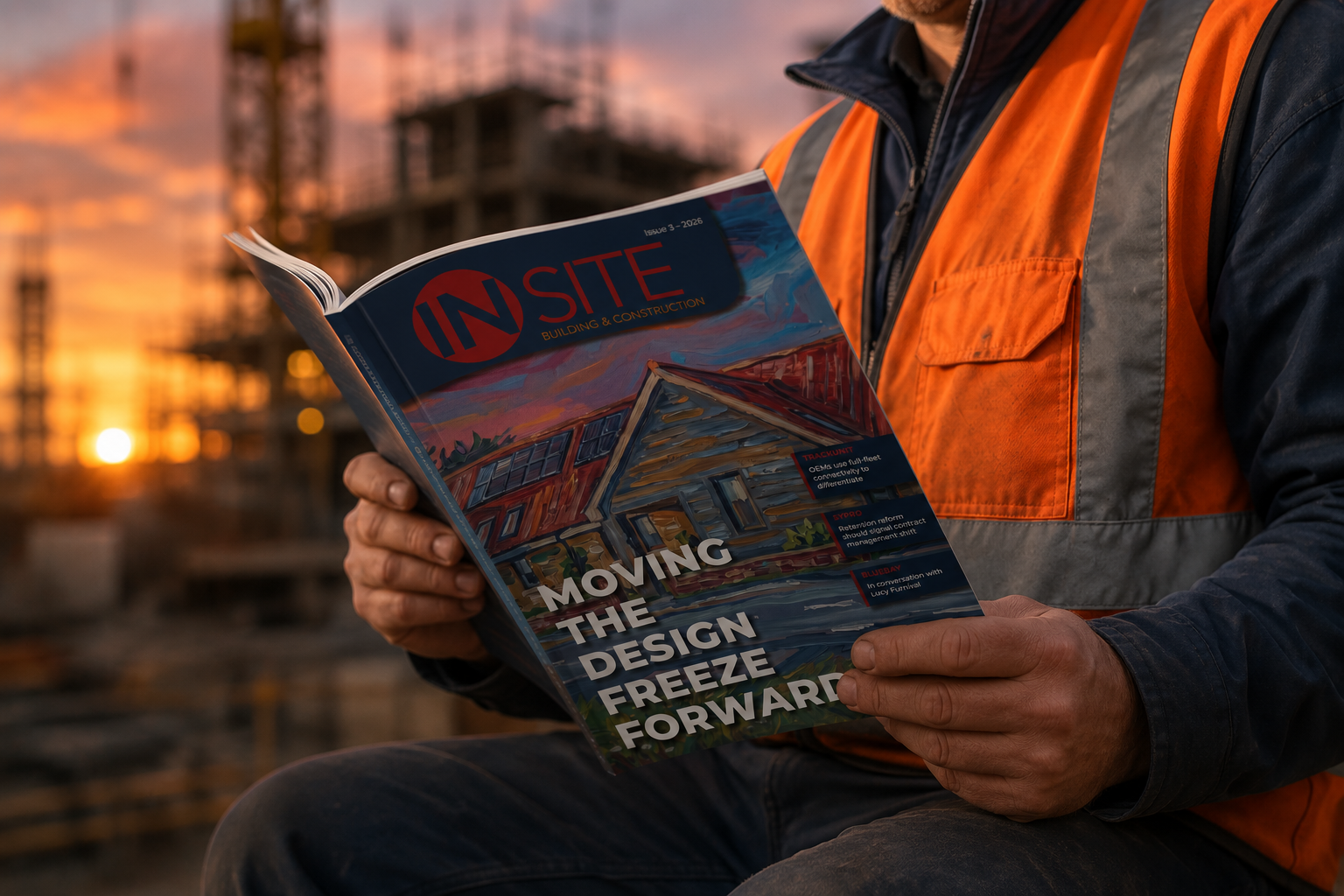
- Issue 3 covers design freezes, contract control, connected equipment, temporary power, off-site construction, and materials.
- The features focus on risks that can be dealt with before work reaches site.
Construction projects often lose time before work starts. A late design freeze leaves interfaces unresolved. Retentions can hide weak contract management. Equipment and materials arrive on site with risks that should have been dealt with earlier.
That is the main concern in IN Site Issue 3. The cover feature from Travis Perkins argues that housebuilding needs earlier design decisions, with specialist information agreed before changes hit cost and programme. Sypro looks at the proposed ban on retentions and makes the case for tighter contract control rather than another financial workaround.
The same problem appears in plant, power, off-site construction, and materials. Trackunit shows how full-fleet connectivity can help OEMs improve service and forecasting. Power Prove explains why generators must be tested under load, not simply started. HadleyFRAME sets out where pre-panelised steel can save time, provided procurement happens early enough.
The material features are just as practical. Stora Enso reports on moisture management for mass timber at Alkerden Academy, while Outokumpu reviews North Sea data on duplex stainless steel.
CITB expects construction to need 206,000 recruits between 2026 and 2030. With recruitment already difficult, the industry has less room to lose time to late decisions. Read Issue 3 now.