IN Brief:
- Project SNUG will trial retrofit-linked energy flexibility in up to 300 social homes.
- Homes in Norwich and Hammersmith & Fulham will receive and monitor efficiency and clean-energy measures.
- Modelling, operational data, and a landlord toolkit will support a potential national flexibility mechanism.
UK Power Networks is leading a trial examining whether social-housing retrofit programmes can provide measurable flexibility to the electricity system alongside warmer and more efficient homes.
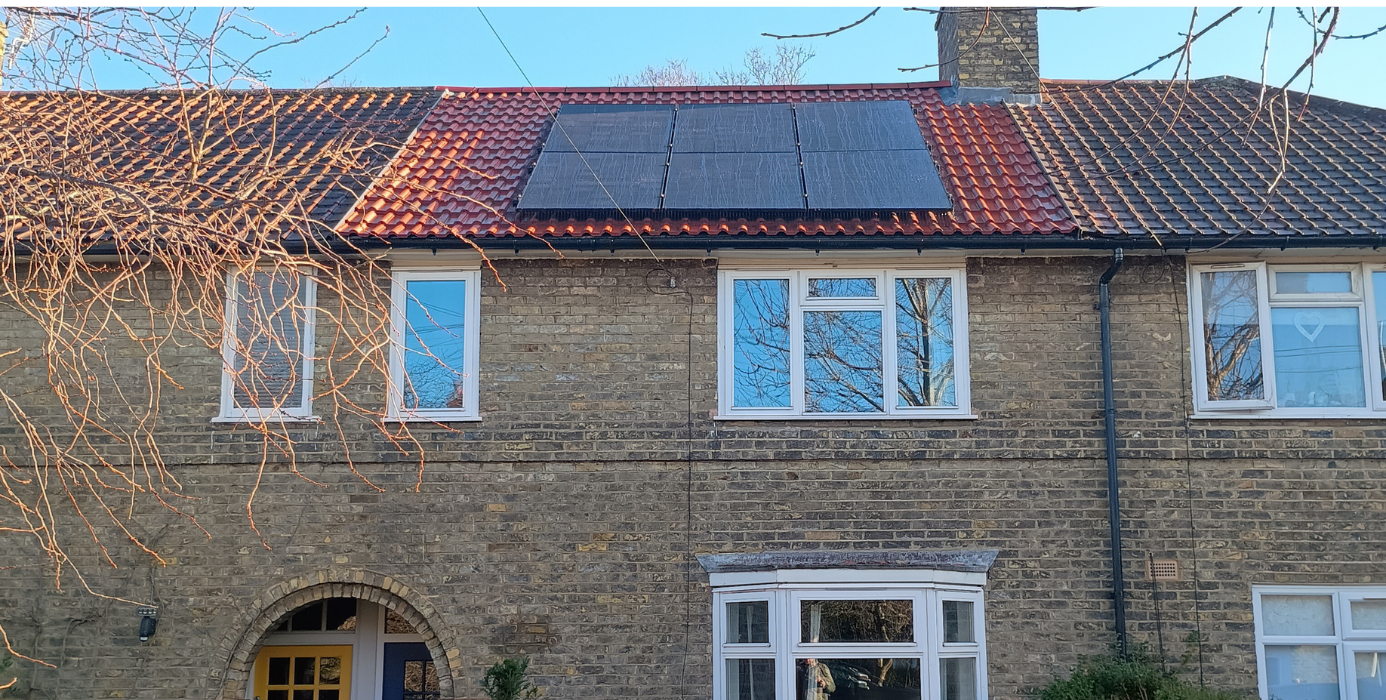
Project SNUG, or Smarter Network UpGrades, will work across up to 300 properties in Norwich and the London Borough of Hammersmith & Fulham. Energy-efficiency measures and clean-energy technologies will be installed and monitored to establish how they affect consumption and demand during peak periods.
The project brings together Northern Powergrid, Sia Partners, the Centre for Sustainable Energy, and the University of Strathclyde’s Power Networks Demonstration Centre. Norwich City Council, Hammersmith & Fulham Council, E.ON Next, Utilita, and other delivery partners are also participating.
SNUG has progressed into the Beta phase of the Strategic Innovation Fund, supported through Ofgem and Innovate UK. The programme moves from modelling and concept development into larger-scale testing across occupied homes.
Retrofit measures can include insulation, solar photovoltaic systems, low-carbon heating, ventilation, controls, and related improvements. Their primary purpose is to reduce energy use, bills, carbon emissions, and discomfort within the home.
The project will examine whether changes to the building and its technologies can also produce a reliable reduction or shift in peak electricity demand. Where that flexibility can be predicted, measured, and contracted, social landlords may be able to provide a service to distribution networks alongside their normal housing investment.
Measured performance from the homes will be compared with existing models, allowing the project team to assess whether different retrofit measures produce sufficiently consistent demand changes for networks and landlords to plan around them.
The wider social-housing stock will also be modelled to estimate the potential flexibility available from future programmes. Network planners could then assess the likely effect of housing investment before every property has generated detailed smart-meter evidence.
Luca Grella, head of innovation at UK Power Networks, said: “Project SNUG is about making the most of improvements already happening in people’s homes. By helping households transition to greener and more energy efficient homes, we can improve everyday comfort while also learning how these changes impact the network.
“The insights we’re gathering are crucial, they will help us understand how upgrades in social housing can reduce demand at peak times and support a smarter, more efficient energy system that works for everyone.”
Retrofit delivery is already scaling through the Warm Homes: Social Housing Fund and other programmes. Current Wave 3 schemes across the Midlands include external-wall insulation, solar PV, ventilation, windows, doors, and loft improvements across thousands of occupied properties.
Those programmes are usually assessed through energy performance, carbon reduction, bill savings, resident comfort, compliance, and installation quality. SNUG adds the timing of energy use to that assessment rather than measuring annual consumption alone.
As buildings electrify, timing becomes increasingly important. Heat pumps, electric hot-water systems, batteries, solar generation, and vehicle charging can increase or reduce local demand depending on control settings, weather, occupancy, and tariff signals.
A well-insulated home may retain heat for longer, allowing a heating system to reduce output during a network peak without causing an immediate fall in comfort. Solar and storage can alter grid imports, while smart controls can shift selected loads into periods of lower demand.
Technical potential does not automatically produce a viable service. Social landlords need clear contracts, resident consent, data arrangements, operational responsibility, payment structures, and a process for handling performance shortfalls.
Residents must retain control over comfort and essential energy use. Flexibility cannot depend on households, particularly those exposed to fuel poverty, tolerating cold homes or confusing equipment to support the network.
Jim Cunningham, strategic lead for net zero housing at Hammersmith & Fulham Council, said: “We are excited to participate in SNUG, which will help our residents fully benefit from our energy efficient upgrades to their homes.
“This pilot will give us valuable insights about the impact of our retrofit programme and enable all social housing providers to participate in flexibility markets.”
SNUG will develop an online toolkit to help landlords understand and engage with the proposed flexibility mechanism. Workshops and interviews will examine awareness, organisational barriers, customer journeys, support requirements, and the information needed for participation.
The commercial model will need to establish how value is divided between residents, landlords, technology providers, aggregators, and network operators. Payments must be sufficiently predictable to support administration, equipment, data management, resident engagement, and ongoing technical support.
Distribution networks are already comparing conventional reinforcement with flexible alternatives. Work on frameworks for choosing between network construction and flexibility reflects a broader shift towards treating controllable demand as part of infrastructure planning.
Retrofit flexibility will only defer physical upgrades where it is dependable at the required location and time. A constraint on one substation cannot necessarily be addressed by flexible homes elsewhere, while performance may vary between winter cold spells, mild weather, occupancy patterns, and technology types.
The construction and housing supply chain will influence the results. Poorly designed insulation, ventilation, controls, or heating systems can undermine comfort and predicted energy performance, making it necessary to distinguish the flexibility model from defects in survey, installation, commissioning, or resident support.
PAS 2035 coordination, property assessment, ventilation design, moisture management, electrical capacity, fire safety, metering, and handover remain central to the work. Flexibility introduces an additional operational outcome without reducing the need for technically sound retrofit.
Data quality will also affect confidence in the findings. Baseline consumption, weather adjustment, occupancy, building type, heating system, and resident behaviour all influence demand, so the modelling must separate genuine flexibility from normal variation.
The Norwich and Hammersmith & Fulham trials will test whether building upgrades can become a dependable part of network management without compromising their primary housing purpose. The evidence will determine whether a model developed across 300 homes can progress towards wider use across Britain’s social-housing stock.