IN Brief:
- Kok Lexmond has taken the first Dutch delivery of a Develon DX360LC-9.
- Two further machines will join its 150–200-unit fleet during the coming months.
- Electronic hydraulics, safety assistance, and attachment performance shaped the fleet decision.
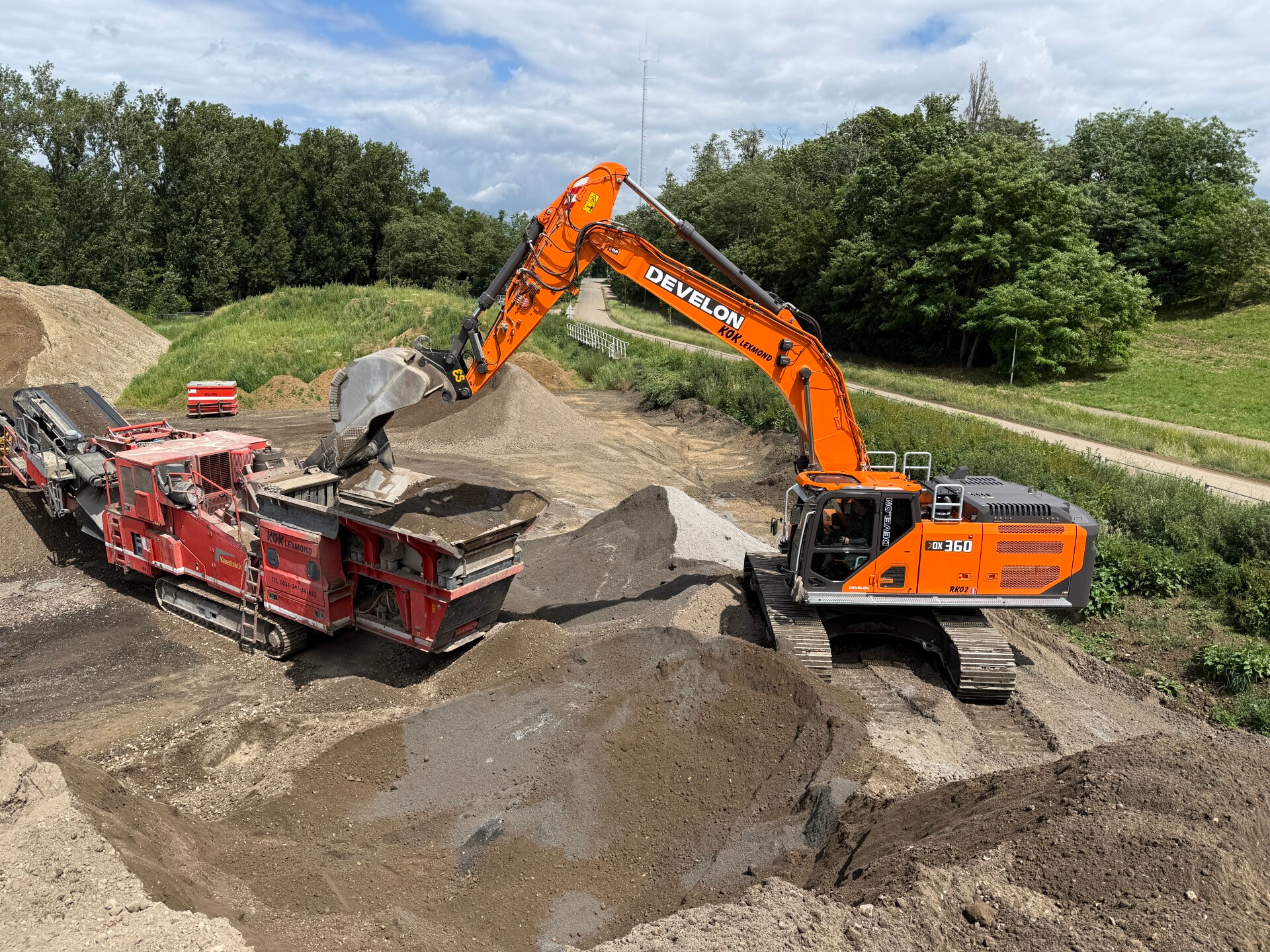
Kok Lexmond has placed the first Develon DX360LC-9 smart crawler excavator operating in the Netherlands into service.
The delivery forms part of an agreement covering three machines, with a further two DX360LC-9 units scheduled to arrive during the coming months.
Kok Lexmond is a family-owned civil-engineering and recycling business with more than 45 years of experience. It operates from four Dutch locations and maintains a fleet of approximately 150–200 machines.
Its activities span earthworks, roads, waterways, infrastructure, demolition support, and onsite recycling. The contractor also operates ten mobile crushing plants, each processing an average of approximately 2,000 tonnes of material per day.
Processed material is converted into certified secondary construction products for use in projects across the Netherlands and Belgium. Excavator performance with breakers, crushers, and other demanding attachments therefore formed an important part of the fleet selection.
The DX360LC-9 is a 37-tonne crawler excavator within Develon’s Series 9 range. It uses a fully electronic hydraulic system intended to coordinate engine output, pump demand, control response, and attachment operation more precisely than a conventionally governed arrangement.
Power is supplied by a Develon DX08V engine rated at 227kW at 1,800rpm under the cited test standard. Maximum torque is 1,230kgf·m at 1,300rpm.
With its standard boom and dipper configuration, the machine has a maximum digging depth of 7,512mm and reach of 11,113mm. Those figures place it within the class used for substantial earthmoving, infrastructure, quarrying, and recycling work.
ELM Bouwmachines, Develon’s authorised dealer for the south-western Netherlands, arranged a demonstration and supported the selection. Dealer service, technical support, and a five-year or 7,500-hour manufacturer warranty also influenced the decision.
Kok Lexmond already operates 17 Develon and Doosan machines. Adding three examples of the latest platform allows the contractor to compare fuel use, productivity, attachment response, reliability, and maintenance against established equipment performing similar work.
The Series 9 platform incorporates a growing range of digital and safety systems. Camera and radar functions can improve visibility around the machine, while operator-assistance features are designed to manage working limits and identify people or objects near the excavator.
The model received its UK introduction alongside the larger DX400HD-9, with Develon demonstrating the Series 9 hydraulic and safety systems at Hillhead. Kok Lexmond’s deployment moves the platform into daily recycling work rather than a controlled demonstration environment.
Recycling places heavy demands on excavators. Attachments create repeated shock loads, dust enters cooling and filtration systems, material can be abrasive, and machines may spend long periods handling dense, irregular feedstock around mobile crushers.
Productivity depends on more than nominal engine output. Hydraulic response, attachment matching, cooling, undercarriage durability, operator visibility, cab ergonomics, service access, and dealer response all influence output across a working week.
Electronic hydraulics give manufacturers more control over machine response, but they also increase reliance on sensors, software, diagnostics, and technician capability. Fleet owners need confidence that faults can be identified quickly and that updates or replacement components will remain available throughout the machine’s service life.
Safety assistance creates a similar balance. Radar, cameras, object detection, movement limits, and emergency intervention can reduce exposure around a large excavator, although the systems still depend on clean sensors, correct setup, trained operators, segregation, and effective site rules.
The machine’s working environment will test those systems continuously. Dust, mud, rain, vibration, attachment changes, and crowded recycling yards can all affect visibility and sensor performance, requiring inspection and cleaning to form part of normal operating discipline.
Kok Lexmond’s crushing activity also reflects the connection between plant investment and circular construction. Producing certified secondary materials onsite can reduce disposal, virgin aggregate demand, and transport movements, provided processing, quality control, and specification support a dependable market for the recovered output.
Mobile recycling shifts equipment between changing sites, making transport dimensions, setup time, service support, and attachment compatibility commercially important. A machine that performs strongly at one permanent yard may be less effective if mobilisation or reconfiguration becomes difficult across temporary operations.
The three-unit order allows the company to standardise part of its 37-tonne fleet without relying on the performance of a single trial machine. Common parts, training, diagnostics, and attachments should reduce support complexity once the additional units arrive.
Fuel use and idle time will provide important measures during operation. Electronic control systems can improve efficiency when machine settings match the task, although aggressive operation, unsuitable attachment setup, or poor maintenance can offset those gains.
Dealer support will also become visible once hours accumulate. Rapid diagnosis, parts availability, planned servicing, software knowledge, and attachment expertise can affect lifetime cost more than a small difference in purchase price.
The first DX360LC-9 will now generate operational data across excavation and recycling work. Fuel consumption, uptime, operator response, attachment performance, wear, and dealer support will provide a clearer measure of the Series 9 platform than launch specifications alone.