IN Brief:
- Develon will show its Series 9 smart crawler excavators at Hillhead 2026 in Buxton.
- The DX360LC-9 and DX400HD-9 will bring electronic hydraulics, AI-assisted safety, and E-Stop technology to the UK market.
- The launch reflects the wider shift towards digitally assisted earthmoving and safety systems on construction plant.
Develon will give its new Series 9 smart crawler excavators their UK debut at Hillhead 2026, with the DX360LC-9 and DX400HD-9 set to headline the manufacturer’s quarrying and construction equipment display.
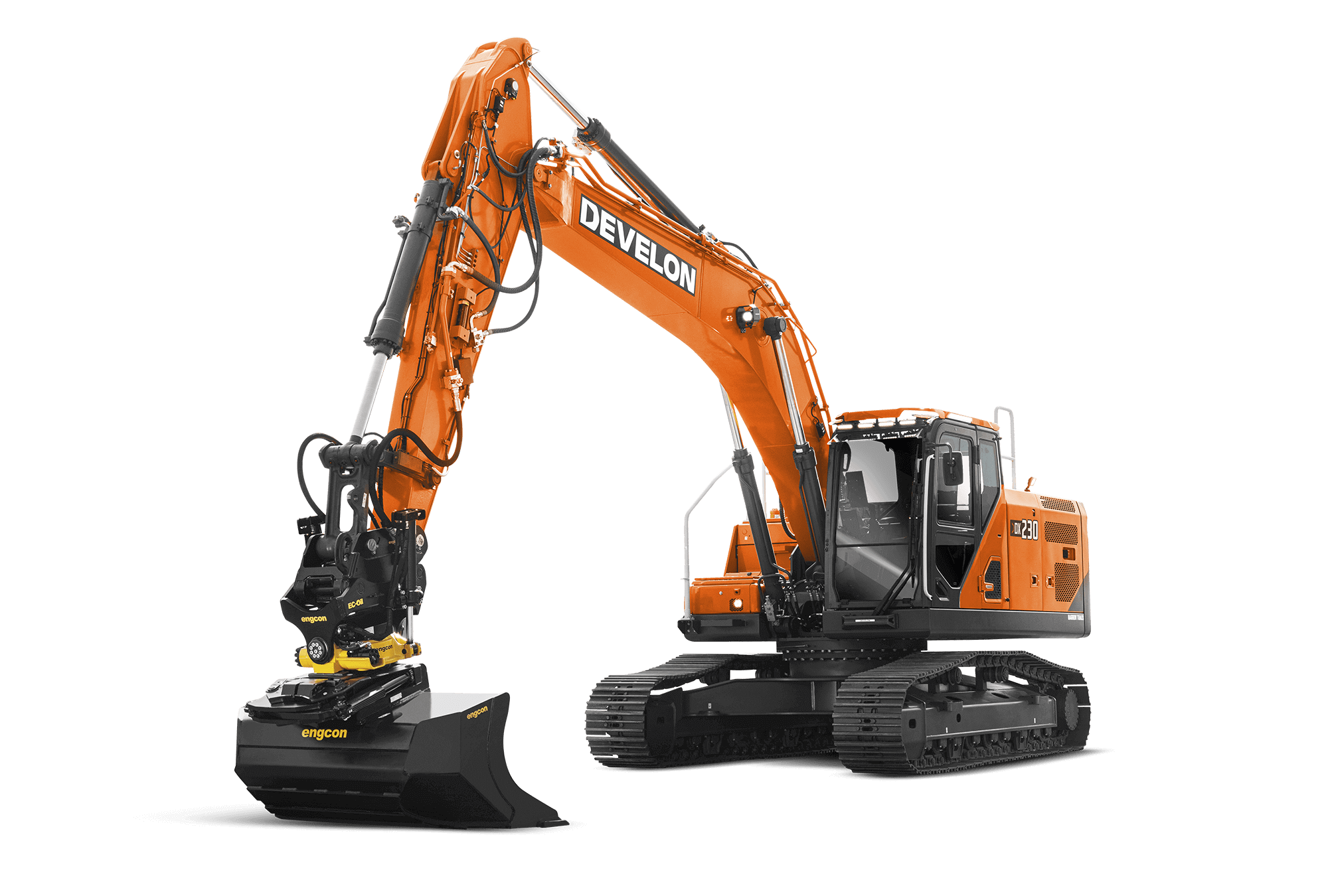
The DX360LC-9 is a 37-tonne crawler excavator, while the DX400HD-9 is a 42-tonne model designed for heavier-duty applications. Both machines sit within Develon’s new Series 9 platform, which combines full electronic hydraulic technology with integrated AI-assisted functions.
During the show, the DX360LC-9 will operate in the demonstration area, where Develon is expected to show its E-Stop site safety technology at the quarry face. The DX400HD-9 will be displayed on the company’s stand alongside the 23-tonne DX230LC-9 and 26-tonne DX260LC-9, extending the Series 9 range available for UK buyers to inspect.
The new machines use Develon’s DX08V engine. On the DX400HD-9, the engine provides 254kW, or 341hp, at 1,800rpm, with a maximum digging depth of 7,512mm and a maximum digging reach of 11,113mm in standard front configuration. The DX360LC-9 has a 37-tonne operating weight and is positioned around lifting performance, stability, productivity, and safety technology.
Safety systems form a central part of the launch. Develon’s Smart AVM and Human Detection System use cameras, radar sensors, and AI-powered object detection to improve visibility around the machine. The E-Stop system monitors a 330-degree field of view and detects people and objects up to six metres away. When a person is detected, the system issues visual and audible alerts, slows the machine as the distance closes, and can bring it to a full stop at closer range.
The Series 9 machines also include virtual wall functionality, allowing operators to restrict machine movement by height, depth, reach, and swing angle. That function can support work in constrained locations where overhead lines, buildings, underground services, retaining structures, live traffic, or other assets create exclusion zones around the working envelope.
Plant manufacturers are moving steadily towards digitally assisted operation, with sensor systems, software, automation, and machine-control functions becoming more prominent across new equipment launches. HD Hyundai’s deployment of an autonomous excavator on a live Swiss construction site showed how AI-enabled earthmoving is beginning to move from controlled demonstrations into working civil engineering environments. Develon’s Series 9 is not being positioned as full autonomy, but it belongs to the same wider transition.
The appeal for contractors goes beyond productivity. Safety systems that identify people in the working zone, operator displays that consolidate information, and boundary tools that restrict machine movement can reduce the risk of high-consequence incidents on busy sites. Earthmoving operations often combine blind spots, reversing plant, haul routes, temporary access, pedestrians, banksmen, changing ground conditions, and programme pressure. Assistive technology adds another layer of control, provided it is supported by competent planning, exclusion zones, training, and supervision.
Fleet managers will also examine fuel efficiency, uptime, operator acceptance, servicing requirements, residual values, and dealer support. More intelligent machines bring more software and sensor systems into the maintenance equation. Those systems can improve performance and safety, but contractors need confidence that diagnostics, parts, training, and technical support are available when machines are under production pressure.
Hillhead remains a useful proving ground because quarry demonstrations put plant into realistic material-handling and excavation conditions. Develon’s Series 9 debut gives the company a platform to show whether its technology package delivers an operational advantage rather than a specification uplift. Across the wider market, hydraulic power and digital control are increasingly being designed as one system.