IN Brief:
- Willmott Dixon has completed £15.6m of electrification works at Hyde Road and Oldham bus depots.
- The projects delivered 138 charging points, a private high-voltage substation and low-voltage distribution infrastructure.
- Both sites remained operational during the 35-week construction programme, which finished in September 2026.
Willmott Dixon has completed £15.6 million of electrification works at two operational bus depots in Greater Manchester, delivering 138 electric vehicle chargers and the associated electrical infrastructure needed to accommodate Transport for Greater Manchester’s expanding zero-emission fleet.
The projects at Hyde Road in Manchester and Oldham town centre were procured through the SCAPE Construction Framework and completed in September 2026, with the contractor reporting their delivery on 20 October. The work included a new private high-voltage substation, low-voltage distribution systems and associated civil engineering to connect the charging infrastructure to the electrical network.
Both facilities continued operating throughout construction, requiring electrical installations, excavations and the movement of construction equipment to be coordinated with existing bus services. Following a 29-week preconstruction phase, the projects were delivered through a 35-week construction programme running from January to September, allowing the operators to maintain their existing transport commitments while the infrastructure was installed.
The latest schemes form part of a £40 million programme undertaken by Willmott Dixon for Transport for Greater Manchester (TfGM) since 2023. Seven depot electrification schemes have now been delivered, comprising two phases at Bolton, two at Hyde Road and individual projects at Ashton-under-Lyne, Middleton and Oldham. The repeated appointments have allowed construction and electrical engineering experience to be transferred between facilities with different layouts and operational requirements.
At an operating bus depot, installing charging equipment involves considerably more than allocating parking spaces beside electrical outlets. Each charger needs a suitable supply, protection and connection arrangement, while the collective electrical demand must be accommodated by the incoming network connection and the depot’s distribution infrastructure.
The private high-voltage substation installed as part of the programme provides an interface between higher-voltage electricity infrastructure and the distribution systems serving the operational site. Transformers and associated switchgear allow electrical power to be supplied at appropriate voltages, while low-voltage distribution equipment carries it onwards to charging installations and other connected systems.
Protection and isolation arrangements must be coordinated across these components to address electrical faults without unnecessarily interrupting unrelated equipment. Cable routing also affects construction logistics, since buried services, vehicle movements and existing depot infrastructure can constrain the location of trenches, distribution equipment and charging points.
Neither the rated output of each charging point nor the total electrical capacity installed across the two depots has been disclosed. The number of chargers therefore establishes the scale of the installation without determining its maximum simultaneous electrical demand. That figure would depend on the equipment ratings, network connection and any charging management arrangements adopted by the operator.
The relationship between vehicle schedules and charging capacity is especially important for a fleet operating fixed routes. A bus returning to its depot must recover sufficient energy before its next duty, with the available charging period influenced by the route timetable, vehicle battery capacity and energy consumed during the previous service.
Where several vehicles return within a relatively short period, their charging requirements can overlap. Managing that demand may involve scheduling charging sessions or allocating available electrical capacity between vehicles, depending on the installed equipment. TfGM has not published the detailed charging control arrangements for the two completed depots, so their operational strategy cannot be specified from the project announcement.
At Oldham, the upgraded facility has already accommodated the Bee Network’s 500th zero-emission bus. The depot is operated by Stagecoach, and the expansion of its charging facilities forms part of the infrastructure investment supporting the transition from diesel vehicles to electric operation across Greater Manchester.
The construction arrangements were shaped by the need to maintain services from both sites. Heavy vehicle circulation, parking areas, maintenance access and staff movements all had to be considered when planning work areas and temporary restrictions. Electrical commissioning also required coordination with the depot operators, particularly where connections and testing affected infrastructure used during normal operations.
Willmott Dixon identifies early engagement and continuity of the delivery team as important features of the wider programme. Experience from earlier sites could inform the treatment of underground services, electrical interfaces and working arrangements at subsequent depots, reducing the need to develop each installation approach without reference to previous projects.
The contractor’s existing relationship with TfGM also includes the £140 million Stockport Interchange development. Although the interchange and bus depot projects have different engineering requirements, both involve infrastructure serving the region’s integrated Bee Network, with the depot programme providing facilities that allow electric buses to enter and remain in operation.
Greater Manchester intends to operate a fully zero-emission bus fleet by 2030. TfGM estimates that completing the wider transition could reduce annual carbon dioxide emissions by more than 76,000 tonnes and nitrogen oxide emissions by approximately 280 tonnes. These are projected regional fleet benefits, not emissions reductions measured specifically from the Hyde Road and Oldham construction schemes.
With the infrastructure installed, the focus moves to maintaining reliable charging operations and integrating additional vehicles into the existing depot schedules. The completed works provide another 138 charging points within a programme covering seven schemes, while further fleet electrification will depend on the availability of suitable vehicles, operational charging capacity and continuing investment in supporting infrastructure.
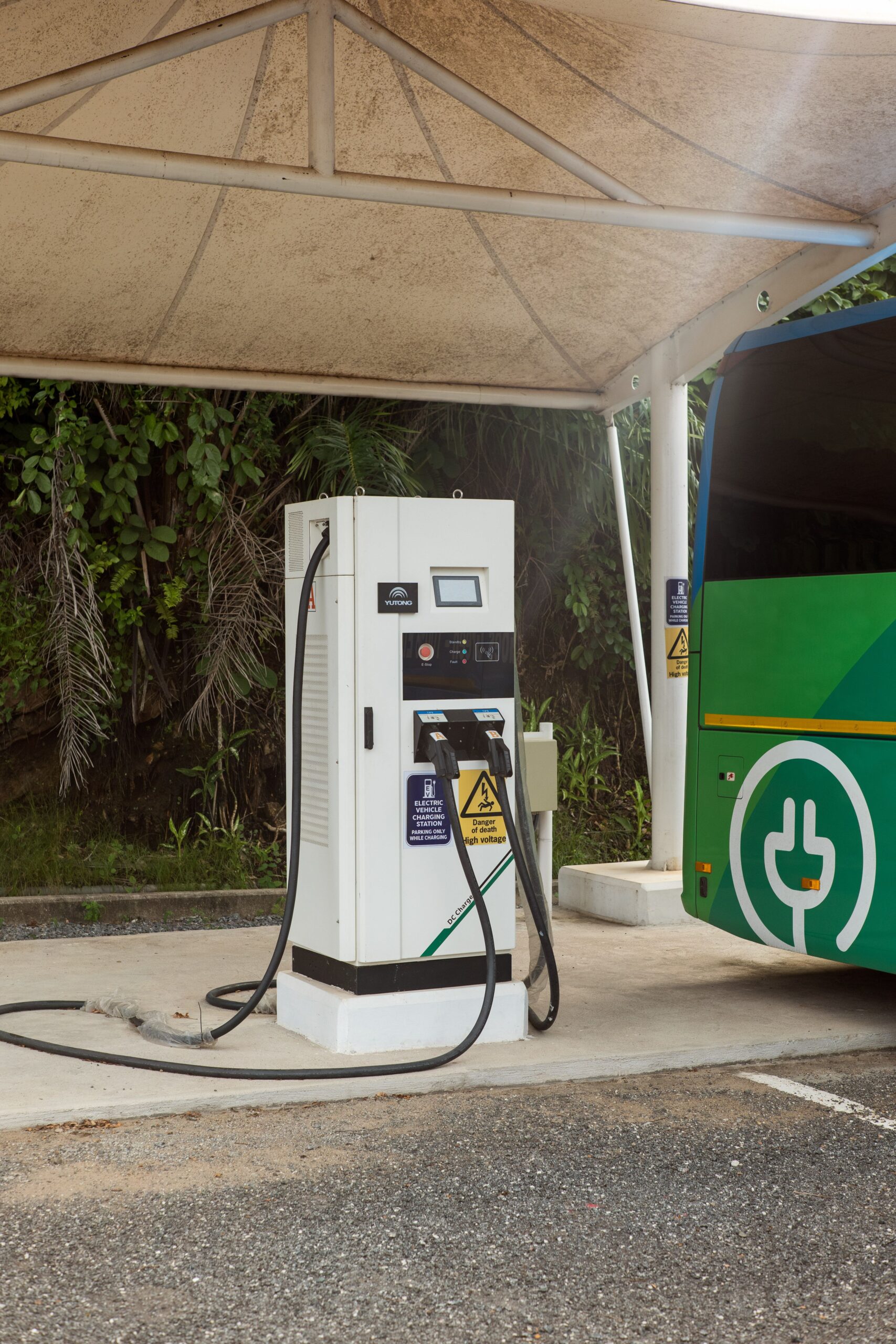
Featured photograph: illustrative electric bus charging equipment, by Andy Coffie / Pexels (Pexels Licence). It does not show the Hyde Road or Oldham depots.