IN Brief:
- Nottingham City Council approved more than £11.6m for Council House repairs on 20 October.
- The works will address roofing, historic stonework and internal and external security arrangements.
- The investment forms part of a £19m programme covering priority maintenance across the council's operational buildings over three years.
Nottingham City Council has approved more than £11.6 million for repairs to the historic Council House, authorising investment in roofing, stonemasonry and security works as part of a wider programme intended to address deterioration across its operational property estate.
The decision was taken by the council’s Executive Board on 20 October and forms part of a £19 million maintenance programme scheduled over three years. The investment will cover priority works at several council buildings, with individual activities determined according to urgency, property condition and the risks associated with leaving defects unresolved.
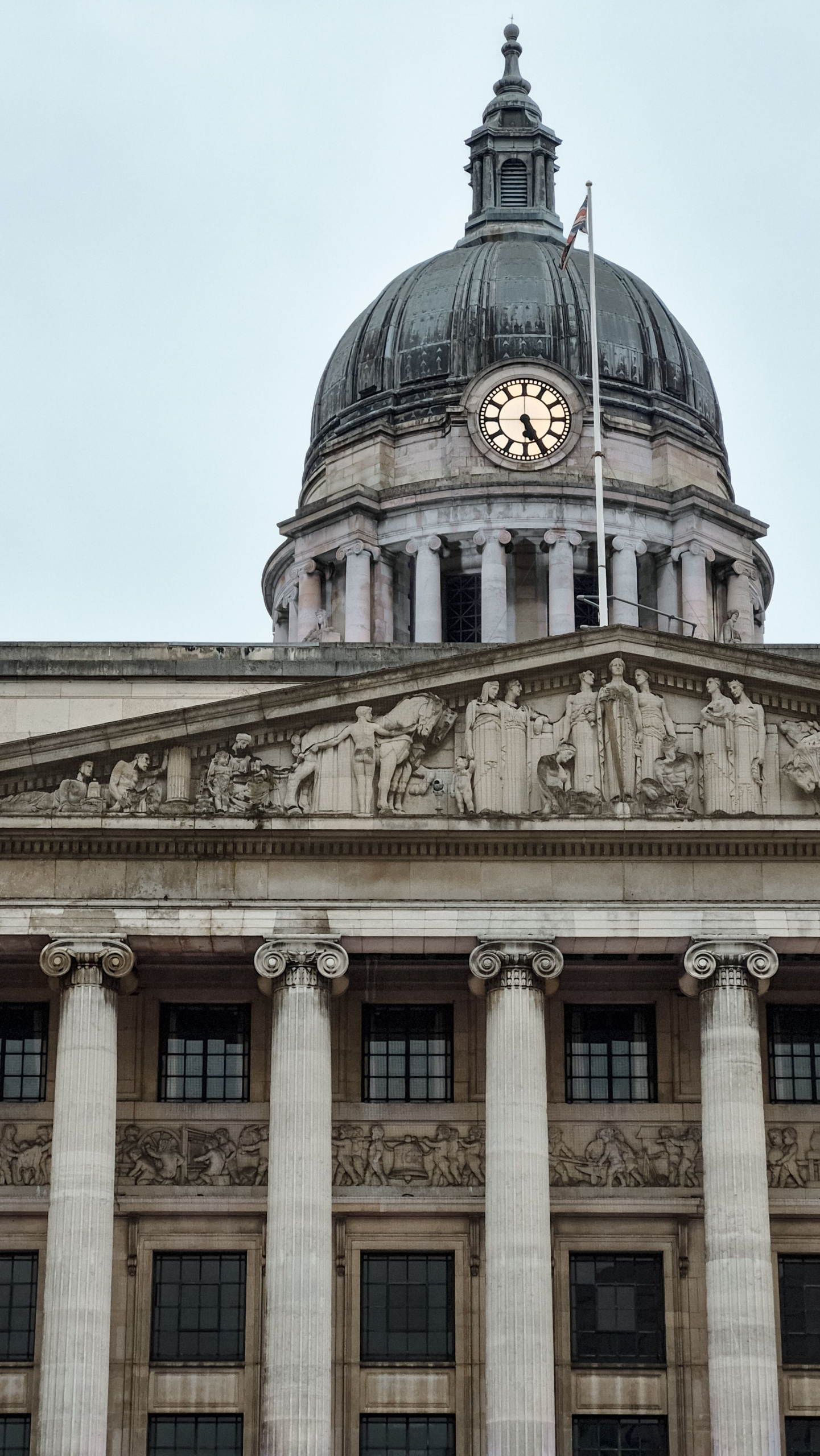
Opened in 1929, the Council House is a Grade II* listed civic building overlooking Old Market Square. Its architectural significance and continued use introduce requirements that differ from those of an unoccupied property or a conventional office refurbishment, particularly where repairs affect original stonework, roofing systems and protected interior features.
The building was designed by T. Cecil Howitt and incorporates a steel structural frame, Portland stone cladding and dressings, and lead roofs. Its external composition includes a prominent dome, classical stone detailing and extensive architectural ornament, while important interior spaces retain original decorative finishes and fittings.
These materials and features help define the scope of conservation work. Although the council has confirmed roofing and stonemasonry repairs, it has not published a detailed schedule identifying each defective component, the extent of replacement required or the methods proposed for individual elevations and roof areas.
Roof deterioration can affect both the external envelope and the building fabric beneath it. Defects at joints, flashings, drainage outlets or interfaces with adjoining masonry may allow water to penetrate concealed spaces, potentially affecting structural components and internal finishes before the source of the problem becomes visible.
The Council House’s lead roofing requires particular attention to material compatibility and movement. Lead expands and contracts with temperature changes, so joints, fixings and adjoining details must accommodate movement without creating openings through which water can pass. Repair decisions will depend on the condition of the existing covering and its underlying supports rather than simply replacing visible damaged sections.
Where water has penetrated an older building, identifying its route can be difficult because moisture may travel through several connected materials before appearing internally. Surveys must therefore distinguish between the apparent location of damage and the defect responsible for it, reducing the risk of undertaking repairs that leave the underlying problem unresolved.
The planned masonry programme involves another set of conservation considerations. Portland stone surfaces, joints and decorative elements are exposed to weathering and changing environmental conditions, while the condition of fixings and interfaces with the structural frame can influence the extent of intervention required.
Different repair approaches may be appropriate according to the condition of an individual stone. Some sections may need local conservation, while more extensively damaged material could require replacement or specialist structural treatment. Replacement stone and mortars must be compatible with the retained fabric, particularly where differences in strength, permeability or thermal movement could cause additional deterioration.
Access arrangements will also influence the works. High-level masonry, roof edges and the dome present different working conditions from lower elevations, and any scaffolding or temporary support must be designed around the geometry and load-bearing capacity of the existing structure. The council has not yet published the temporary works strategy or the proposed sequence of access installations.
The listed status adds statutory considerations to the technical design. Alterations affecting the building’s special architectural or historic interest may require listed building consent, with the extent of necessary permissions dependent on the proposed intervention. Contractors will also need to protect retained decorative fabric and maintain records of the repairs carried out.
Internal and external security works are included within the approved investment, although the council has not identified the particular systems or modifications planned. Integrating security measures into a protected building can involve constraints around cable routes, equipment fixing locations and alterations to existing openings. Those considerations will need to be resolved through the detailed design and consent process.
The Council House investment sits alongside maintenance at other properties within the council’s operational estate. The wider programme includes roof works at Loxley House and investment at St Ann’s Valley Centre, Byron House and the Royal Concert Hall. Different building types and operational requirements will influence the priority and delivery approach adopted at each location.
By combining the works into a three-year programme, the council intends to reduce the likelihood of defects becoming more extensive and expensive to repair. A planned approach also allows specialist surveys, procurement and construction access to be coordinated across the estate, although the authority has not identified contractor appointments or start dates for every project.
The maintenance programme will be delivered alongside continuing use of council buildings. At the Council House, maintaining civic functions and managing access around repair areas may affect the sequence of works, particularly where investigations and interventions take place close to occupied interiors or public entrances.
A separate £3.5 million proposal for Old Market Square is also being developed, including new planting, trees and a water feature. The public realm scheme is related geographically to the Council House but is not part of the approved £11.6 million building repair allocation. Its proposed works have their own scope and approval requirements.
Executive Member for Housing and Planning Councillor Jay Hayes linked the repairs to protecting council assets and avoiding more substantial future expenditure. With the capital investment approved, the next stages will involve turning the identified maintenance requirements into surveys, specifications and procurement packages, followed by the physical conservation and repair works.
No completion date or principal contractor has been confirmed for the Council House programme. The immediate construction milestones will be the finalisation of its detailed repair scope and commencement of the approved interventions, with the building’s protected fabric and continued civic use shaping the methods adopted.