IN Brief:
- Kirklees Council has awarded Willmott Dixon a £14.9m construction contract within the £16.5m market refurbishment.
- The listed 1887 market hall will receive structural conservation work and modern accessibility and hospitality facilities.
- A temporary market opened in August with 36 indoor and 30 outdoor stalls to maintain trading during construction.
Willmott Dixon has been appointed by Kirklees Council to deliver £14.9m of construction work at Huddersfield Open Market, moving the Grade II* listed building into the main phase of its £16.5m redevelopment. Work is due to get under way during October, with completion scheduled for spring 2028 and temporary trading arrangements in place alongside the site.
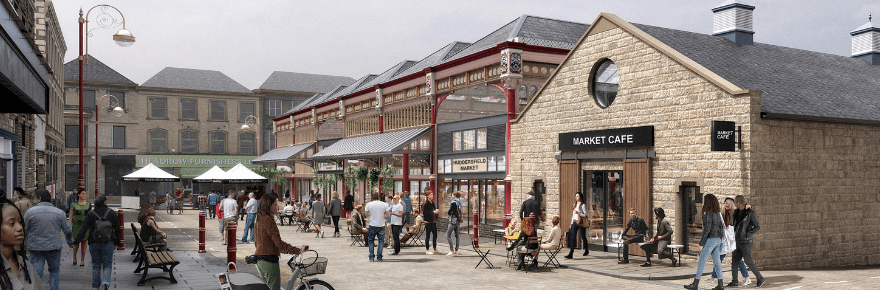
The market hall dates from 1887 and combines a decorative cast-iron structure with timber elements and substantial glazed areas. Its historic construction is central to the refurbishment specification, which includes repairs to the timber and cast-iron framework, renewal of external finishes and reinstatement of the building’s earlier red, pink and cream colour scheme. The scheme is intended to keep the market in use for the long term rather than replace it with a new building.
Willmott Dixon’s £14.9m award forms part of the council’s overall £16.5m redevelopment, funded through the government’s Levelling Up Fund; the two amounts are not separate project budgets. Following the creation of temporary trading accommodation and other preparatory work, the appointment brings the principal restoration and building alterations into contract delivery. The contractor expects to begin the new phase in October.
Planned changes to the internal layout will add a market café, hot-food units and a mezzanine seating area with a bar. The new hospitality provision is intended to sit alongside the traditional market rather than displace all existing uses. The council aims for the completed hall to operate six days a week and host more events, although those are operational intentions and not measurable outcomes of the construction contract.
The annex will be reconfigured internally to provide workspace for the markets team and public toilets. Access upgrades across the scheme include automatic doors, accessible WCs, a Changing Places facility and showers. Outside, curtain walling will replace existing roller shutters. The interventions must fit within the hall’s protected structure while meeting the practical requirements of a contemporary trading and hospitality venue.
The Grade II* designation requires careful treatment of retained materials, connections and finishes, particularly where original ironwork, timber and glazing meet modern entrances, partitions or building services. Kirklees Council says it has worked with a conservation architect and heritage consultant, Historic England and its own conservation specialists. Surveys and approved repair methods will guide what can be retained, strengthened or replaced as the contractor opens up the existing fabric.
Hidden conditions can change the sequence of refurbishment work. Repairs to historic frames and roofs may expose deterioration not fully visible during initial inspection, while new services and access routes have to pass through or around protected elements. Neither the contractor nor the council has published a component-by-component replacement schedule. Conservation decisions will need to be coordinated with the programme for the new internal facilities.
The temporary market between the hall on Brook Street and the neighbouring Tesco car park opened in August, allowing trading to continue during the main restoration. Maintaining separate routes for customers, deliveries and construction activity is necessary while hoarding, servicing and access arrangements change around the listed hall. The temporary accommodation is already operational rather than a future facility still awaiting installation.
The operating temporary market was reported by the council as providing 36 indoor and 30 outdoor stalls, with room for up to 28 additional pitches on Byram Street during busier periods. Earlier planning material used provisional figures of 37 indoor and 29 outdoor stalls. The August operating layout is the more appropriate description for the current works, although actual trader occupancy may differ from the maximum spaces available.
The refurbishment forms part of Huddersfield’s broader town centre investment programme, but this contract is confined to the historic market hall and its annex. Kirklees wants the building to accommodate traditional trading alongside cafés, food counters and events. The physical scope can be described now; future visitor numbers, trading performance and the success of the hospitality offer cannot be inferred from the award alone.
Willmott Dixon has relevant work under way on other heritage buildings, including the Capitol Theatre in West Sussex, and has worked on the £40m Princes Exchange in Leeds. Those projects provide context for the contractor’s restoration capability, although the construction requirements at Huddersfield will be determined by the market hall’s particular fabric and its agreed conservation design.
Construction will proceed alongside trading in the temporary market, with the historic frame, roof, external finishes and internal facilities all due for work. The contractor’s stated completion target is spring 2028. Handover will require the protected building fabric to be repaired and the new entrances, welfare facilities and building services made suitable for public use.