IN Brief:
- Excavation is complete on the longest tunnel within the SS106 Third Mega Lot.
- The twin-tube structure extends for 3.3km and will divert traffic from urban and hilly routes.
- The wider package includes 13 tunnels, 16 viaducts, and four interchanges across Calabria.
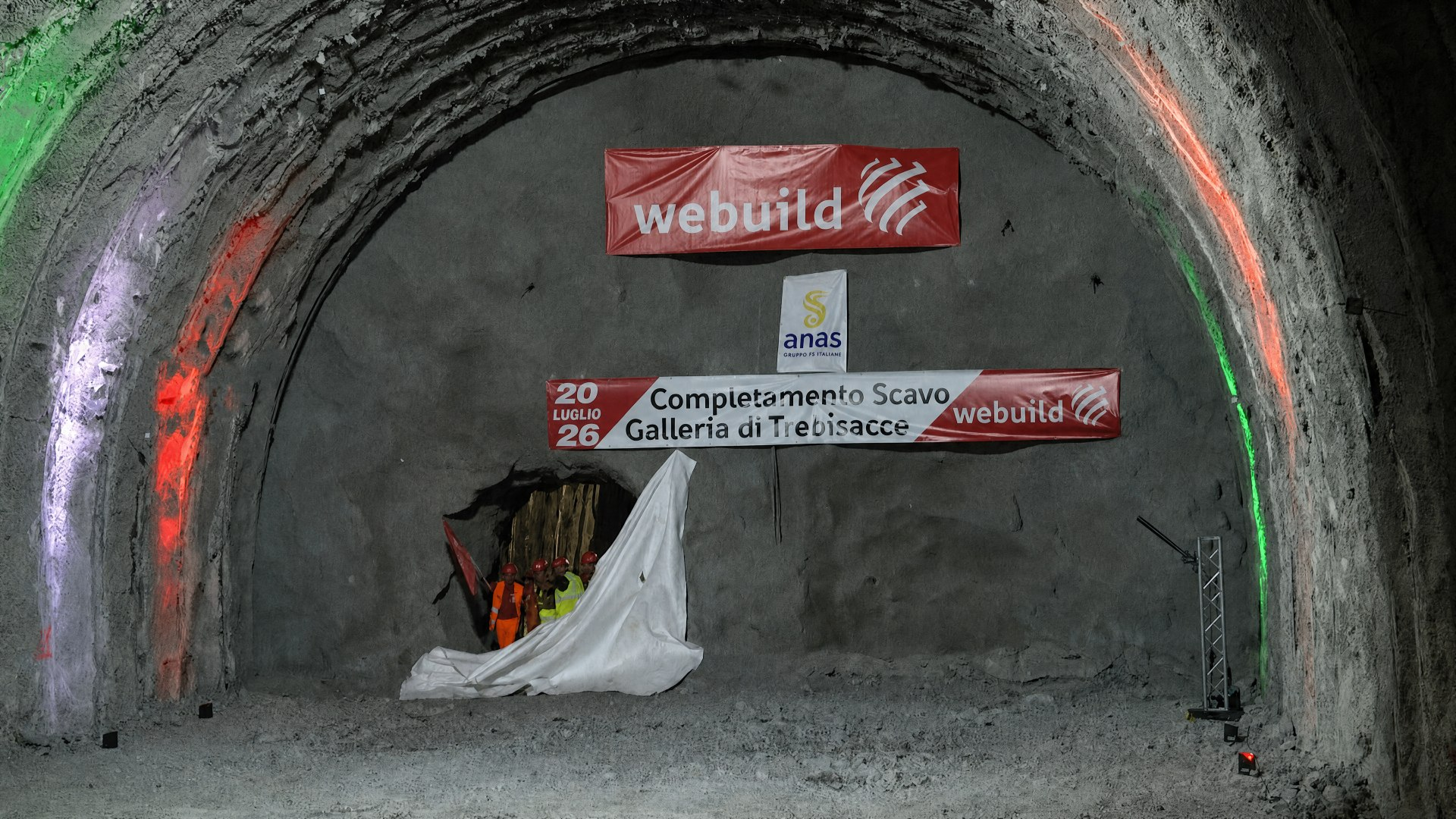
Webuild has completed excavation of the Trebisacce Tunnel, the longest tunnel within the Third Mega Lot of the SS106 Jonica road upgrade in Calabria.
The twin-tube structure extends for 3.3km, with one bore serving each direction of travel. Construction has used conventional excavation methods rather than a tunnel boring machine.
The tunnel will allow traffic to bypass hilly inland terrain and avoid passing through urban centres along the existing SS106. Its completion advances a road programme intended to improve connections between Calabria, Basilicata, and Puglia.
The upgraded route will link with the A2 and A14 motorways and with regional roads serving coastal and inland communities. Reduced journey times, safer alignments, and more reliable regional access form the principal operational objectives.
Around 1,200 direct and indirect jobs have been created through the Third Mega Lot. Approximately 900 companies have been involved since work began, with 45% based in Calabria.
Webuild has also completed the Avena and Straface viaducts. The 660-metre Avena structure crosses between Albidona and Amendolara, with its deck supported by four piers, including two V-shaped supports.
Work continues on the Annunziata Viaduct, which extends for approximately one kilometre and uses a two-level deck arrangement, with a separate level for each direction of traffic.
The full Third Mega Lot contains 13 natural and artificial tunnels with a combined length of 10km. Sixteen viaducts provide a further 7km of structures, while four interchanges connect the new road with Sibari, Cerchiara-Francavilla, Trebisacce, Roseto, and the surrounding network.
Passing through several municipalities in the province of Cosenza, the scheme brings together tunnels, slopes, watercourses, valleys, existing roads, local access, environmental controls, and repeated interfaces between structures and earthworks.
Completing excavation marks a substantial advance, although the tunnel still requires final lining, drainage, waterproofing, road construction, ventilation, lighting, power, fire systems, communications, signage, emergency equipment, cross-connections, and testing before traffic can enter.
Conventional tunnelling provides flexibility where geology varies or access is available from multiple headings. Output depends on the repeated cycle of excavation, support, spoil removal, surveying, ventilation, and lining, with ground behaviour reviewed continuously against design assumptions.
Water management will remain important after breakthrough. Drainage must control groundwater entering the excavation while preventing pressure, deterioration, or icing during operation.
The final system also needs accessible inspection and maintenance routes over a long asset life. Poor detailing around joints, channels, sumps, or outfalls can create persistent maintenance problems even where the primary structure performs correctly.
Fire and life-safety design becomes more demanding in a twin-tube road tunnel of this length. Detection, ventilation, emergency communication, lighting, escape connections, traffic control, and incident access must operate as an integrated system rather than as separate packages.
Mechanical and electrical installation will therefore form a substantial part of the remaining programme. Cable routes, substations, control rooms, ventilation equipment, emergency signage, and monitoring systems all need coordinated installation and commissioning within a confined linear asset.
The project’s regional supply-chain content is significant. Local companies can support earthworks, concrete, transport, fabrication, accommodation, plant, labour, and services, although complex structures continue to require specialist tunnelling and bridge expertise.
Webuild is also delivering Lot 1 of the SS106, covering approximately 17km between the Coserie Viaduct and the Corigliano Ovest interchange. That package includes 15 viaducts, three overpasses, and a 1.4km artificial twin-tube tunnel.
Together, the two lots bring the group’s SS106 construction and upgrade workload to around 55km. Up to 500 people are expected to work on Lot 1, allowing experience and supplier capacity developed on the Third Mega Lot to remain within the wider programme.
The contractor is active across 21 projects in southern Italy with a combined awarded value above €16 billion. Those programmes employ approximately 10,200 people and have involved around 7,500 suppliers.
Large transport investment in southern regions influences more than journey time. Reliable road and rail connections affect logistics, labour mobility, tourism, industrial investment, construction access, and the ability of local businesses to reach wider markets.
Webuild’s TBM launch on the Gardena Tunnel shows the range of excavation methods operating across its Italian portfolio. The Alpine rail project relies on mechanised excavation over long underground drives, while Trebisacce has advanced through conventional headings adapted to local geology and access.
Both approaches depend on survey accuracy, ground interpretation, lining quality, logistics, water management, ventilation, plant availability, and disciplined progress monitoring. The machinery differs, but the need for reliable geotechnical control remains constant.
Trebisacce has now moved beyond the excavation phase. Completion of the remaining civil and systems work will determine when the tunnel can begin serving the wider SS106 corridor and how reliably the new alignment performs in operation.