IN Brief:
- Lift supervisor James Connolly was fatally struck by a reversing telehandler on a Cheshire construction site in June 2023.
- HSE found an unobstructed turning circle was available, but the operator reversed without a banksman and had used a mobile phone.
- Michael Nixon received a 12-week suspended prison sentence, an £800 fine, and £2,000 costs.
A self-employed telehandler operator has received a suspended prison sentence after a reversing manoeuvre on a Cheshire construction site killed lift supervisor James Connolly. An investigation by the Health and Safety Executive found that the driver reversed without a banksman despite an unobstructed turning circle being available.
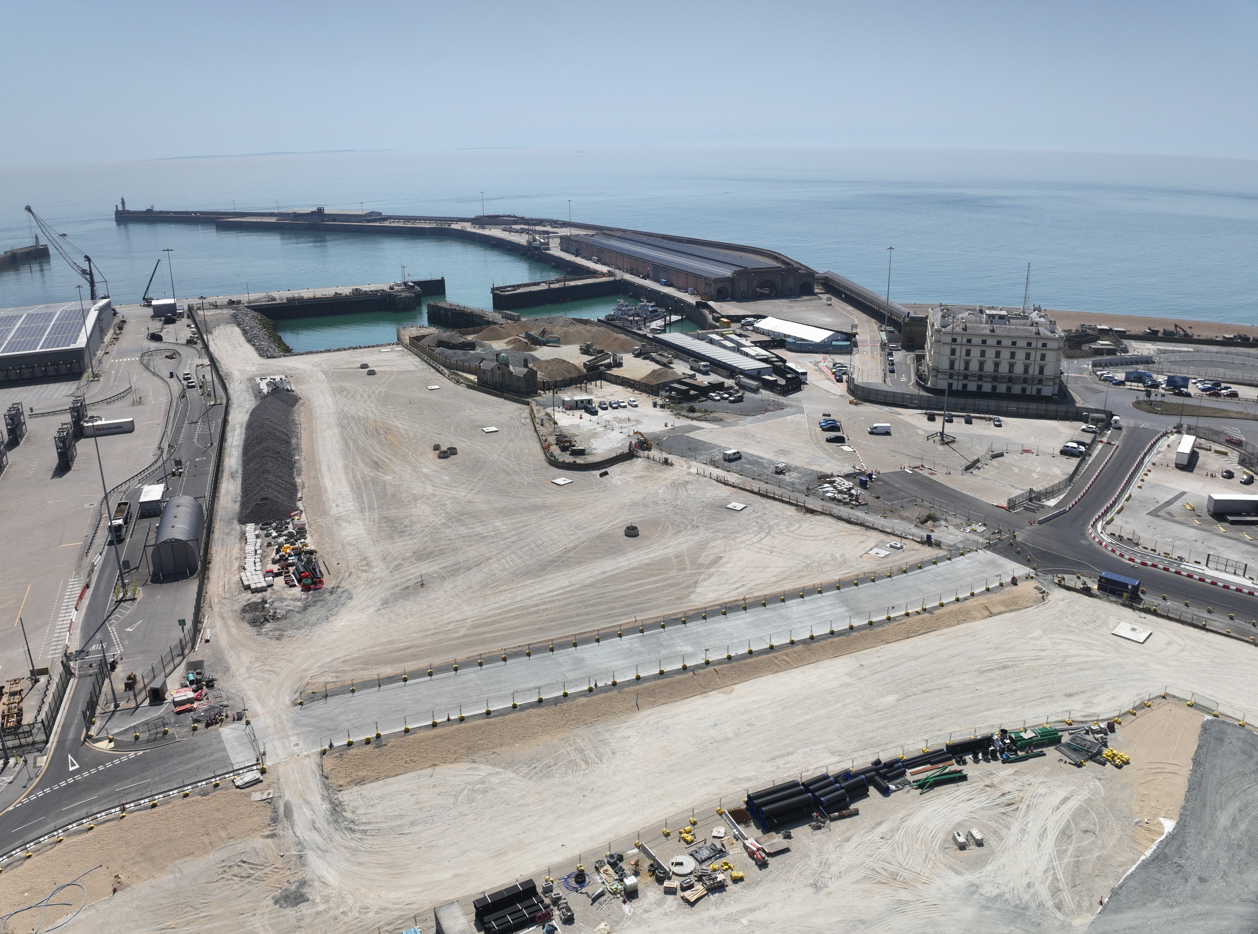
The incident happened on 11 June 2023 at a large construction site in Ince, Ellesmere Port. Connolly, 49, was walking back to his work area from the welfare compound when he was struck and reversed over by a telehandler operated by Michael Nixon. He suffered fatal injuries.
The principal contractor had arranged the site to reduce the need for reversing, including provision of a turning circle that HSE found was clear at the time of the incident. Nixon, who was qualified and experienced as a telehandler operator, nevertheless chose to reverse the machine without a banksman.
Investigators also found that Nixon had been using a mobile phone while operating the telehandler, contrary to site rules he had agreed to follow. The combination of an avoidable reversing movement and distraction became central to the prosecution.
Nixon, 46, of Deeside, Heswall, Wirral, pleaded guilty to breaching Section 3(2) of the Health and Safety at Work etc. Act 1974. At Warrington Magistrates’ Court on 11 August 2026, he received a 12-week prison sentence suspended for 12 months, an £800 fine, and an order to pay £2,000 in costs.
HSE principal inspector Laura Royales said workplace transport incidents remain one of the largest causes of workplace deaths, and stressed that drivers must follow established site controls rather than take shortcuts. The prosecution was brought against the individual operator after HSE examined the circumstances of the collision.
The facts illustrate why avoiding reversing sits high in the hierarchy of construction transport controls. One-way systems, turning areas, and drive-through loading arrangements remove the need for drivers to depend on rearward visibility, mirrors, cameras, alarms, or a signaller in the first place.
Where reversing cannot reasonably be avoided, site teams have to manage visibility, pedestrian segregation, vehicle routes, and communication around the manoeuvre. Banksmen can form part of that system where the risk cannot be controlled adequately through layout or direct visibility.
Telehandlers complicate that task because they move frequently between different parts of a project. The same machine may unload deliveries, move pallets, support work at height, and travel repeatedly between compounds, storage areas, and workfaces during a single shift.
Those journeys rarely remain identical throughout construction. Materials accumulate, temporary works are installed, buildings rise, access narrows, and pedestrian routes move as different trades arrive. A traffic plan suitable during groundworks can therefore become inadequate later unless routes and interaction points are reviewed.
The Ince case is particularly stark because HSE found that the physical arrangement intended to remove the need for reversing was already available. The failure did not arise from the absence of turning space but from a decision not to use it.
That distinction matters when contractors investigate incidents. Designing a safer route does not complete the control measure if drivers routinely ignore it, if supervision allows alternative movements to develop, or if site culture treats the approved route as optional.
Mobile-phone use adds a separate source of avoidable risk. Plant operators are required to monitor people, ground conditions, vehicle movements, load stability, changing site geometry, and exclusion zones. Even at low speed, distraction reduces the time available to identify a pedestrian entering a blind area or to respond when the path of the vehicle changes unexpectedly.
Welfare compounds and access points deserve particular attention because they create repeated crossings between pedestrians and plant. Workers may leave a cabin, turn a corner, or step into a route without the extended sightlines available elsewhere on the site. A traffic system that segregates people successfully for most of a journey can still fail at a single poorly controlled crossing point.
HSE guidance does not suggest that every reversing movement must use a banksman. The first objective is to eliminate the manoeuvre where reasonably practicable and then apply controls appropriate to the remaining risk. In this case, investigators found both that an alternative movement was available and that the operator reversed without assistance.
The criminal proceedings close more than three years after Connolly’s death. For contractors, the circumstances require little interpretation: the turning facility existed, the driver chose not to use it, distraction was present, and a worker was killed. Site layout can remove risk only when the people operating within it continue to follow the system it was designed to create.