IN Brief:
- Public bodies can use direct awards or streamlined mini-competitions.
- The framework covers temporary and permanent modular accommodation.
- Education, healthcare, council, and wider public estates can access the agreement.
Portakabin has been appointed as an approved supplier to Place Group’s Everything Estates framework, providing public-sector organisations with a procurement route for temporary and permanent modular buildings.
Clients can either appoint an approved supplier directly or run a mini-competition, avoiding the need to establish a complete standalone tender for each project.
Local authorities, schools, academy trusts, healthcare organisations, and other public bodies will be able to use the agreement for additional capacity, replacement buildings, temporary accommodation, and wider estate programmes.
Portakabin’s appointment covers modular solutions intended for both short-term and permanent use. Building modules are designed and manufactured off site before being transported for installation, connection, and completion at the customer’s location.
Keith Rayner, head of frameworks at Portakabin, said: “Joining the Everything Estates framework reinforces our commitment to making it easier for public sector organisations to access high-quality modular building solutions, for both temporary and permanent requirements.”
Claire Delaney, managing director of Everything Estates, said the framework was designed to give clients control over supplier selection and value assessment rather than relying on requirements predetermined entirely by the framework operator.
Public estates are managing ageing buildings, capacity shortages, condition backlogs, decarbonisation requirements, and restricted capital budgets, often while services must remain operational throughout construction.
Modular delivery can reduce the duration of disruptive activity at the project location because manufacturing, groundworks, utility preparation, and enabling works can proceed in parallel. Once modules arrive, the structural enclosure can be assembled more quickly than a conventional sequence built entirely on site.
Shorter site programmes are particularly valuable around schools, hospitals, council offices, and emergency-service facilities, where prolonged construction can interfere with day-to-day operations and public access.
Offsite manufacture does not remove the need for detailed preparation. Structural loading, module dimensions, transportation, crane access, fire strategy, acoustics, mechanical and electrical distribution, façade interfaces, planning, and future adaptability must be resolved before production begins.
Foundations, drainage, utilities, external works, and ground conditions remain specific to each site even where the building system is standardised. Any delay in those packages can leave completed modules awaiting delivery or storage while the location is made ready.
Framework procurement can support earlier supplier involvement, allowing feasibility and technical development to begin without waiting for a full construction tender. Public clients must still demonstrate value and ensure that the chosen award route complies with procurement obligations.
Mini-competitions offer an alternative where several approved suppliers could meet the requirement. They enable project-specific comparison while limiting participation to organisations already assessed for capability, financial standing, and compliance.
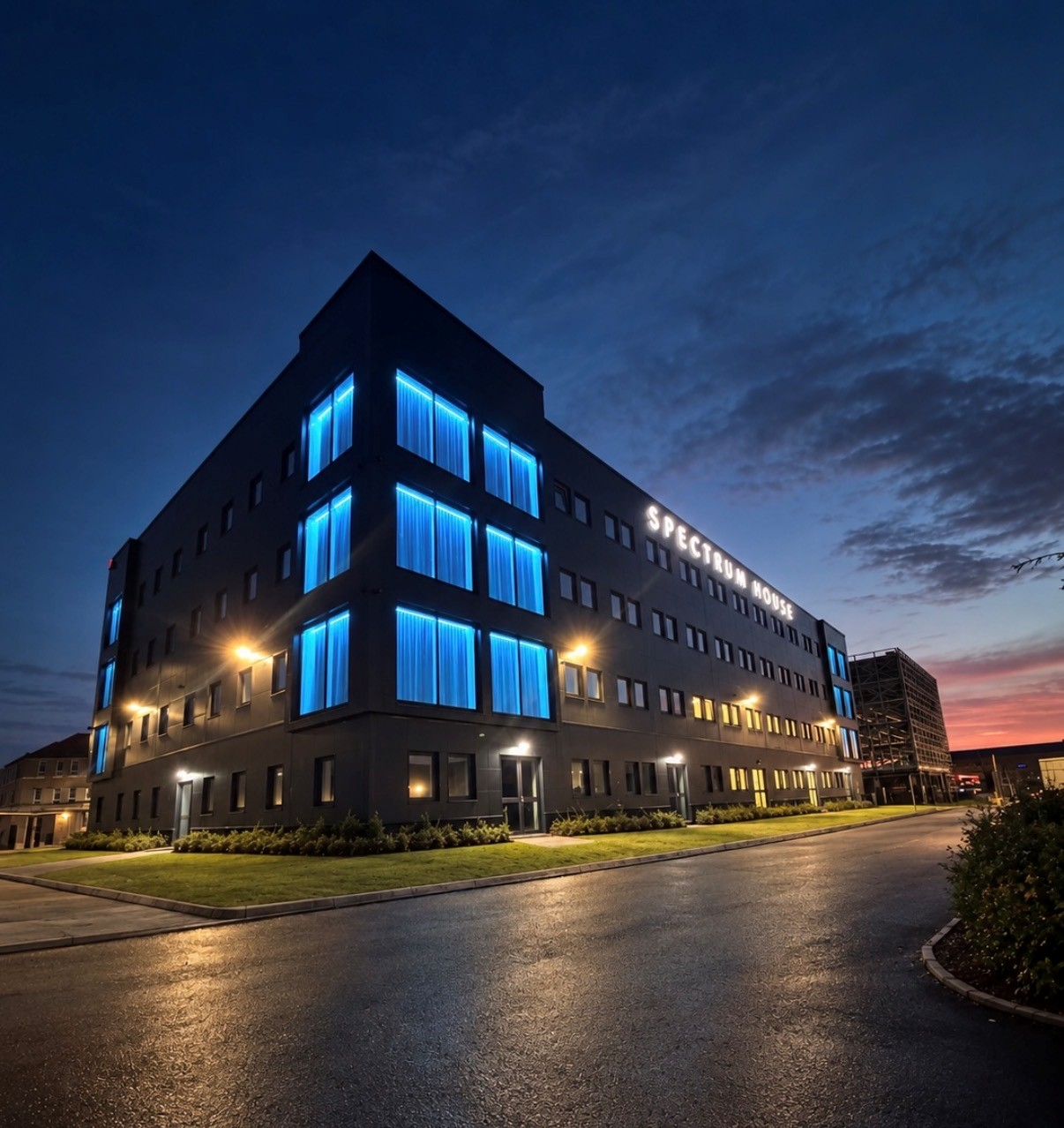
Portakabin’s modular headquarters project for Workdry also demonstrates how factory-built systems are moving beyond temporary classrooms and site accommodation into permanent commercial and operational facilities.
Healthcare buildings, laboratories, offices, schools, and specialist workspaces now form a growing part of the modular market. As projects become larger and more permanent, design life, façade quality, energy performance, maintenance, and integration with conventional construction carry greater weight.
Successful standardisation does not require generic buildings. Repeatable structural and service components can be combined with project-specific layouts, façades, access arrangements, and internal environments that respond to planning and operational requirements.
Factory production can improve quality control because work takes place within a managed environment using repeatable inspection points. Information accuracy becomes correspondingly important, since an error released into manufacture may be repeated across several modules before it is identified.
Capacity across design teams, factory lines, transport, cranes, and site-installation crews will influence how quickly framework projects can be delivered. A streamlined procurement route offers limited benefit when production slots or specialist personnel are unavailable.
Public clients will also need to consider whether temporary buildings are likely to remain in use longer than originally intended. Accommodation procured for short-term pressure can become semi-permanent, making durability, energy use, maintenance, accessibility, and eventual relocation relevant from the outset.
The Everything Estates framework gives public bodies another route for securing modular accommodation where programme and continuity of service are central. Its performance will depend on the volume and consistency of projects released, and on whether suppliers are engaged early enough to resolve site, planning, and technical risks before manufacture begins.