IN Brief:
- Smulders has ordered 64 PF 160-5m davit cranes from PALFINGER.
- The cranes will support turbine-platform handling, servicing, and maintenance.
- Deliveries are due by the end of 2026 for the 960MW East Anglia TWO project.
PALFINGER has secured an order from Smulders to supply 64 davit cranes for the East Anglia TWO offshore wind farm.
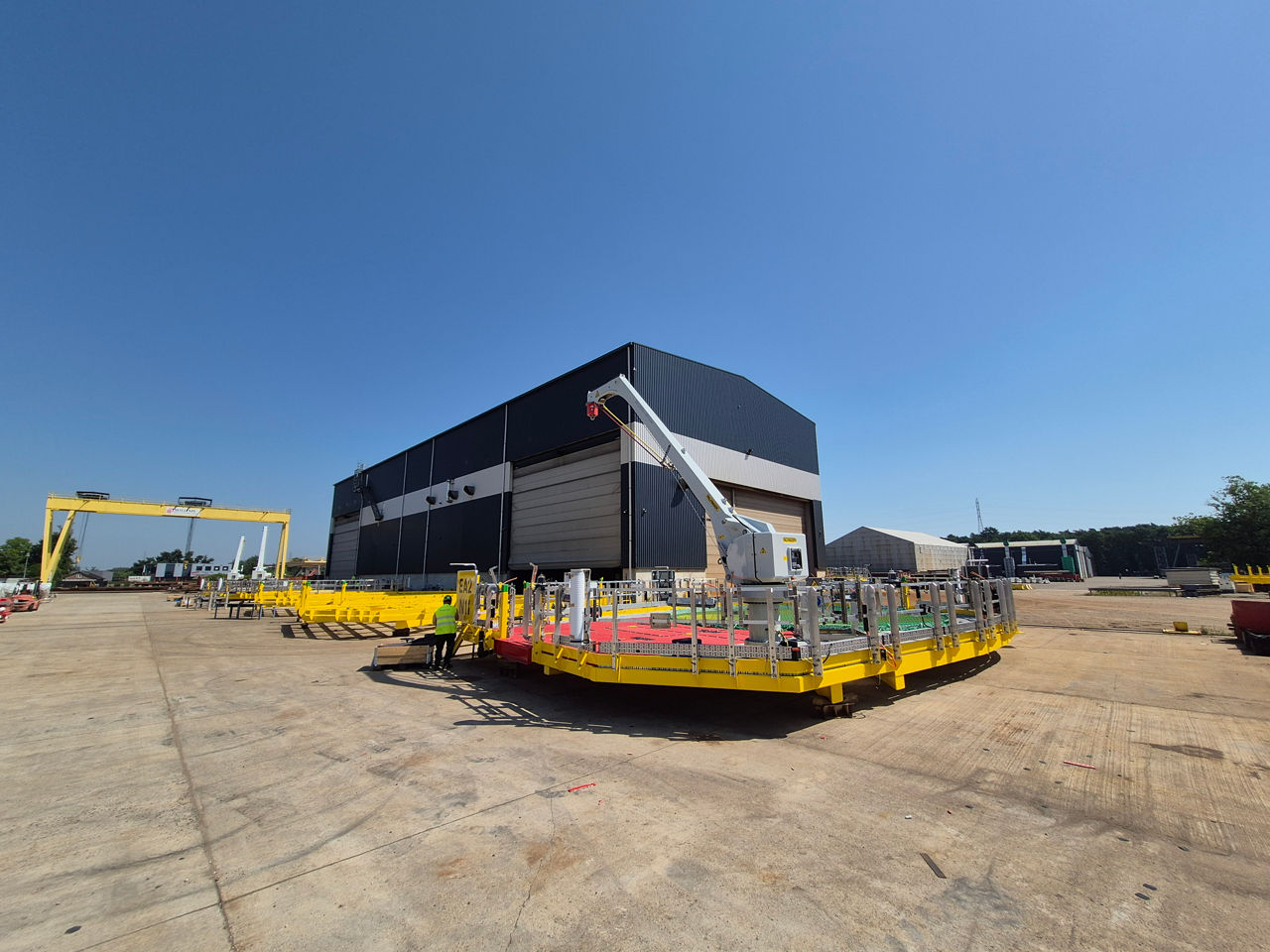
One PF 160-5m crane will be installed on each of the project’s 64 turbine platforms, with deliveries scheduled for completion by the end of 2026.
East Anglia TWO is being developed by ScottishPower Renewables in the southern North Sea off the Suffolk coast. The project is planned with capacity of up to 960MW, providing potential output equivalent to the annual electricity demand of almost one million homes.
The cranes will support material handling, planned servicing, component movement, and maintenance work during the wind farm’s operating life. Their role will continue long after turbine installation has finished, placing reliability and maintainability alongside lifting performance in the equipment specification.
PF 160 cranes are designed for marine environments where corrosion, salt, wind, restricted deck space, and limited intervention windows affect operation. Offshore access frequently depends on suitable weather and vessel availability, so a small handling failure can delay work far beyond the time needed for the repair itself.
The East Anglia TWO order extends an established relationship between PALFINGER and Smulders. The manufacturer also supplied 96 PF 160 cranes for East Anglia THREE, where offshore turbine installation has been progressing.
Together, East Anglia TWO and THREE are expected to supply power equivalent to the demand of approximately 2.25 million homes. Their combined equipment requirement shows the scale created by repeat projects within one development zone.
PALFINGER has worked in offshore wind for 23 years. Its lifting and handling systems are used across 19 countries and five continents, supporting wind assets with a combined capacity above 53GW.
The latest order takes the company to 7,000 lifting and handling systems sold for onshore and offshore wind, with approximately 6,600 already delivered. The UK is its largest offshore-wind customer market within Europe.
Crane supply forms one part of a much larger turbine-foundation package. Smulders must integrate the lifting equipment with platforms, steelwork, access systems, electrical services, coatings, and interfaces before the foundations reach offshore installation.
That integration requires close control of structural loads, maintenance access, hydraulic or electrical supply, controls, emergency operation, certification, and eventual replacement. A crane cannot be treated as an isolated component once its pedestal, service routes, and safe working envelope are built into the platform.
East Anglia TWO is already generating contracts across several sections of the offshore supply chain. CRP Subsea’s order for 142 inter-array cable-protection systems covers another critical interface between the turbine foundations and the completed electrical network.
The packages show how offshore projects are assembled through numerous specialist components, each performing a narrow function with a potentially substantial consequence if it is unavailable. Cable protection, lifting, access, electrical connection, corrosion protection, and monitoring systems all contribute to long-term turbine availability.
Manufacturing schedules are being compressed by the volume of parallel European projects. Component suppliers need to reserve material, fabrication, testing, and shipping capacity well before offshore installation begins.
Delays at factory level can move directly into marshalling yards, foundation assembly, vessel campaigns, and turbine erection. A single missing certified component may prevent an otherwise completed platform from advancing to the next stage.
Repeat equipment can reduce part of that risk. Common crane models across East Anglia TWO and THREE should support shared spares, training, inspection methods, maintenance documentation, and technician familiarity.
Standardisation is particularly valuable offshore, where carrying the wrong component or tool can waste an entire access window. It can also help the foundation manufacturer by allowing jigs, connection details, testing, and installation methods to be refined across a larger production run.
Every project still requires configuration control and final verification. Small differences in platform geometry, loads, controls, coatings, or access can create installation problems if drawings and serialised components are not matched accurately.
The order follows PALFINGER’s separate contract to supply davit cranes for North Sea HVDC converter platforms. That converter-platform package extends the same lifting requirement from turbine assets to offshore transmission infrastructure.
Offshore wind growth is increasing demand for equipment that supports operations rather than generating power directly. Projects may receive approval and finance through their turbines and megawatts, but lifecycle performance depends on access, lifting, vessels, ports, cables, substations, and a service supply chain capable of working safely in marine conditions.
Inspection and maintenance planning will begin before the cranes enter service. Coatings, seals, hydraulic components, wire ropes, controls, structures, and certification all require defined intervals and accessible procedures.
PALFINGER’s delivery programme runs to the end of 2026. The cranes will then pass through platform integration, testing, logistics, offshore installation, and commissioning before taking on the long-term maintenance role for which they are being supplied.