IN Brief:
- Morgan Sindall has been awarded a £35 million Sellafield roofing package.
- Approximately 28,500 sq m of roof will be replaced across two operational facilities.
- The long-duration programme is intended to support continued operations into the 2060s and 2070s.
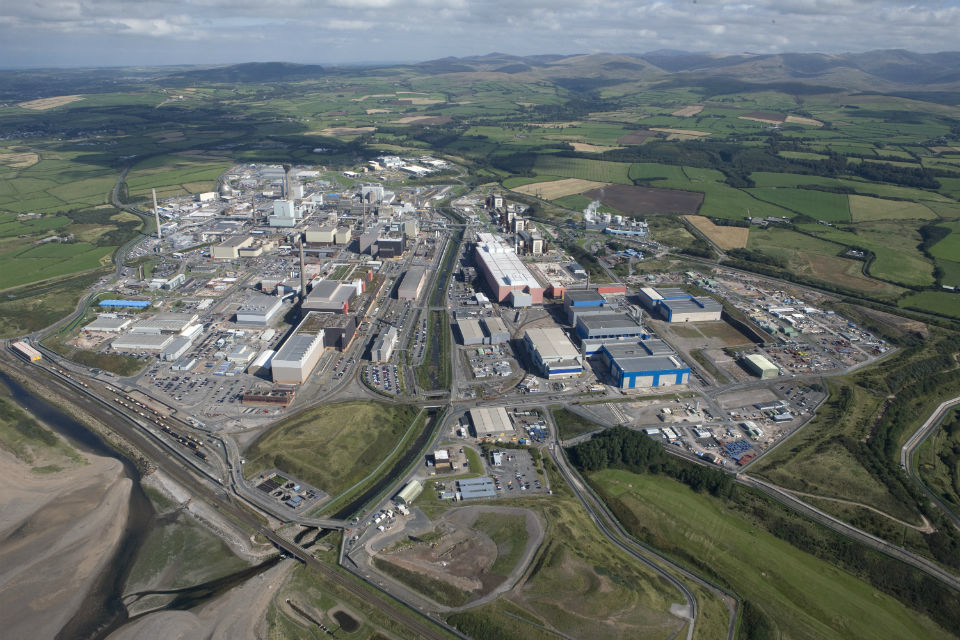
Morgan Sindall Construction & Infrastructure has secured a £35 million contract to replace approximately 28,500 sq m of roofing across two operational facilities at Sellafield in Cumbria. The package covers the Fuel Handling Plant and the Site Ion Exchange Effluent Plant, known as SIXEP, and is intended to keep both buildings safe and serviceable for decades.
The award was published through Contracts Finder in September after being made in August. Procurement records describe the work as a call-off covering replacement of an area equivalent to roughly five acres, with the contract running to January 2031. The requirement is for a maintainable roofing system capable of supporting continued operations into the 2060s and 2070s.
The existing roofs have been affected by persistent water ingress, with repeated repairs no longer considered a sustainable long-term approach. Water penetration on ageing industrial buildings is more than a fabric-maintenance problem when the structures contain equipment and processes that must remain available. At Sellafield, keeping weather out of the two facilities is tied directly to protecting plant, personnel and operational continuity.
The Fuel Handling Plant receives and stores spent nuclear fuel, while SIXEP is used to remove radioactive material from contaminated water before discharge. Both facilities date from the 1980s and remain part of the site’s long-term operational and decommissioning infrastructure. Their remaining service requirements extend well beyond the normal refurbishment cycle of a commercial building, which helps explain the scale and duration of the roofing package.
The project was previously tendered at a substantially lower estimated value, but the current award is £35 million. Current reporting indicates that a significant share of the work will pass into the specialist supply chain, with around 57% expected to be subcontracted across roofing materials, removal of existing coverings, installation and temporary works.
That subcontract content is significant because the physical roofing work is only one part of delivering the package on an operational nuclear site. Access, temporary protection, sequencing, material handling, workface control and interfaces with live facilities all have to be planned around site requirements that are markedly different from an ordinary industrial re-roofing job. A five-acre replacement area also creates a long exposure period in which temporary weather protection becomes part of the construction strategy rather than a short-term precaution.
The contract duration, stretching into 2031, reflects that delivery environment. Large sections cannot simply be stripped and replaced as if the buildings were vacant warehouses, and each phase has to maintain protection while permanent coverings are removed and reconstructed. The programme must also account for the condition of existing substrates, interfaces with penetrations and services, and the inspection and assurance requirements associated with work at Sellafield.
The package combines conventional building-envelope trades with a highly controlled operating environment. Roofing contractors, temporary works specialists, access providers and material suppliers will work within a programme where reliability, documentation and sequencing carry unusual weight. With more than half of the work expected to be subcontracted, the award has a wider commercial footprint than the main contract value alone suggests.
Temporary weathering will be a recurring part of that sequence. Each opened section must remain protected while old coverings are removed, substrates are inspected and replacement systems are installed, so the temporary solution has to work alongside access equipment, lifting operations and permanent details rather than being treated as a separate short-duration activity.
The project also illustrates the less visible side of the UK’s nuclear decommissioning estate. New treatment plants and major hazard-reduction projects attract much of the attention, but decades of remaining operations depend on existing buildings continuing to perform while replacement facilities are developed and commissioned. Building-fabric maintenance can therefore sit on the critical path of operational resilience even when the work itself is recognisably construction rather than nuclear process engineering.
Sellafield’s wider programme includes extensive new construction, remediation and asset-care activity, creating sustained demand for contractors able to operate under nuclear-site controls. The roofing package adds a substantial long-duration contract to that workload and places a large portion of delivery through specialist subcontractors.
The task is straightforward to describe but difficult to execute: remove failing roof systems, keep two important facilities protected throughout the works, and install a maintainable replacement that can support operations for several more decades. With the contract scheduled through early 2031, success will depend less on the speed of stripping roof sheets than on whether each phase can be delivered without compromising the facilities beneath them.