IN Brief:
- The £53m secondary school will provide accommodation for up to 850 pupils.
- Completion is scheduled for spring 2029.
- Photovoltaics, heat pumps, material reuse, and energy monitoring support a net-zero operational target.
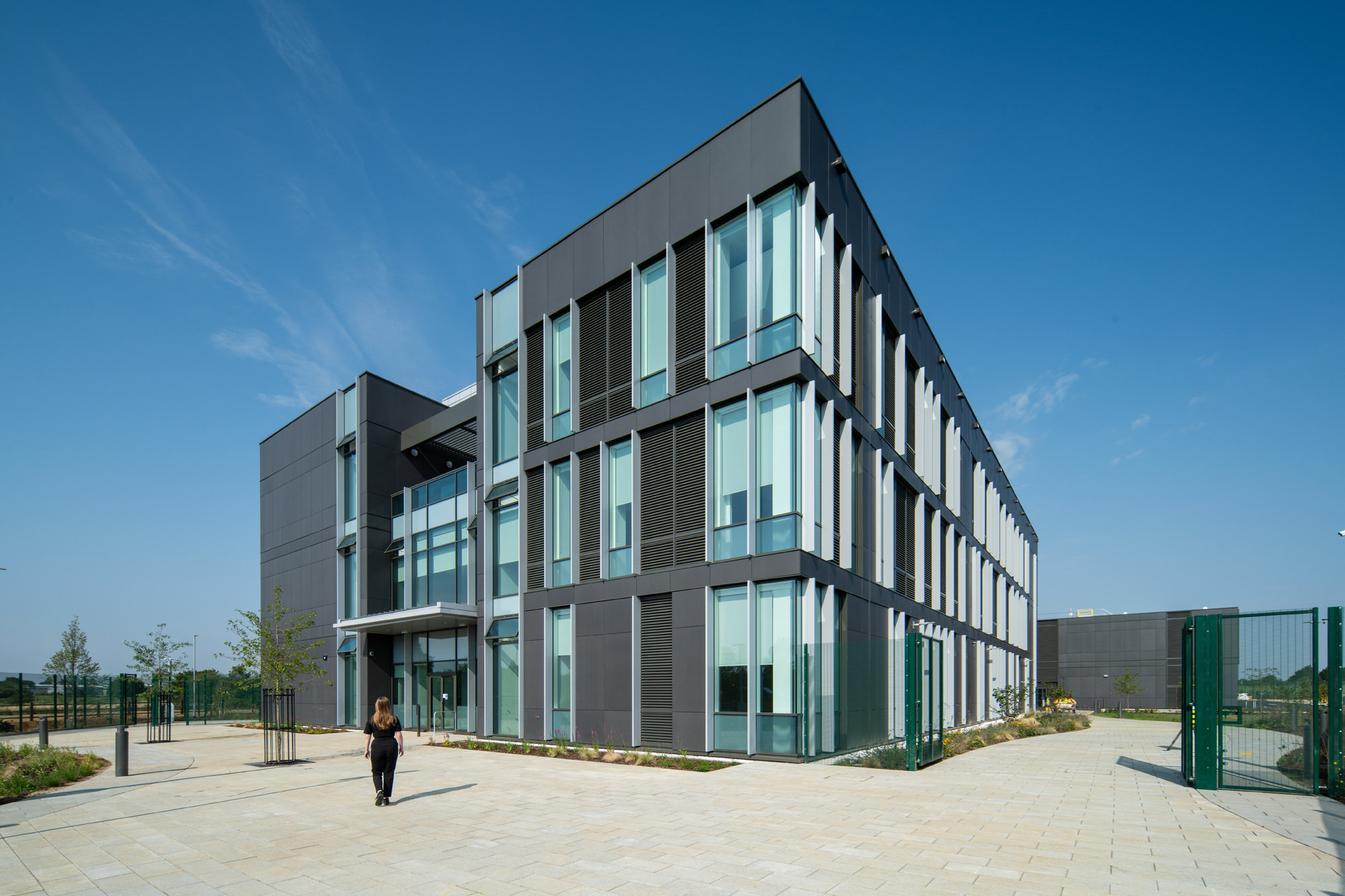
Morgan Sindall Construction has started work on the £53m Llangatwg Community School development in Cadoxton, Neath.
Delivered for Neath Port Talbot Council through the South West Wales Regional Contractors Framework, the project will create accommodation for up to 850 pupils. Completion is scheduled for spring 2029.
The new building will replace existing school facilities assessed as being in poor condition. General teaching accommodation will be supported by specialist spaces for design and technology, construction, and hairdressing, together with administration, dining, and pupil-support areas.
Sports provision includes a sports hall, a full-size 3G rugby pitch, a junior 3G football pitch, a three-court multi-use games area, and a 100-metre sprint track. A 90-space car park and dedicated drop-off provision will also be created.
The main school building will use a steel frame with brickwork and cladding across the external envelope. Curtins is providing engineering support, Troup Bywaters + Anders is responsible for building services, and Austin-Smith:Lord is leading architectural design.
Photovoltaic panels will occupy the maximum practical roof area, while air-source heat pumps will replace fossil-fuel heating. The completed school is targeting net-zero carbon in operation and an EPC A rating.
Construction-stage energy and water use will be monitored through the K2N platform, allowing the project team to track consumption against programme activity. Morgan Sindall is also applying its 10 Tonne Carbon Challenge, under which the project team and supply chain identify practical opportunities to reduce embodied and construction-related emissions.
Where condition and programme allow, materials from the existing school will be incorporated into the new development. Bricks are expected to be reclaimed, while timber panelling from the existing hall will be recovered for reuse within the completed building.
An existing stream crossing the site will be naturalised into a swale, connecting the drainage and landscape strategies. The intervention is intended to create a more open water feature while contributing to surface-water management and biodiversity.
Because construction will continue across several academic years, the logistics plan must maintain safe separation between pupils and site operations. Deliveries, temporary access, noise, dust, emergency routes, and changes to existing services will need to be coordinated around the functioning school estate.
Operational targets extend beyond handover
Education buildings combine several demanding performance requirements within one asset. Classrooms need stable ventilation, temperature, lighting, and acoustic conditions, while halls, kitchens, technology rooms, changing facilities, and specialist teaching areas operate with different loads and schedules.
Heat pumps can reduce operational emissions, but their effectiveness depends on fabric performance, system temperatures, zoning, controls, commissioning, and user understanding. Poorly balanced systems may consume significantly more electricity than predicted, particularly where ventilation and heating controls operate independently.
Photovoltaic generation is well suited to schools because daytime occupation broadly coincides with periods of solar production. The usable roof area will nevertheless be affected by plant, access routes, shading, structural loading, fire separation, drainage, and future maintenance requirements.
Previous net-zero operational school projects delivered by the contractor have combined heat pumps, photovoltaic generation, fabric improvement, and construction-stage carbon measurement. Carrying commissioning and operational lessons between projects will be essential if designed performance is to translate into actual energy use.
Extended community use may alter the final consumption profile. Evening sports, events, holiday activities, additional catering, or greater use of specialist equipment can increase demand beyond the assumptions used during design.
Metering therefore needs to distinguish between major loads and areas of the building. Without sufficient sub-metering, an energy increase may be visible at whole-building level but difficult to trace to heating, hot water, ventilation, lighting, catering, or user equipment.
Reclaimed bricks and timber provide a practical route to material reuse, although recovery requires early planning. Components must be inspected, removed without excessive damage, stored, cleaned, documented, and returned to the programme at the correct point.
Labour and handling requirements may be higher than for new products, while designers must confirm that reclaimed materials remain suitable for their intended application. Their environmental benefit depends on avoiding excessive processing, transport, and replacement work.
The swale will require the drainage, landscape, ecological, and maintenance strategies to remain coordinated. Sustainable drainage performs reliably only where flow paths, storage volumes, overflow arrangements, gradients, soil, vegetation, and long-term maintenance responsibilities are clearly defined.
Construction extending to spring 2029 will expose the project to changes in material pricing, labour availability, design development, weather, and educational requirements. Programme control will be particularly important around school holidays, when disruptive connections or changes may be easier to complete safely.
Operational performance will ultimately determine whether the investment achieves its environmental objectives. Energy use, comfort, maintenance cost, drainage operation, and the durability of retained and new materials will provide a more meaningful measure than design certification alone.
Once complete, Llangatwg Community School will add a substantial new education asset to Neath Port Talbot. Its long-term value will depend on whether construction quality, commissioning, facilities management, and user behaviour remain aligned with the standards established during design.