IN Brief:
- Morgan Sindall Construction has secured the £10m demolition and rebuild of Liberton Community Fire Station.
- The replacement will provide upgraded welfare, decontamination, contaminated-kit, and community facilities.
- Liberton forms part of the Scottish Fire and Rescue Service programme addressing RAAC across its operational estate.
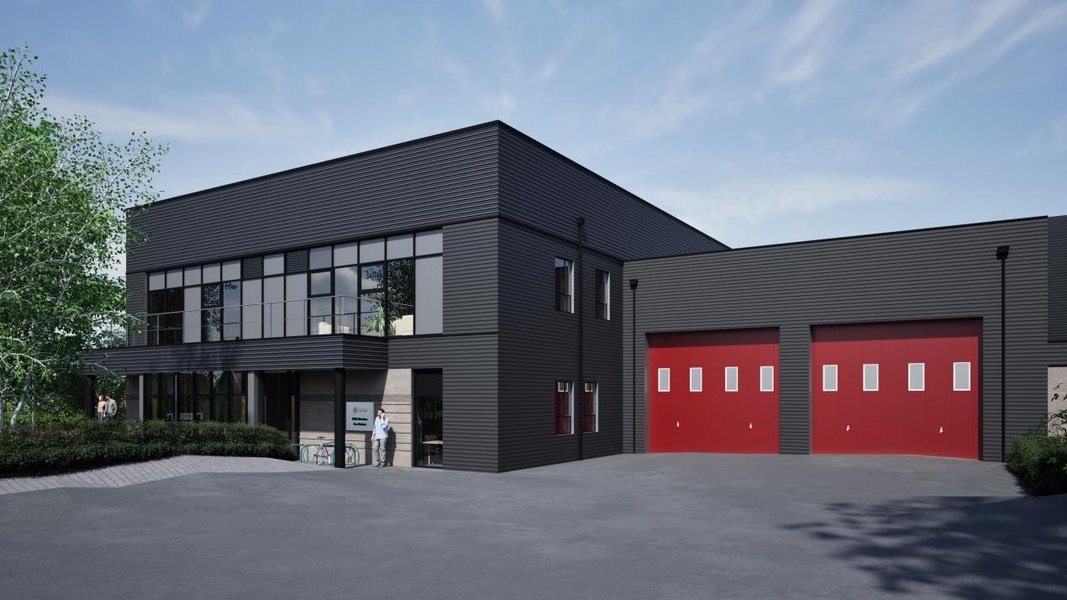
Morgan Sindall Construction has been appointed by the Scottish Fire and Rescue Service to demolish and rebuild Liberton Community Fire Station in Edinburgh under a £10 million contract procured through the SCAPE Scotland Construction Framework.
The project will deliver Edinburgh’s first new-build fire station in more than 30 years and the first new station anywhere in Scotland since the national fire service was created in 2013. Liberton occupies a strategic position for emergency response across Edinburgh and the east of Scotland, giving continuity of operations a central role in the construction programme.
The replacement building will include upgraded welfare and decontamination facilities, improved community space, and dedicated areas for managing contaminated fire kit. Those requirements reflect the greater separation now expected between equipment exposed during incidents and cleaner welfare areas used by crews.
Liberton is also part of the Scottish Fire and Rescue Service’s wider response to reinforced autoclaved aerated concrete, or RAAC, across its estate. The service previously identified 14 stations affected by RAAC and indicated that rebuilding could provide the safest and most economical long-term solution at a number of sites.
Earlier estate planning put the indicative cost of replacing all 14 affected stations at around £77 million. The same assessment identified a wider property challenge, with a substantial proportion of SFRS buildings more than 30 years old and parts of the operational estate rated poor, bad, or unsuitable.
The new Liberton contract is therefore one element of a broader capital programme rather than an isolated replacement. Temporary support, inspection, monitoring, repair, and eventual rebuilding have to be prioritised across an estate that must remain operational throughout the work.
Morgan Sindall’s appointment follows four fire-station refurbishments for SFRS at Inverness, Dingwall, Newcraighall, and Galashiels. The contractor says all four were delivered on time and within budget without disrupting live blue-light operations.
Stuart Parker, Managing Director of Morgan Sindall Construction in Scotland, said: “Having successfully delivered refurbishments at Inverness, Dingwall, Newcraighall and Galashiels, our Scotland-based team understands both the technical requirements and the operational sensitivities of working within live blue light environments.”
Liberton presents a different delivery problem because the existing station is being replaced rather than refurbished. Demolition, temporary operational arrangements, construction, commissioning, and final occupation have to be sequenced without compromising the emergency-response capability that the building exists to provide.
The SCAPE framework also shapes how the programme is developed. Earlier contractor involvement can bring construction methodology, programme, and cost planning into the project before site activity is fully mobilised, which is particularly useful where decant arrangements, vehicle access, welfare, contaminated-kit handling, and operational handover need to be considered alongside the permanent design.
The building specification illustrates how fire-station requirements have become more specialised. Appliance accommodation remains fundamental, but modern facilities have to support training, welfare, contamination control, equipment management, and engagement with the surrounding community.
RAAC adds another constraint because the condition of affected structural elements can require monitoring and temporary measures before a long-term estate decision is implemented. Owners of affected public buildings have had to determine whether repair, strengthening, partial replacement, or complete redevelopment provides the most proportionate response.
At Liberton, that decision has now reached a funded construction contract with a named contractor and procurement route. The project therefore moves beyond investigation and interim mitigation into a programme that will remove the existing asset and replace it with a purpose-designed operational building.
The £10 million value also reflects the intensity of services and operational requirements within relatively modest building footprints. Fire stations need resilient utilities, secure appliance circulation, specialist changing and decontamination areas, welfare facilities, communications, and carefully managed access throughout construction and handover.
The operational handover will also need to bring building services, communications, appliance access, contamination-control areas, and staff facilities into use as a coordinated package. For an emergency-service asset, practical completion is only useful once crews can occupy the building and respond from it without introducing new operational constraints.
Further RAAC-related repair and rebuild work is planned across Scotland over the next five years. Liberton will provide an early indication of how efficiently the service can convert condition assessments and interim structural measures into completed replacement buildings while maintaining emergency coverage around live construction programmes.