
IN Brief:
- De Klerk Werkendam is installing 162 sheet piles, each 23 metres long, during refurbishment of the Brouwer sluice complex in the Netherlands.
- Liebherr's LR 1130.1 unplugged crawler crane operates on battery power or an external electrical supply, with a maximum rated lifting capacity of 137 tonnes.
- The work pontoon incorporates electric drives, battery storage and solar panels, while the sheet pile vibrator's hydraulic power unit remains diesel powered.
Liebherr has detailed the use of its battery-powered LR 1130.1 unplugged crawler crane on a marine engineering project at Brouwersdam in the Netherlands, where contractor De Klerk Werkendam is replacing sheet pile structures at the Brouwer sluice complex.
The refurbishment involves the installation of 162 new sheet piles, each measuring 23 metres in length, before the existing elements are removed. The structures are approximately 50 years old and form part of the infrastructure regulating water exchange between the North Sea and the Grevelingenmeer. Their replacement requires heavy lifting and vibratory piling equipment operating from a floating construction platform.
De Klerk Werkendam has deployed the LR 1130.1 unplugged on a work pontoon, using its lifting capability and working radius to position the new steel elements. The crane also handles construction materials delivered from the shore, combining material transfer and pile positioning within the same marine construction operation.
The project is taking place in highly compacted sandy ground within the dam. These conditions create substantial resistance during installation, requiring a powerful sheet pile vibrator and a lifting arrangement capable of maintaining control of long steel elements while they are positioned and driven into the ground.
Vibratory piling equipment transmits oscillating forces into a sheet pile, reducing the resistance between the steel and surrounding soil during installation. The effectiveness of this process depends on ground conditions, vibration characteristics, pile geometry and the forces transmitted through the equipment. Dense sand can present particular difficulties where the available vibratory force is insufficient to overcome installation resistance.
The crawler crane supports the operation by lifting and positioning the piles while the vibratory equipment performs the installation. The interaction between the crane, pile and vibrator must be controlled to maintain the required alignment and avoid imposing loads beyond the equipment’s operating limits. The manufacturer has not disclosed the weight of individual piles or the precise lifting arrangements adopted for each installation.
Replacing the existing sheet pile structures involves a defined sequence. De Klerk Werkendam installs the new elements before extracting the older piles, allowing the replacement works to advance while maintaining the intended structural arrangement. The detailed temporary works design and hydraulic assessments for the sluice have not been published.
Working from a pontoon introduces considerations that differ from a conventional land-based lifting operation. A floating platform must provide a suitable base for the crane and piling equipment, while the distribution of loads and the movement of construction materials influence its stability and working position.
The pontoon’s position also has to be controlled during pile installation. De Klerk Werkendam uses electrically operated spud piles, which provide a means of securing the platform’s position relative to the bed beneath it. Their operation forms part of the wider arrangement of electrically powered equipment used on the project.
The LR 1130.1 unplugged has a maximum manufacturer-rated lifting capacity of 137 tonnes, achieved under specified operating conditions. That rating does not represent the permissible load at every working radius or boom configuration. The manufacturer specifies a maximum radius of 78 metres, but has not stated the working radius used during the Brouwersdam installation.
The crane is powered by an electric drive system that can operate from onboard batteries or an external electrical connection. When connected to a suitable site supply, it can continue lifting while its batteries are charged. Disconnecting the cable allows the machine to operate independently, providing flexibility when the working position or site arrangements make a permanent connection impractical.
Liebherr states that the LR 1130.1 unplugged can operate for up to eight hours on battery power, depending on the application and energy demand. The manufacturer also specifies a recharge period of approximately four and a half hours under its stated charging conditions. These are technical ratings for the model rather than measured endurance or charging results from the Brouwersdam project.
Actual battery consumption depends on the crane’s operating cycle, including lifting loads, slewing, hoisting, travelling and periods of inactivity. Heavy lifting and frequent movements can create different energy demands from intermittent handling operations, making the pattern of work relevant to the selection of charging arrangements and available battery capacity.
The ability to operate while connected to shore power allows the contractor to reduce dependence on stored energy when a suitable electrical supply is available. Battery operation provides an alternative where the cable would restrict movement or interfere with construction activities. Both modes retain the crane’s intended lifting performance, according to Liebherr.
The work pontoon incorporates further electrical equipment, including an electric propulsion system and a hybrid power arrangement combining battery storage with photovoltaic panels. These installations support the wider attempt to reduce combustion engine operation during the marine works, extending the approach beyond the lifting machine itself.
Electric operation does not, however, extend to every component of the piling system. Liebherr confirms that the hydraulic power unit driving the sheet pile vibrator remains diesel powered. The equipment combination can therefore operate with substantially reduced local exhaust emissions when shore power is available, but it is not an entirely emission-free construction process.
The distinction is important when assessing the practical electrification of specialist foundation equipment. Replacing the diesel engine in a crawler crane removes one source of local exhaust emissions, while the piling attachment may continue to require a separate source of hydraulic power. The environmental performance of the complete operation depends on the energy systems used by each machine and the electricity supply supporting them.
Project managers and operators have reported positive experience with the electric crane, particularly regarding lower noise and the absence of local exhaust emissions from its drive system. Reduced engine noise during idling can improve working conditions around the lifting equipment, although the vibratory piling operation and associated machinery remain sources of construction noise.
Liebherr has provided illustrative acoustic comparisons for its unplugged crawler cranes, but has not published independent project measurements establishing the total noise reduction achieved at Brouwersdam. Nor has the manufacturer disclosed the completed project’s electrical consumption, comparative diesel use or quantified carbon savings.
De Klerk Werkendam has also highlighted equipment reliability, replacement parts availability and technical support as positive features of the deployment. The contractor intends to introduce further electric cranes, although the models, quantities and timing of those additions have not been specified.
The Brouwersdam refurbishment demonstrates how battery-powered lifting equipment can be incorporated into a marine civil engineering operation alongside electrically powered support systems. The replacement programme covers 162 substantial steel piles, with the electric crawler crane undertaking material handling and installation duties while conventional diesel power remains necessary for the hydraulic vibrator.
As the installation proceeds, the contractor’s experience will provide further operational evidence about the suitability of electric crawler cranes for work on floating platforms. No overall project completion date or verified energy savings have been published with the October project report.
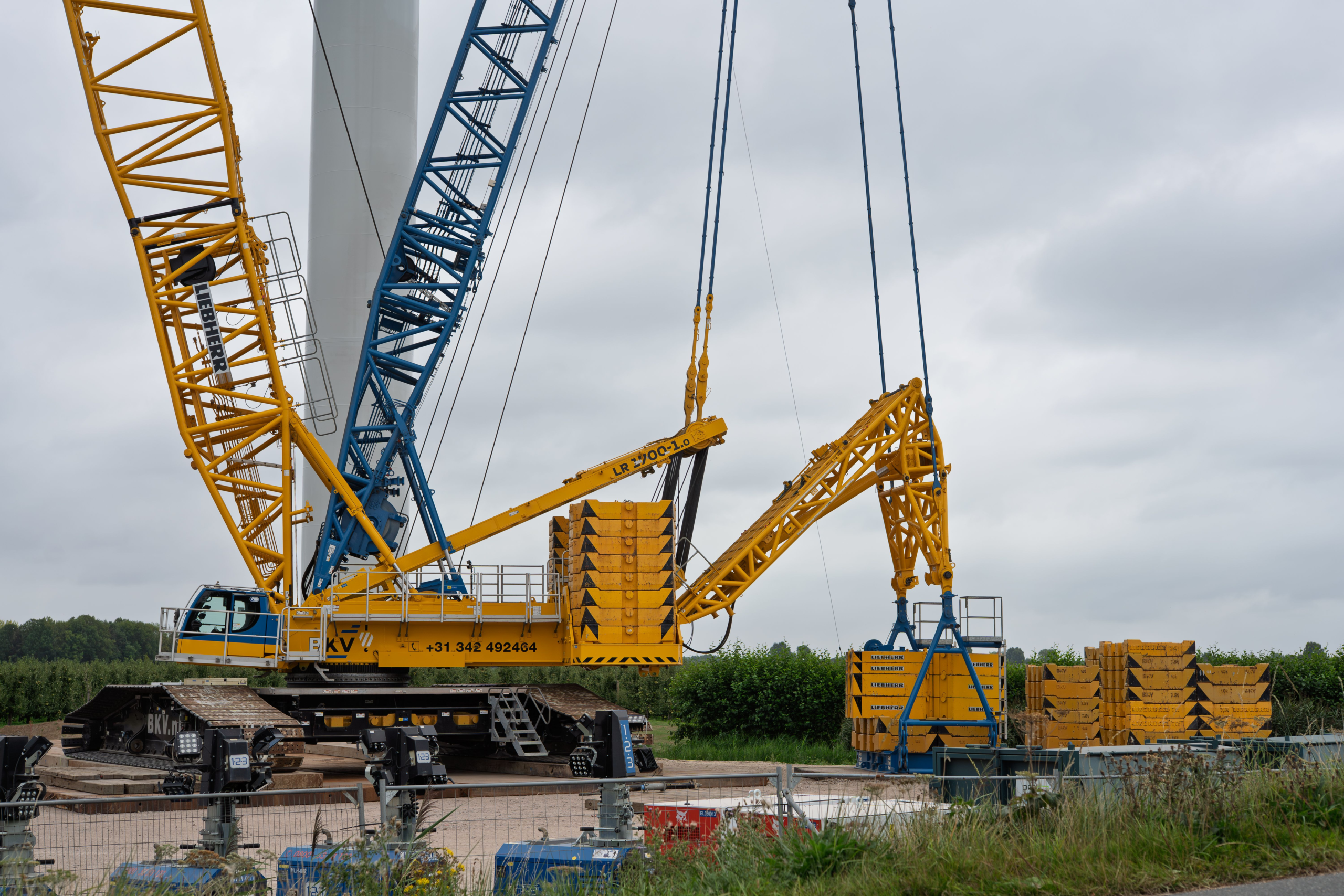
Illustrative heavy construction crane, by Martijn Stoof / Pexels (Pexels Licence); this is not the Liebherr LR 1130.1 unplugged at Brouwersdam.
