IN Brief:
- Kier's £29m package covers design development, surveys, ground investigations, enabling activity, and site preparation.
- The proposed plant would use thermal hydrolysis and advanced anaerobic digestion to increase renewable biogas output.
- Full construction remains subject to planning and final approval, with annual biogas production projected at around 127,000MWh.
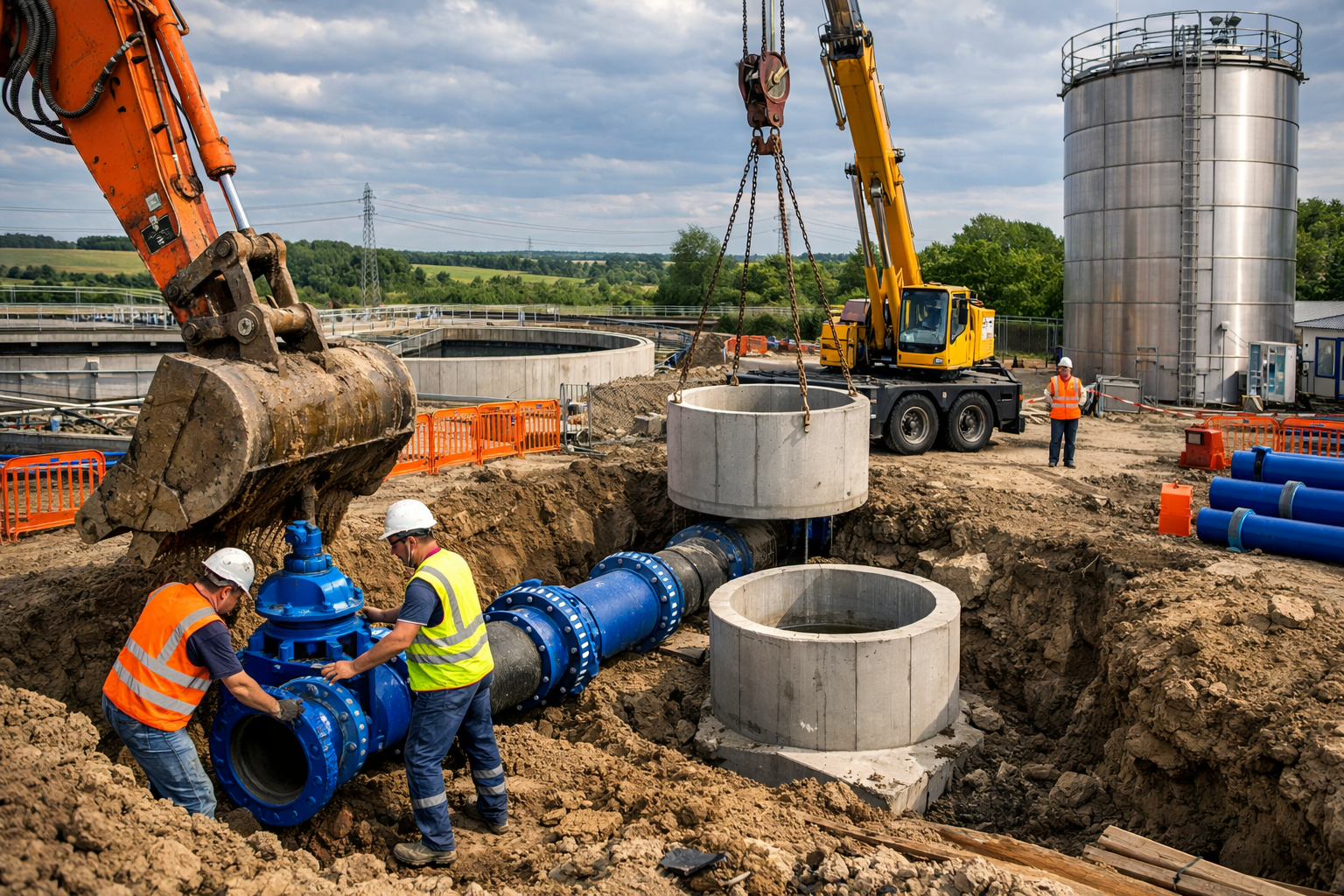
Kier has begun a £29m package of design development and early works for United Utilities’ proposed advanced anaerobic digestion development at Blackburn Wastewater Treatment Works. Surveys, ground investigations, enabling activity, and site preparation are now progressing while the utility continues through planning and final project approval.
The wider Blackburn scheme would be worth around £170m if approved. United Utilities intends to introduce thermal hydrolysis and advanced anaerobic digestion capable of treating an average of about 45,000 tonnes of dry solids each year, with additional capacity intended to accommodate seasonal demand, population growth, and planned or unplanned outages elsewhere in its bioresources network.
The proposed process is designed to increase renewable biogas production by around 20% compared with the conventional anaerobic digestion process currently used at Blackburn. Once operational, United Utilities projects annual production of around 127,000MWh of renewable biogas energy. The utility already operates the same broad technology at Davyhulme in Manchester.
Kier’s appointment comes through United Utilities’ Enterprise model, which brings operations, designers, contractors, and specialist suppliers into project development before the main construction phase is fixed. At Blackburn, that team is developing the solution, programme, and delivery strategy while the planning and approval process continues. The scope and timing of subsequent construction will only be confirmed if those approvals are secured.
Early investigation carries unusual weight
That separation between early works and main construction is particularly important on an operational wastewater site. Ground conditions, buried services, live process assets, access restrictions, temporary works, and the need to maintain treatment can all alter the intended construction sequence once intrusive investigations begin. Surveys completed now can therefore reduce the quantity of uncertainty eventually priced into the principal works.
The proposed treatment process also creates dense interfaces between civil structures and specialist systems. Tanks, thermal hydrolysis equipment, pipework, gas handling, electrical distribution, controls, instrumentation, and energy recovery infrastructure must be coordinated around access for operation and maintenance. The plant cannot sensibly be divided into a simple building shell followed by a collection of independent equipment packages.
Maintaining current treatment during construction adds another constraint. Wastewater and sludge processing cannot simply stop while new equipment is installed, so connections and commissioning will need carefully planned stages. Temporary systems, controlled shutdowns, and cutovers can become critical programme activities, which gives operational staff a direct influence over construction design and sequencing.
The project also combines treatment resilience with energy recovery. Additional digestion capacity would give United Utilities more flexibility when throughput changes or another facility is unavailable, while improved process performance is intended to extract more usable biogas from material that already has to be managed. Those benefits depend on the new plant being integrated without compromising the existing site’s ability to operate during the build.
Early contractor involvement gives the project team a chance to test those interfaces before the main scope becomes contractual. Access for large plant, crane positions, temporary compounds, service diversions, excavation support, commissioning routes, and maintenance clearances can all affect the layout long before permanent structures are built. Resolving them after mobilisation would be considerably more expensive.
The Blackburn design is also intended to leave room for later process development. United Utilities says the scheme could accommodate future technology capable of increasing biogas output further and capturing carbon dioxide as suitable systems become commercially available. Reserving physical space, service capacity, and access during the current design phase is cheaper than attempting to insert those provisions into a tightly packed operational plant later.
None of that makes the £170m construction programme certain. Kier’s current £29m scope is explicitly tied to development and early works while United Utilities pursues planning and final approval. The distinction matters because the present activity is designed to establish whether the larger scheme can be delivered with sufficient certainty on scope, cost, programme, and operational risk.
By the time a main construction decision is taken, the useful output from the current package will be measured in information as much as physical preparation. Reliable ground data, verified service positions, developed interfaces, and an agreed construction sequence should leave fewer unknowns for the subsequent contract. On a live process site, that is considerably more valuable than pretending the main build is fixed before the ground has been properly opened up.