IN Brief:
- Tunnel boring machines Karen and Madeleine have each passed the halfway point of their 7.2km drives from Old Oak Common towards Euston.
- The 1,624-tonne machines have been advancing at approximately 16 metres per day.
- Machine recovery will involve dismantling underground, with the front shields retained behind the permanent concrete tunnel linings.
Construction of the twin tunnels connecting Old Oak Common with HS2’s proposed Euston terminus has passed its halfway milestone, with both tunnel boring machines (TBMs) having excavated more than 3.6km of their respective 7.2km drives beneath London.
HS2 confirmed the milestone on 23 November, with the machines having reached the area between West Hampstead and Kilburn High Road stations by 17 November. Tunnelling is taking place at depths of up to approximately 50 metres beneath the capital.
Named Madeleine and Karen, the machines were launched from Old Oak Common in January and March 2026. Both weigh approximately 1,624 tonnes and are being operated by the Skanska Costain STRABAG joint venture, with excavation progressing at around 16 metres per day.
Construction of the twin tunnels is expected to generate approximately 1.5 million tonnes of excavated material and require almost 50,000 precast concrete lining segments. Both machines are scheduled to complete their drives during 2027.
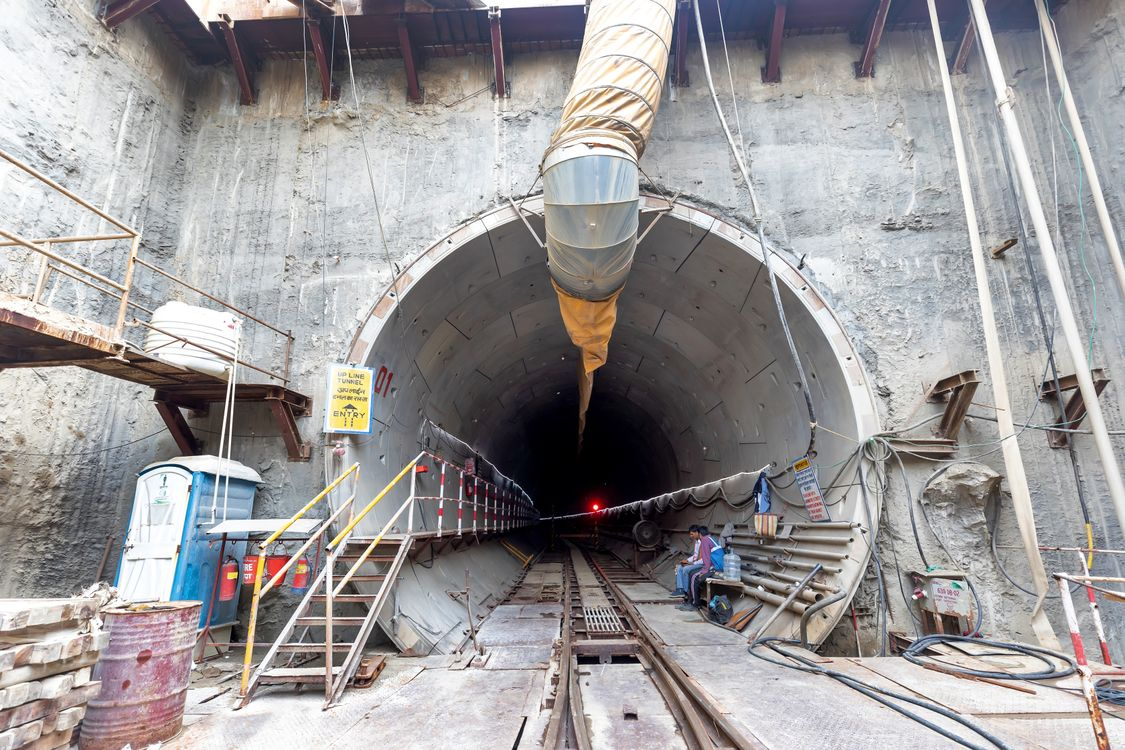
The TBMs combine excavation and construction of the permanent tunnel lining within a continuous underground production operation. As each cutterhead removes material from the excavation face, the machine advances within its protective steel shield, allowing precast concrete lining segments to be assembled behind it.
Individual segments form structural rings capable of supporting the surrounding ground once the machine has moved forward. The rings must maintain the required internal tunnel dimensions while accommodating loads imposed by the surrounding geology and groundwater.
Manufacturing and installation tolerances are particularly important because inaccuracies accumulated during successive ring installations can affect the alignment of the tunnel and the space available for subsequent railway infrastructure. The interfaces between segments must also satisfy the structural and water resistance requirements established for the completed lining.
The scale of the operation creates substantial logistical demands. Maintaining excavation progress requires a continuous supply of concrete segments and consumables, together with arrangements for removing spoil and maintaining equipment within increasingly long underground working areas.
The reported advance rate incorporates the recurring excavation and lining installation cycle rather than uninterrupted machine movement. Changes in geology, equipment maintenance requirements, and interruptions to the supply or removal of materials can influence the rate achieved during individual periods.
Tunnelling beneath densely developed parts of London also requires monitoring of existing infrastructure and ground movement. Buildings, utilities, and operational railways can impose different settlement tolerances according to their structural condition, sensitivity, and proximity to the underground construction.
Instrumentation allows engineers to compare observed movements with anticipated ground behaviour and identify where adjustments to construction parameters may be necessary. These measurements complement operational data generated by the tunnelling equipment itself.
The arrangement for completing the Euston drives introduces a further engineering challenge because neither machine will emerge directly into an open reception shaft. Both will stop underground on the approach to the planned terminus, with recoverable equipment dismantled and transported back through the completed tunnels.
Each cutterhead measures approximately 8.53 metres in diameter. These assemblies will be recovered subsequently through the Euston cavern excavation, while the external front shields will remain underground, secured with grout behind the permanent concrete lining.
Recovering equipment through completed tunnels imposes dimensional and logistical restrictions that differ from those associated with extracting an assembled machine at the end of a conventional drive. Components must be separated into suitable sections, with handling arrangements designed around the available underground space and transport capacity.
The recovery operation also depends on coordination between the bored tunnels and the separate excavations being constructed at Euston. Access to the cutterheads will become available through the cavern works, rather than through the same route used to remove other recoverable equipment.
Earlier this month, HS2 began bulk excavation at the Euston station site, introducing a rail freight operation expected to remove up to 170,000 tonnes of material, including spoil transported during earlier trials.
The station excavation and the twin tunnel drives represent separate construction packages within the wider development of the London terminus. Their permanent structures must eventually connect through the underground infrastructure accommodating the railway’s approaches and platforms.
Completion of the bored tunnels will establish the principal underground route between Old Oak Common and Euston, but further civil engineering and railway systems installation will remain. Connecting structures, cross passages, track, power distribution, ventilation, and communications infrastructure must all be completed before passenger operations can begin.
The immediate construction programme remains focused on finishing both tunnel drives during 2027, followed by recovery of the machines and further engineering works within the Euston approaches.