IN Brief:
- The first of 117 planned Willow Bank homes reached roof level at a ceremony on 22 October 2026.
- Esh Construction is delivering 117 affordable homes for Joseph Rowntree Housing Trust in New Earswick.
- The planned tenure split is 60% social rent and 40% shared ownership, with phased occupation from 2027.
Esh Construction has reached roof level on the first of 117 affordable homes being developed for Joseph Rowntree Housing Trust at Willow Bank in New Earswick, York. The first-home milestone was marked on 22 October and confirmed publicly four days later. It records progress on one dwelling, not completion of the housing development, with the first residents expected in 2027 and further occupation planned into 2028.
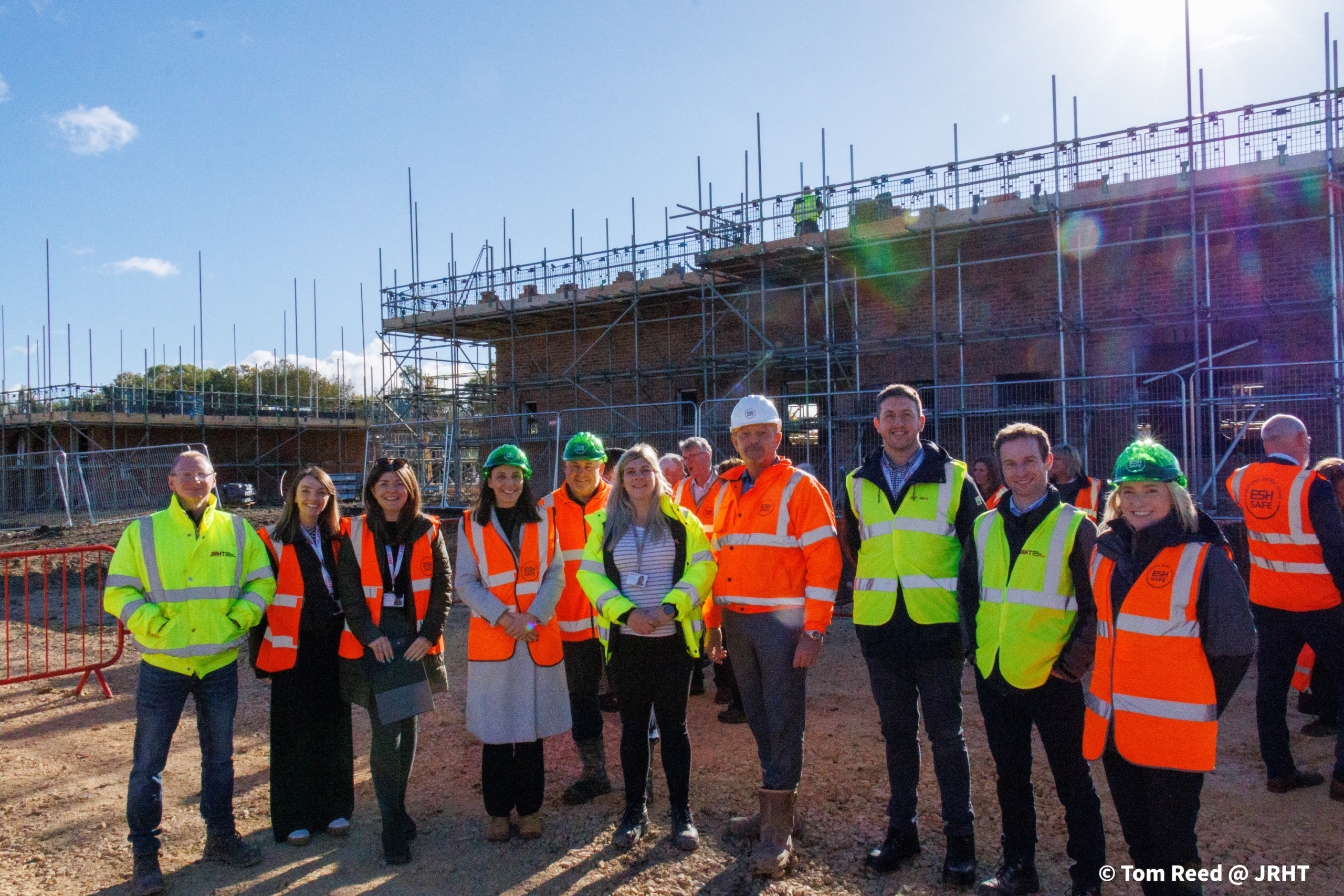
The topping-out ceremony brought together project partners, local representatives, residents and students from The Joseph Rowntree School. Rich Thomas, the housing trust’s director of assets and investments, placed one of the final bricks on the roof element. Reaching the highest point is a measurable construction milestone, although further roofing, building-services, finishes and inspection work is needed before the first home can be handed over.
Willow Bank is being developed on land north of the existing residential area within New Earswick. The housing trust’s published scheme information identifies 117 dwellings, all of them affordable, with 60% intended for social rent and 40% for shared ownership. The mix includes two- and three-bedroom houses and one- and two-bedroom flats. These different building types will require their own construction and completion sequences, although the trust has not disclosed the stage reached by each individual block or plot.
The same contractor is also appointed to six homes at Acacia Avenue, a separate former garage site. Esh’s September 2025 agreement with the trust therefore covers 123 affordable homes in total: 117 at Willow Bank and six at Acacia Avenue. The October topping-out concerns Willow Bank alone, and the 60% social-rent and 40% shared-ownership mix applies to the published affordable housing programme.
The housing trust describes the eastern portion of Willow Bank as providing green recreational space, while the main residential development sits further west. Its plans include paths connecting to The Joseph Rowntree School and Willow Bank, together with a cross-site pedestrian and cycle route. Most dwellings will sit around smaller cul-de-sacs intended to reduce traffic dominance around residential entrances. These arrangements are design intentions for the completed site, not confirmation that every route or landscape feature is already installed.
The houses are designed to reflect New Earswick’s existing garden-village architecture, with brick walls, clay tiles, hipped roofs, gables and planted front boundaries among the features described by the trust. Masonry, roof coverings, joinery and external landscaping form separate elements of the construction sequence. The precise structural system of the first topped-out home has not been published, so the scheme’s appearance alone cannot establish how its frame or load-bearing walls were built.
Across the wider two-site programme, the partners have identified triple glazing, solar panels and battery storage as intended energy-efficiency features. No measured operational performance or confirmed installation output has been reported for the first Willow Bank dwelling. Those specifications will need to be distinguished from the energy use recorded after construction, commissioning and occupation, which are still to come.
Roof-level progress is followed by several practical stages before residents can move into a new home. The building envelope must be completed and made weather-resistant; internal partitions, services, fittings and finishes then require installation and inspection. Connections to utilities and completion of site access can also affect handover. This sequence explains why the first dwelling can reach its highest point in October 2026 while the first occupations remain scheduled for the following year, without implying that a completion date has been missed.
The trust’s scheme information envisages phased occupation during 2027 and 2028. Its original September 2025 appointment notice anticipated completion by May 2028, while the October milestone confirms only that first residents are expected next year. Without an updated plot-by-plot programme, the earlier date remains a planning expectation rather than proof that all homes will be handed over simultaneously.
New Earswick was established as a model village by Joseph Rowntree in the early twentieth century, with the housing trust presenting Willow Bank as an extension of its affordable housing purpose. The new homes are intended to accommodate households through social rent and shared ownership rather than open-market sales across the entire development. Allocation, shared ownership transactions and occupancy arrangements are separate from the contractor’s responsibility for completing the physical buildings.
Construction will continue on the remaining dwellings and on the routes, utilities, public open space and landscaping that will serve the completed neighbourhood. The first home’s roof-level completion provides a verified indication of progress following the contractor appointment and mobilisation; the next publicly stated milestone is the arrival of the first residents in 2027. Occupation of the wider Willow Bank development is planned to extend through 2028.