IN Brief:
- Cawarden has returned Walter’s Walkway across the River Derwent using a 470-tonne crane.
- Sheet piles, infill and concrete abutments were installed after demolition of the unsafe original bridge.
- Derby City Council expects reopening in mid-November, once access ramps and safety checks are complete.
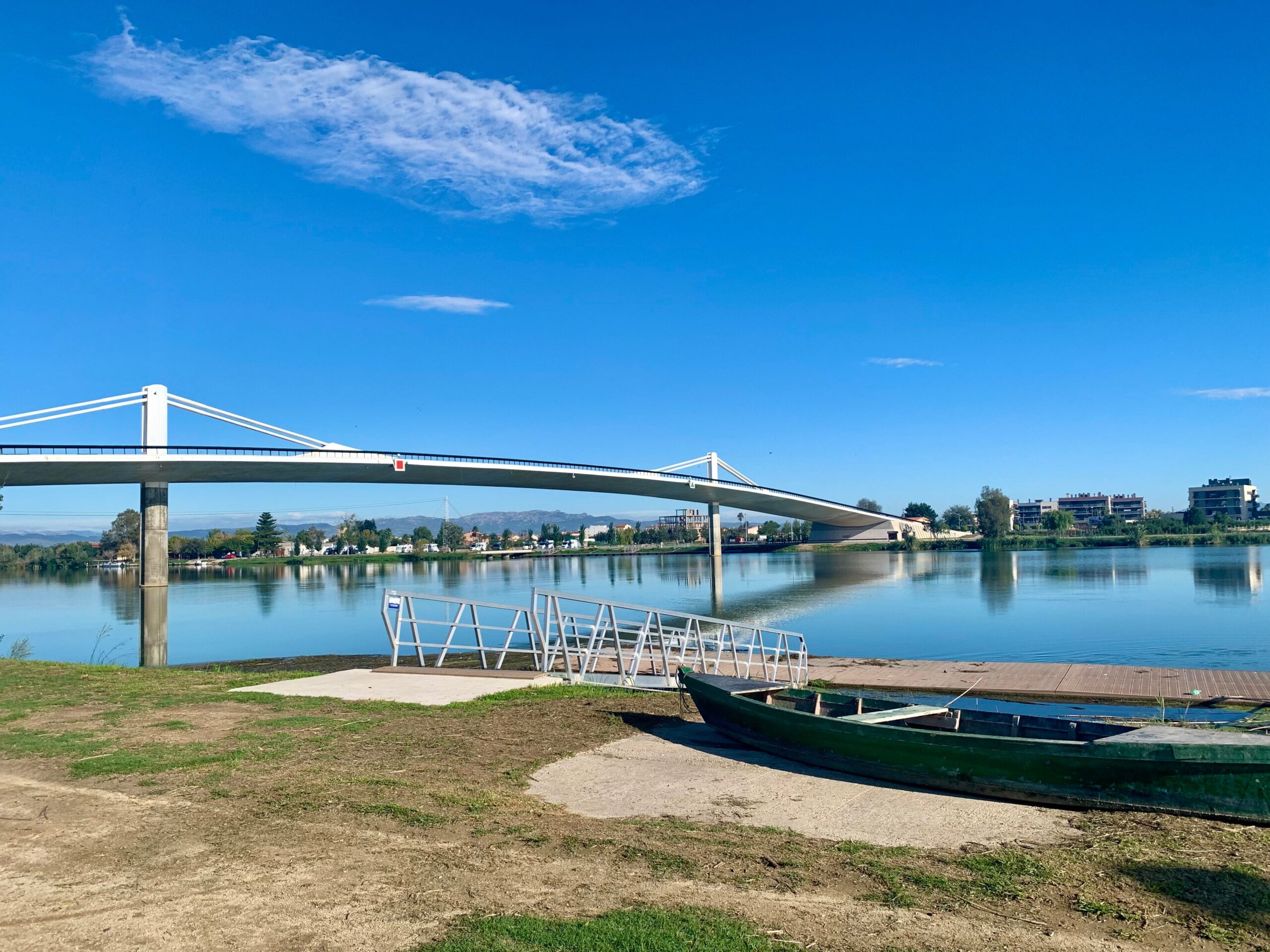
Cawarden has returned Walter’s Walkway to its position over the River Derwent in Derby, using a crane in the 470-tonne capacity class to reinstate the prefabricated crossing between Darley Village and Darley Abbey Mills. Derby City Council confirmed the lift on 22 October, reporting that the structure was back in place around four months ahead of the previous programme for demolition and reinstatement. The bridge is not yet open to pedestrians: new access ramps and final safety checks remain outstanding.
Walter’s Walkway had provided a temporary pedestrian and cycle route since 2022, when the original Darley Abbey Mills Bridge became unsafe. The walkway itself closed in December 2025 as deterioration and erosion around the river crossing raised fresh safety concerns. In July, Cawarden lifted the temporary span out of the way so the old bridge could be demolished without working underneath it. Derby City Council confirmed in August that demolition of the 1930s structure was complete.
The riverbank needed stabilisation before the crossing could return. Contractors installed sheet piles and placed infill behind them, then built concrete abutments to support the repositioned prefabricated span. Sheet piling restrains loose ground beside the river, while abutments transfer the bridge’s working loads into the supporting structure. The council has not published a detailed description of the abutment foundations, so the type and depth of their bearing arrangement remain unspecified.
The lifting equipment was a 470-tonne crane, although that rating does not represent the weight of Walter’s Walkway. A crane’s permitted load depends on its configuration, operating radius and the ground supporting its outriggers or other bearings. Restricted working space beside the Derwent required the contractor to manage the lifting area and its proximity to existing banks and buildings. Neither the actual lifted weight nor the October lift radius has been disclosed.
For the July removal, the contractor installed 28 sheet piles, each six metres long, and used approximately 250 tonnes of material to form a crane platform. Those figures describe preparation for the earlier operation, not additional quantities installed for the October reinstatement. The subsequent riverbank reinforcement, infill and concrete abutments provided support for the reinstated bridge, with the lifting operation following once the site was ready.
The completed lift restores the span to its position between Darley Village and the historic mills, but it has not yet restored pedestrian access. Temporary fencing remains necessary around the active worksite while crews install ramps between the bridge deck and the adjoining paths. Inspections must also establish that the bridge and its new supports are safe for use before the authority can remove restrictions.
Derby City Council expects the bridge to reopen in mid-November, roughly four months ahead of the timetable that had allowed until February 2027 for demolition and reinstatement. The October achievement concerns the physical lift; reopening depends on the remaining ramp work and safety checks. The council has not specified an exact first day of public access, and the crossing should not be described as already reopened.
The works have taken place beside the weir in the Derwent Valley Mills World Heritage Site, where the narrow approach roads and riverbanks constrain construction access. Positioning heavy lifting equipment requires more than adequate crane capacity: the working area must also provide reliable support and prevent loads or equipment from encroaching on unsafe ground. The council has kept the immediate site fenced while these construction activities continue.
Funding from the East Midlands Combined County Authority has supported the urgent response to the failing original bridge and the reinstatement of Walter’s Walkway. Removing the old structure first eliminated an immediate structural hazard; the replacement bank support and bridge abutments then made the temporary route’s return possible. The accelerated sequence brings forward the expected restoration of an everyday connection between the village and the mills complex.
The council has separately published a strategic outline business case for a permanent bridge intended to provide an enduring route for active travel and emergency vehicle access. That remains a distinct project requiring further design, investment decisions and consents. Reusing Walter’s Walkway does not pre-empt the form of that permanent structure, nor should the temporary bridge’s placement be reported as completion of the permanent Darley Abbey crossing.
Once the ramps and safety checks are complete, the council intends to reopen Walter’s Walkway as an interim route. The separate permanent bridge proposal remains at development stage, following publication of a strategic outline business case for a crossing that could accommodate active travel and emergency vehicles. Further decisions on design, funding and approvals are required before that project can proceed, while the new mid-November target applies only to the temporary walkway.