IN Brief:
- Iemants has secured the steel structures package for the new West Merwede Bridge near Gorinchem.
- The contract includes a 258m arch using around 7,400 tonnes of steel and a 53m movable section weighing approximately 840 tonnes.
- Fabrication began in June 2026 across Eiffage facilities, with the steelwork package scheduled for completion in 2030.
Eiffage has secured the steel structures package for the new West Merwede Bridge in the Netherlands, with subsidiary Iemants responsible for engineering, manufacturing, delivery, assembly, and installation of the crossing’s principal arch and movable sections.
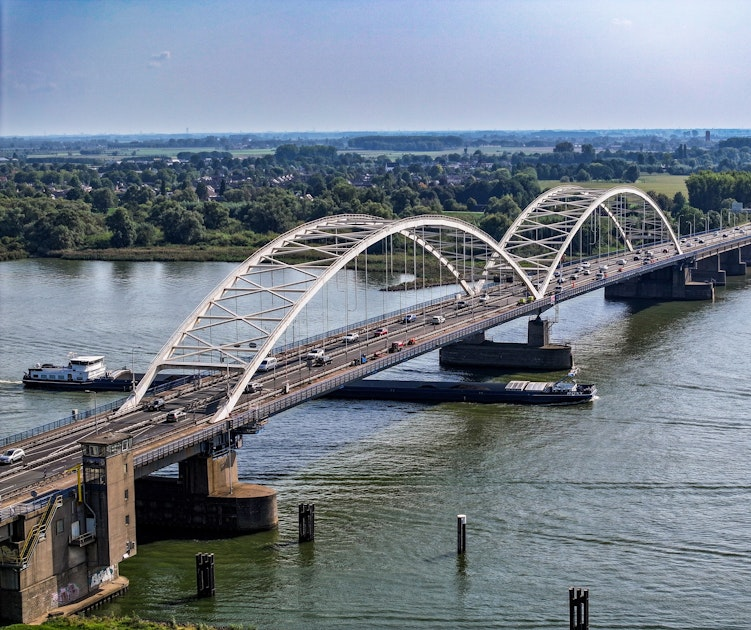
The contract was awarded by ALSÉÉN, the Ballast Nedam and Fluor consortium delivering the bridge works on behalf of Rijkswaterstaat. It forms part of the A27 Houten – Hooipolder programme, which includes replacement of the existing Merwede Bridge near Gorinchem on one of the Netherlands’ principal north-south motorway corridors.
The fixed steel arch will measure 258m and account for around 7,400 tonnes of steel. Alongside it, Iemants will deliver a 53m movable section weighing approximately 840 tonnes, creating two substantial fabrication packages with different structural, mechanical, assembly, and commissioning requirements.
Manufacture is being distributed across Eiffage Group facilities at Arendonk, Balen, Hoboken, and Vlissingen. Fabrication began in June 2026, months before the award was publicly announced, with the complete steelwork package scheduled for completion in 2030.
That programme underlines how much of a major bridge is constructed away from the river where it will eventually stand. Engineering development, plate preparation, welding, dimensional control, corrosion protection, inspection, and trial assembly can all precede the arrival of major sections at the final site.
The production sequence then has to align with ALSÉÉN’s civil-engineering programme around Gorinchem. Foundation and substructure works need to reach the right stage before large fabricated elements can be assembled and installed, while logistics have to accommodate components whose scale rules out routine delivery arrangements.
The 258m arch is the most visually dominant element, but the movable section introduces a different set of interfaces. A bridge span designed to open for river traffic has to combine structural stiffness with machinery, controls, alignment, bearings, and operating tolerances that remain dependable after installation.
Iemants’ scope extending from engineering through installation reduces the number of organisational boundaries around the steel structures. It also places responsibility for fabrication geometry and site assembly within the same specialist organisation, which is valuable where tolerances established in the factory directly affect whether large sections align correctly during erection.
The new bridge will replace an ageing A27 crossing carrying passenger and freight traffic across the Merwede. Rijkswaterstaat’s wider motorway programme is intended to improve traffic flow and safety while maintaining a long-term connection along the corridor between Houten and the Hooipolder junction.
Replacement has to be staged around an operating transport network rather than delivered on an empty site. The existing crossing continues to carry motorway traffic while the new western bridge is constructed alongside it, and the river below remains an active navigation route.
That combination places constraints on temporary works, lifting operations, marine access, worksite protection, and the timing of major installations. Activities that would be comparatively straightforward on a land-based fabrication site become more heavily controlled when they are undertaken beside live motorway traffic and commercial navigation.
Material volume creates another layer of complexity. The main arch and movable section together account for more than 8,000 tonnes of steel before the remainder of the bridge structure is considered, making fabrication capacity, inspection, and transport planning integral parts of the overall construction programme.
Large welded bridge components also accumulate dimensional effects. A small deviation within one fabricated section can become considerably more significant when a sequence of elements is assembled across hundreds of metres, requiring survey and quality-control processes to remain linked from factory production to site erection.
Eiffage has not disclosed the commercial value of the contract. The physical scale, production period, and breadth of Iemants’ responsibility nevertheless place the award firmly within specialist heavy civil engineering rather than conventional structural-steel supply.
The package also spreads work across several manufacturing plants, allowing individual components to be produced where suitable facilities and specialist capability are available. That approach increases production flexibility but places greater emphasis on configuration control so that elements fabricated in different locations arrive as parts of one coordinated structure.
Completion of the Iemants package in 2030 will not itself mark the opening of the bridge. The steel structures still have to be integrated with the wider civil works, road infrastructure, moving equipment, safety systems, and commissioning programme before traffic can transfer to the new crossing.
The contract therefore connects two construction environments separated by several years and several hundred kilometres: controlled fabrication halls where the bridge is taking shape now, and the live A27 corridor where those components will ultimately be assembled. Long before the new span becomes a visible part of the Dutch motorway network, thousands of tonnes of it will already have passed through production.