IN Brief:
- Approximately 38,650m³ of material was moved during the works.
- Hydrocarbon contamination was bioremediated, while heavy metals received a clean cover.
- More than 32,000m³ of material was reused across the site.
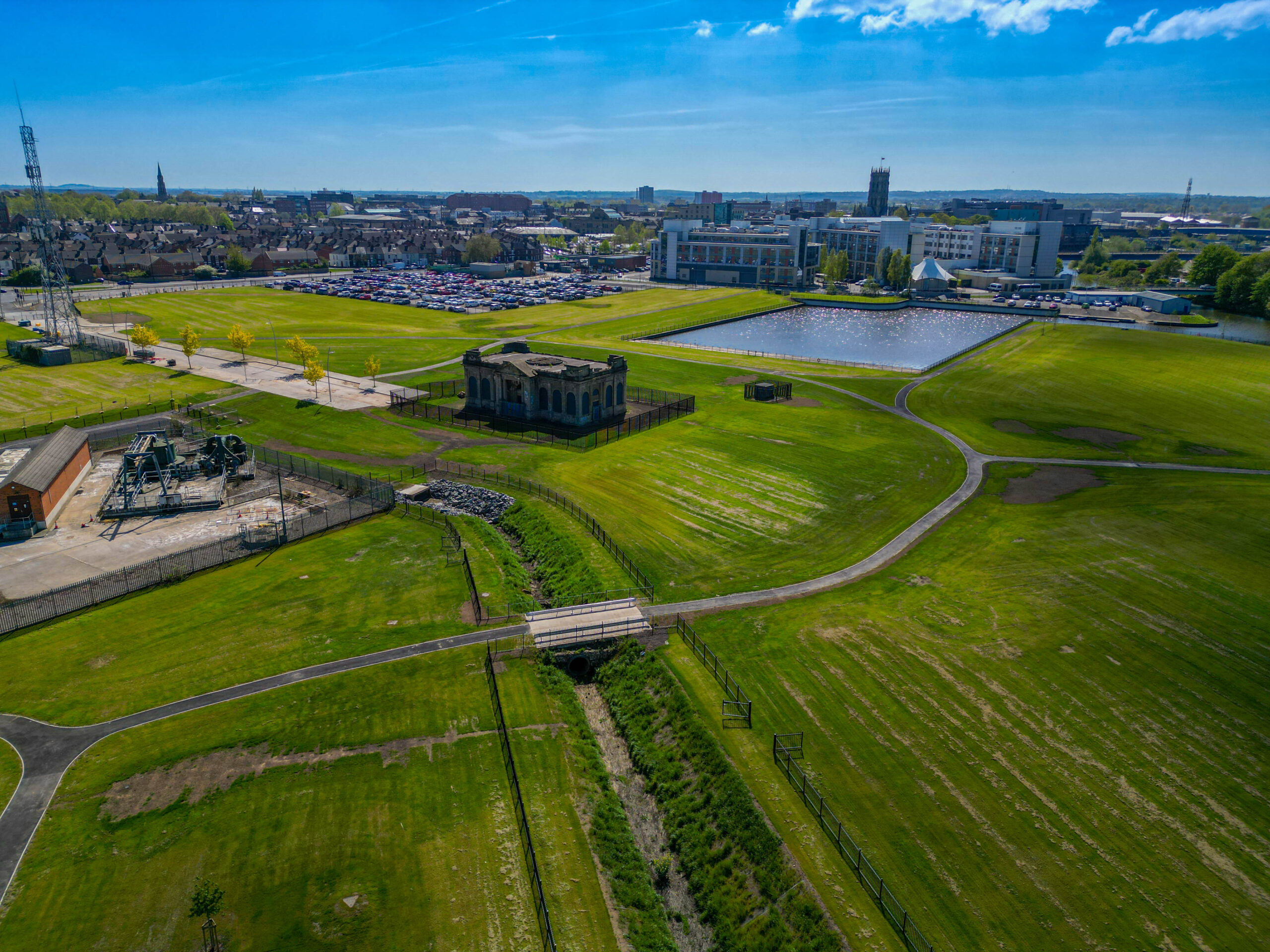
Remediation has been completed across the 22-acre Waterfront East Park site in Doncaster, with Pick Everard and Keltbray treating contaminated ground and processing extensive underground obstructions ahead of future regeneration.
Located on Chappell Drive, close to Doncaster city centre and the River Don, the land had previously accommodated industrial units, car parks, a scrapyard, and a pumping station. Historic activity left hydrocarbons, heavy metals, buried concrete, and invasive vegetation requiring treatment.
City of Doncaster Council appointed Pick Everard through Perfect Circle under the SCAPE Consultancy Framework. Its remit included project management, cost management, quantity surveying, civil engineering, construction safety, and environmental services, while Keltbray undertook the main remediation works.
Hydrocarbon-contaminated soil was treated through bioremediation, with mixing and aeration used to stimulate naturally occurring microorganisms capable of breaking down the pollutants.
Areas containing heavy metals received a clean-cover system because those contaminants cannot be degraded biologically. Approximately 1,044 loads of topsoil and 64 loads of subsoil were imported to create the necessary separation and finished ground profile.
Emelye Kenyon, director of environmental services at Pick Everard, said: “By combining these approaches, we were able to maximise the amount of material treated on site, significantly reducing waste and supporting a more sustainable remediation strategy.”
Himalayan balsam growing along the drainage ditch was also removed. A specialist contractor handled the invasive plant and associated soil to prevent further spread and maintain compliance with environmental controls.
Once ground treatment had been completed, hydroseeding used pre-soaked seed suspended within a gel medium to accelerate germination and establish vegetation across the finished areas.
Extensive underground obstructions complicated the programme, including concrete footings, former roads, car parks, floor slabs, and the remains of a gas-holder foundation. Removal of the known gas-holder pad exposed further buried concrete requiring excavation and processing.
Concrete was crushed on site and either reused or sold for recovery, reducing disposal volumes and limiting the requirement for imported aggregate.
Across the project, Keltbray moved approximately 38,650m³ of material and reused around 32,365m³. Of the 6,319m³ produced during the works, 1,000m³ was used to fill soft spots, backfill excavations where water was encountered, and form temporary haul roads.
David Sloyan, regional director — major infrastructure at Keltbray, said: “Working in close partnership with City of Doncaster Council and Pick Everard, we have been able to safely manage and treat significant contamination, while maximising the reuse of materials on site.”
Brownfield remediation frequently attracts less attention than the buildings that follow, although it determines whether later development can proceed with an acceptable ground-risk profile. Unresolved contamination can affect planning conditions, foundation design, drainage, worker safety, warranties, finance, and the future use of public space.
Treating soil in place can provide a lower-waste alternative to excavation and disposal where the contaminants are suitable for biological degradation. It also reduces the road movements associated with transporting material to landfill and importing replacement fill.
Bioremediation requires detailed characterisation because hydrocarbon type, concentration, soil composition, moisture, temperature, oxygen, and treatment duration all affect the outcome. Verification testing must demonstrate that the treated material meets the agreed standard before it is retained.
Heavy metals require a different approach because they remain within the ground unless removed or chemically stabilised. A clean-cover system creates a controlled barrier, whose long-term effectiveness depends on material quality, finished levels, accurate records, and protection during future construction.
Material reuse similarly relies on classification, testing, tracking, and an agreed management plan. Excavated concrete and soil must be technically suitable for their intended function if they are to remain project resources rather than become waste.
The approach mirrors other large brownfield programmes where enabling works have unlocked land for development, including the infrastructure programme supporting Leeds South Village.
Waterfront East Park was part-funded by the UK Government and South Yorkshire Mayoral Combined Authority. Its position near the city centre, river, and transport connections provides substantial development potential, although later proposals will still need to address flood risk, access, utilities, ecology, and the remediated ground conditions.
Completion of the environmental works provides a prepared development platform rather than a finished regeneration scheme. The next phase will determine how the land is translated into buildings, infrastructure, public space, investment, and long-term use.