
IN Brief:
- Costain will deliver around £150m of upgrades across 15 Thames Water wastewater treatment sites during AMP8.
- The programme includes inlet stations, storm-tank resilience, repairs, modifications, and wider wastewater-system improvements.
- Delivery across eastern and western site groups will form part of Thames Water’s broader investment in more than 250 assets.
Costain has been selected by Thames Water to deliver around £150m of wastewater treatment upgrades across 15 sites in the Thames Valley, adding a substantial package of asset renewal work to the utility’s AMP8 investment programme.
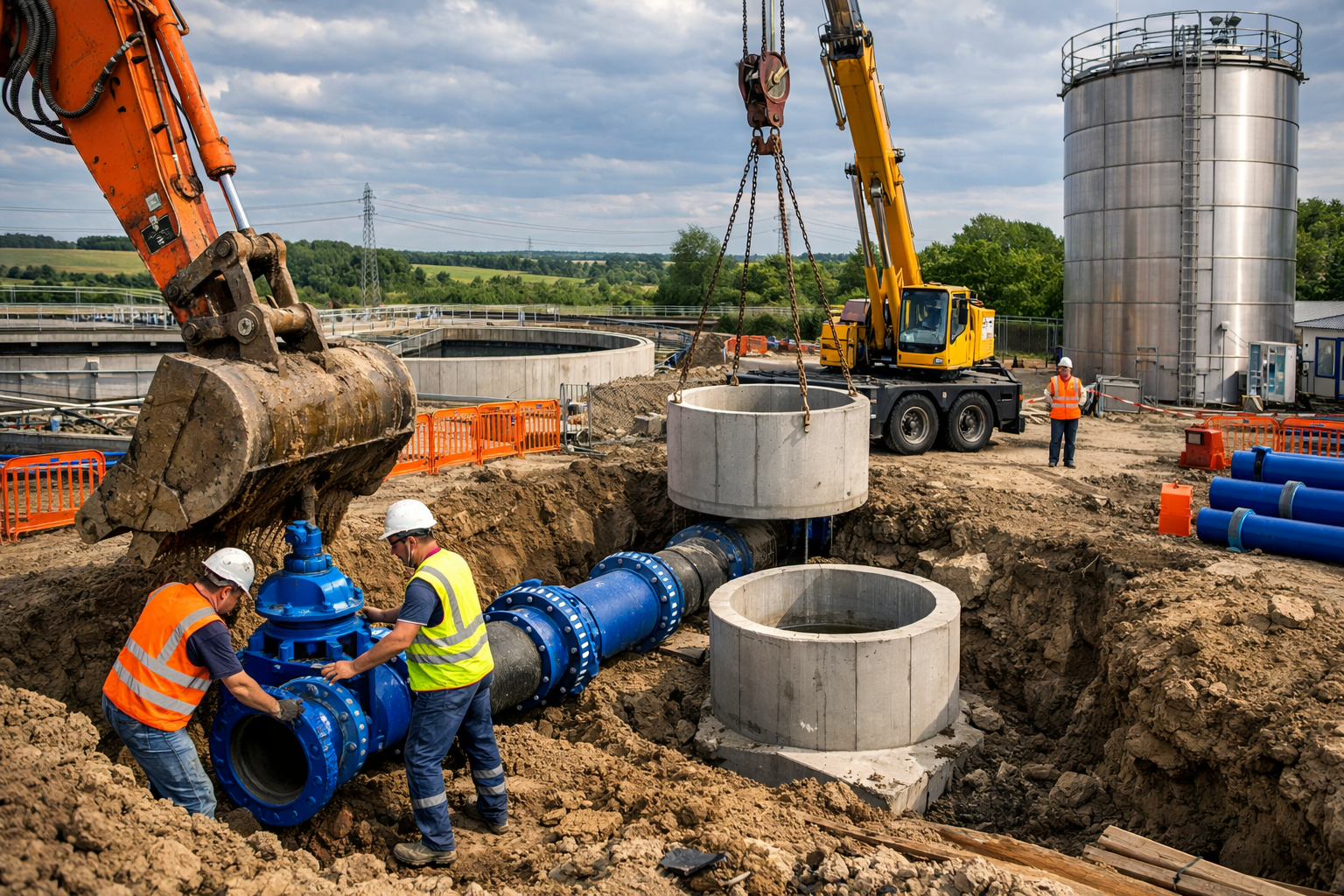
The work forms part of Thames Water’s Wastewater Asset Assurance Programme and is expected to continue through the 2025–2030 regulatory period. Costain’s scope covers upgrades to inlet stations, improvements to storm-tank resilience, and repairs, modifications, and other changes intended to improve wastewater-system performance.
Delivery will be divided into eastern and western regions, each led by a regional senior project manager. The eastern group comprises Barkway, Brentwood, Long Reach, Little Hallingbury, North Weald, and Standon, while the western programme covers Aldershot, Burghfield, Esher, Horley, Lightwater, Marlborough, Northleach, Waddesdon, and Windsor.
The package sits within Thames Water’s wider programme of sewer and sewage-treatment investment, with more than 250 sites due to receive improvements across the region. Costain’s award is therefore one defined delivery package within a much broader programme of treatment capacity, resilience, and asset-assurance work.
A portfolio of operational treatment sites demands a different delivery model from a single large civil engineering project. Engineering, design control, procurement, temporary works, site logistics, commissioning, and operational coordination have to be repeated across assets that remain part of a live wastewater network throughout construction.
Standardised engineering can reduce design effort and create purchasing efficiencies where similar interventions recur, but the scope cannot simply be duplicated from one treatment works to another. Each site has its own process configuration, existing equipment, access conditions, capacity constraints, interfaces, and outage requirements.
Costain has been increasing its exposure to the water sector as AMP8 moves from planning and design into physical delivery. The contractor’s £7bn forward work position reported at the end of June included a growing regulated-infrastructure workload, while water revenue increased during the first half of 2026 as utilities began releasing more work from the new control period.
The Thames Water programme gives that broader pipeline a specific construction workload extending to 2030. It follows earlier Costain work for the utility at Markyate, Brickendon, Sandhurst, and Selborne, alongside the contractor’s involvement in clay-compaction trials for the proposed White Horse Reservoir in Oxfordshire.
Wastewater projects bring particular sequencing constraints because treatment capacity generally has to remain available while existing equipment is isolated, replaced, altered, or recommissioned. Programme teams may need temporary pumping, bypass arrangements, staged outages, or carefully controlled process changes before new equipment can be brought into service.
Splitting the 15 sites between eastern and western regions gives Costain a structure for allocating engineering and project-management resources while transferring lessons between individual schemes. Repeated mechanical, electrical, process, civils, instrumentation, access, and commissioning packages should also give specialist suppliers a more continuous workload than a sequence of isolated tenders.
Costain has promoted value engineering, standardisation, off-site manufacturing, design for manufacture and assembly, and production-led delivery across its water work. Those methods are well suited to programmes containing repeated interventions, although their value depends on designs being sufficiently mature and client decisions being made early enough for suppliers to plan production capacity.
The award arrives as water companies increase capital spending sharply during AMP8, creating simultaneous demand for experienced engineers, process specialists, project managers, electrical contractors, equipment manufacturers, and commissioning teams. Programme scale alone does not guarantee efficient delivery if the same limited specialist resources are being drawn into multiple utility programmes at once.
That puts greater weight on portfolio controls. Cost, schedule, quality, outage planning, temporary works, and commissioning need to be managed consistently across all 15 sites because delays at one treatment works can absorb people or equipment expected on the next.
A distributed programme can smooth workload and allow proven solutions to be repeated, but it can also multiply interface risk when designs, site conditions, and operational requirements diverge. The delivery challenge will be to standardise enough of the £150m programme to gain efficiency without overlooking the conditions that make each live treatment asset different.
AMP8 runs until 2030, leaving Costain with several years to convert the award into completed upgrades. Thames Water’s wider programme means the 15-site package will be delivered against an unusually busy investment backdrop, where contractors are being judged as much on their ability to manage operational interfaces and specialist capacity as on the physical construction itself.

