IN Brief:
- DustFast is applied to loose surfaces using Corgin’s DustChief equipment.
- One application typically remains effective for six to 16 weeks, depending on traffic and conditions.
- The product is already being used on major UK infrastructure and energy projects.
Corgin has demonstrated a long-term dust suppressant designed to reduce repeated watering across construction haul roads, yards, and other exposed surfaces.
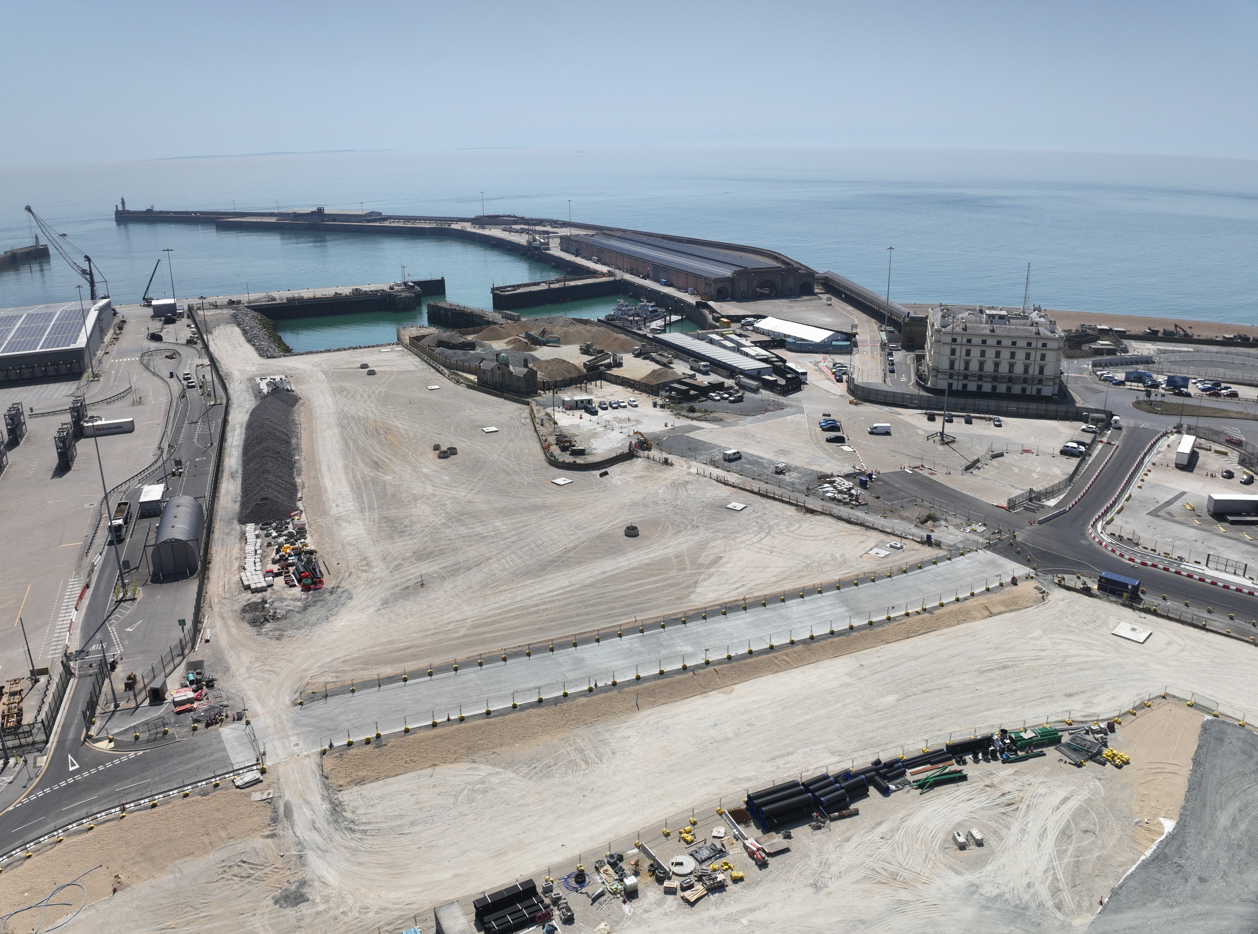
Shown in operation at Hillhead 2026, DustFast was applied to an area of loose ground to demonstrate how the fluid binds fine particles and restricts their movement into the air.
The treatment is applied undiluted using Corgin’s DustChief cannon. After absorption onto surface fines, it adds weight to particles that might otherwise be lifted by vehicle movement, dry weather, or wind.
One application will typically remain effective for between six and 16 weeks, according to Corgin, with performance varying according to traffic volume, vehicle type, surface condition, and weather. Residual control may continue for longer where treated areas experience limited disturbance.
Because the fluid is hydrophobic, it is intended to remain in place during wet weather rather than being readily diluted or washed away. The product is manufactured through gas-to-liquid processing and classified as non-hazardous to groundwater for its intended use.
DustFast has been available in the UK since 2025 and is being used on projects including HS2, Sizewell C, and Hinkley Point C. Large infrastructure and energy sites contain extensive haul routes, stockpiles, compounds, and temporary surfaces where conventional dust control may require repeated bowser movements.
Water remains the standard control for many external dust sources because it is familiar, accessible, and effective while surfaces remain damp. During dry weather, however, evaporation and heavy traffic can require several applications within a working shift.
Each bowser movement consumes water and fuel while adding another vehicle to congested work areas. Filling, operating, and maintaining the equipment also requires labour, while excessive watering can create poor traction, mud transfer, standing water, or surface degradation.
A longer-lasting suppressant reduces that operating cycle, although the application rate and treatment frequency must still reflect surface composition, drainage, weather, vehicle loading, and any grading or disturbance carried out after treatment.
Control begins before dust becomes airborne
Dust management is often judged by whether a visible cloud crosses the site boundary, yet health and environmental risks also arise from particles that are difficult to see. Material composition, exposure duration, wind direction, nearby receptors, and the activities generating dust all influence the required controls.
Haul roads generally produce mixed mineral dust rather than one controlled substance, while concrete, stone, mortar, and engineered products can generate respirable crystalline silica during cutting, crushing, or processing.
Tighter enforcement around engineered-stone cutting has reinforced the requirement to prevent silica dust at source, including the rejection of uncontrolled dry processing. Haul-road treatment addresses a different activity, but the underlying control principle remains the same.
Long-term suppressants therefore belong within a wider dust-management plan rather than replacing other measures. Speed limits, wheel washing, covered loads, road maintenance, local extraction, misting, enclosed processing, housekeeping, and exposure monitoring may all be required across the same project.
Compatibility with environmental permits, drainage systems, sensitive habitats, and eventual surface removal also needs to be confirmed. Biodegradability and groundwater classification do not remove the requirement to apply the correct quantity under suitable conditions.
Cost comparisons with watering should include bowser hire, driver time, water supply, fuel, maintenance, traffic interactions, and lost productivity during repeated applications. The purchase price of the suppressant represents only one part of the operating calculation.
Programme performance may improve where treated access roads remain usable without becoming saturated or slippery. Reliable haul routes support earthworks, deliveries, waste removal, and emergency access, although the underlying road must still be designed and maintained for the imposed loads.
Water consumption is also receiving greater scrutiny as major projects expand in regions already managing supply pressures. Construction demand is temporary but can become intensive during earthworks and prolonged dry periods, when other users are drawing heavily on the same resource.
Site trials will be needed to confirm performance under local traffic, weather, drainage, and ground conditions. A treatment that works effectively on compacted stone may behave differently on finer material, frequently graded roads, or surfaces affected by fuel and hydraulic contamination.
Corgin’s system places a routine site-control problem within the wider management of water, fuel, traffic, health, and environmental compliance. Adoption will depend on whether projects can demonstrate reliable dust control alongside acceptable traction, drainage, and whole-life cost.