IN Brief:
- More than 1,500 pupils aged 10 to 18 attended the three-day Construction & Engineering Week at Lincolnshire Showground.
- More than 80 companies supported practical activities covering construction trades, engineering, plant, surveying and emerging technologies.
- CITB forecasts that UK construction needs an average of 41,200 additional workers each year to meet anticipated demand.
The Engineering Construction Industry Training Board has helped bring more than 1,500 school pupils into direct contact with construction and engineering careers during a three-day programme at Lincolnshire Showground involving more than 80 employers and industry organisations.
Construction & Engineering Week 2026, now in its 22nd year, was organised to give pupils aged between 10 and 18 practical experience of the trades, technical disciplines and professional roles used across construction and engineering construction.
Activities included carpentry, bricklaying, welding, electrical and mechanical engineering, with pupils also given opportunities to use plant and equipment. Other sessions addressed surveying, materials inspection, sustainability and emerging technologies including fusion power.
The format is intended to make careers more tangible than a classroom presentation or recruitment brochure. Pupils can handle equipment, attempt practical tasks and speak directly to employers and apprentices about work that may otherwise be difficult to visualise before entering training.
Year Six pupils from Hartsholme Academy used laser scanners in a materials inspection exercise delivered by Altrad. The activity focused on identifying defects that cannot necessarily be seen from the surface, introducing pupils to the use of inspection technology alongside more familiar construction trades.
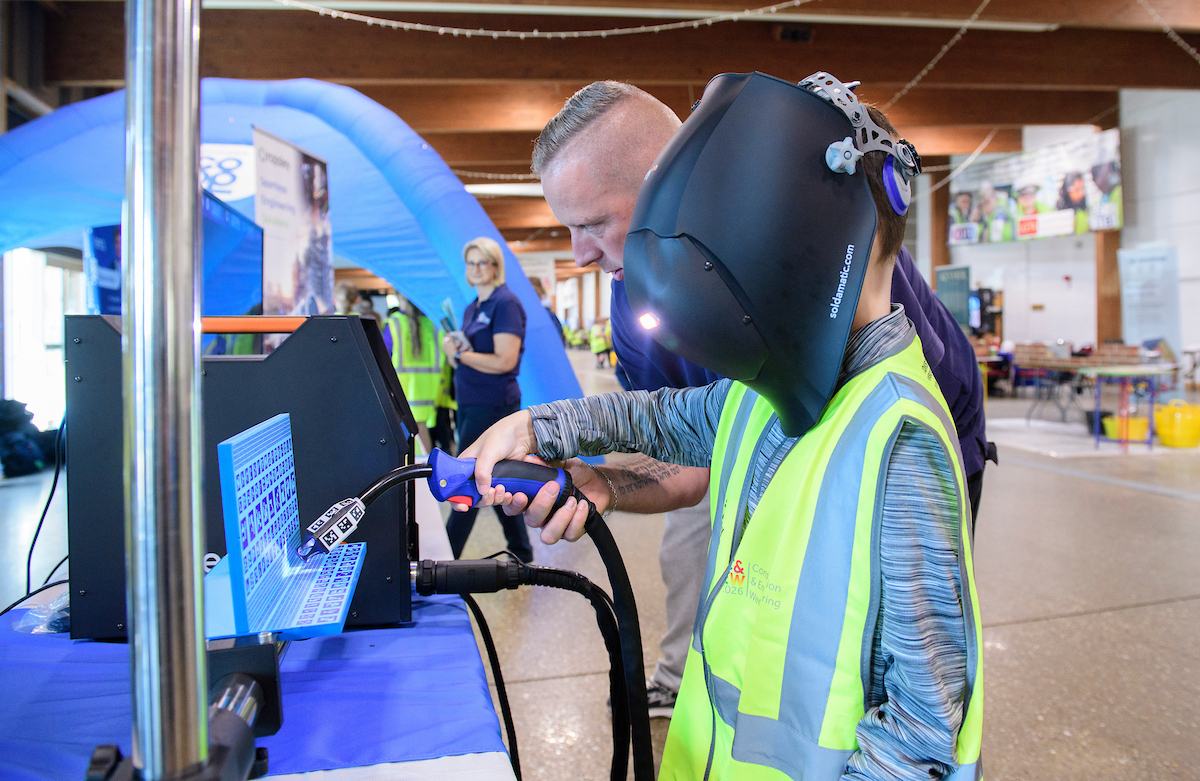
Other schools took part in collaborative STEM exercises, including an Anglian Water partner activity using large building blocks to demonstrate teamwork and construction principles. PJD, part of Ropsley Group, used a virtual welding simulator and practical pipefitting exercises to introduce pupils to mechanical engineering skills.
Current apprentices also supported the programme. PJD apprentice pipefitter Matty Watson, who completed the ECITB Scholarship programme at CATCH in 2025, helped pupils assemble models using small plastic pipes and discussed his own route into engineering.
That involvement shortens the distance between the audience and the workforce the event is trying to describe. Apprentices who have recently moved from education into industry can explain training routes without presenting them solely through senior management or recruitment teams.
The organisers also point to measurable changes in pupil attitudes following the previous event. After the 2025 programme, 79% of participants reported greater awareness of what employers look for, 71% said they had developed relevant industry skills and 63% said they were more likely to consider a career in construction or engineering.
Those percentages sit against a much larger workforce requirement. CITB’s Construction Workforce Outlook forecasts that construction needs an average of 41,200 additional workers across the UK each year to meet anticipated demand. Skills events cannot supply that workforce directly, but they operate near the beginning of the recruitment pipeline.
Construction and engineering recruitment involves a long delay between initial interest and productive site capability. Young people may move through GCSE choices, college courses, apprenticeships, site training and professional development before they can work independently in an occupation facing shortages today.
Andrew Hockey, Chief Executive of the ECITB, said: “The construction and engineering construction industries have inspiring long-term careers to offer. The challenge is ensuring more young people know it.”
The breadth of the event reflects how much the sector now extends beyond its most visible traditional trades. Welding, bricklaying and carpentry remain important, but employers also need people in surveying, inspection, project management, mechanical and electrical work, digital systems and emerging energy technologies.
Plant operation provided another route into the industry during the showground programme. Giving pupils supervised contact with machinery helps demonstrate the scale and technical nature of construction equipment, while making clear that site work involves trained operators rather than simply manual labour.
The event was free for primary and secondary schools and was organised by Lincoln Group Training Association and Abbey Access Training in partnership with employers. CITB, ECITB and Humber Energy Board were principal sponsors, with further regional organisations supporting the programme.
More than 80 companies from Lincolnshire, Yorkshire, the Humber and nearby areas took part. That employer base included contractors, engineering businesses, utilities and organisations connected to energy and infrastructure, exposing pupils to different sections of the regional construction economy rather than one occupation or employer.
The Humber element is particularly relevant as investment across energy, manufacturing and infrastructure increases the need for technically trained workers. New projects create demand not only during construction but through commissioning, maintenance and operation, widening the range of long-term careers associated with major capital investment.
Indrani Banerjee-Jones, Chief Financial Officer at CITB, said the week allowed industry and training bodies to work together to demonstrate the careers available and encourage young people to consider construction and engineering construction. She also pointed to the 41,200-worker annual requirement identified in CITB’s workforce outlook.
Those forecasts explain why employers continue to invest time in activities aimed at pupils who are years away from entering the labour market. Recruitment carried out only when a contract is awarded is too late for occupations that require formal apprenticeships, specialist certification or several years of experience.
Early engagement cannot guarantee that pupils will eventually enter the sector, and attendance figures should not be confused with future recruitment numbers. Its more immediate purpose is to ensure construction and engineering are among the options young people understand before choosing qualifications and career routes.
Practical activity is central to that objective. A pupil who has used a laser scanner, tried virtual welding or handled construction equipment leaves with a clearer reference point than someone who has only read a list of job titles.
The annual event therefore occupies the earliest part of a much longer workforce programme. The industry still has to provide apprenticeships, training places, competent supervision and sustained employment after interest has been created, but none of those routes can recruit people who never considered construction or engineering in the first place.