IN Brief:
- Bristol City Council is preparing to appoint a principal contractor for the regional cycling centre's main works.
- Scope covers an operational building, closed-loop and Bikeability tracks, landscaping, drainage, utilities, and associated transport infrastructure.
- Construction is currently scheduled from April 2027 to March 2029, with the contract value still undisclosed.
Bristol City Council is preparing to appoint a principal contractor for the main construction works at the Bristol Regional Cycling Centre, combining a new operational building with specialist cycling facilities and supporting civil engineering.
The procurement was published on 28 September at planning stage and gives an anticipated construction period from 1 April 2027 to 30 March 2029. The estimated contract notice date is 9 November 2026, while the value of the main works package has not yet been disclosed.
Published scope includes an operational building, a closed-loop cycling track, Bikeability training tracks, hard and soft landscaping, pedestrian and cycle infrastructure, drainage, utilities and minor off-site highway improvements.
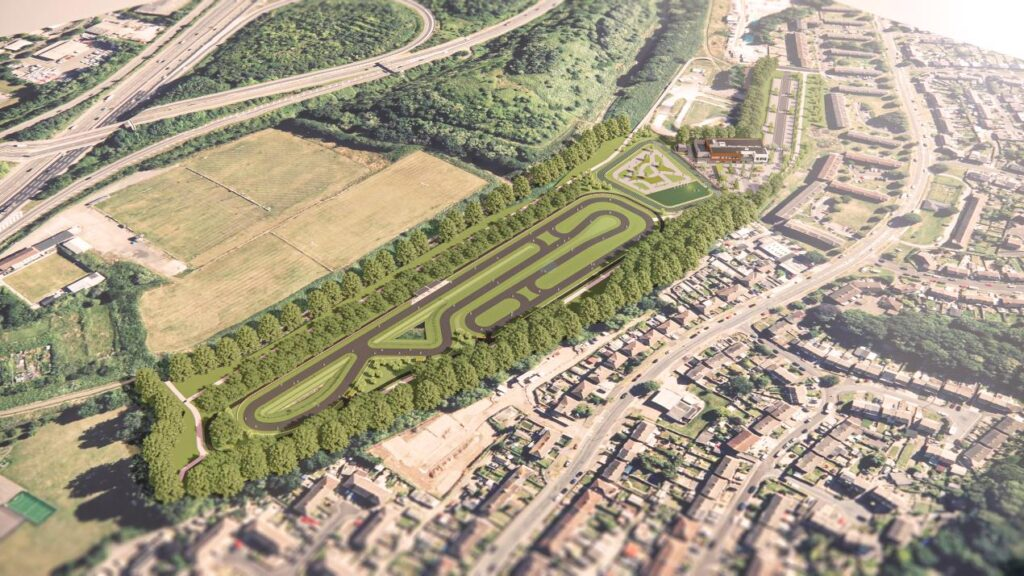
Earlier approved project information provides more detail on the planned facility. The centre at Merriman’s and Henacre Open Space in Lawrence Weston is designed around a one-kilometre closed circuit, six metres wide, alongside a rubberised Bikeability training area and additional cycling space. The approved plans also include a two-storey building, car parking, pedestrian routes and changes to existing cycle connections.
The principal contract therefore combines several construction disciplines rather than centring on a specialist track alone. Building structure and services have to progress alongside earthworks, drainage, utilities, hard landscape, track formation and highway interfaces, with each workstream competing for access across the same site.
Below-ground coordination will be particularly important. Drainage and service routes can affect building foundations, paved areas, track construction and landscaping, so those packages need to be resolved before finished surfaces close access. Late changes to underground infrastructure can otherwise lead to excavation through newly completed external works.
The cycling surfaces introduce their own tolerances. Closed-loop tracks need consistent geometry, drainage and surface quality, while Bikeability areas are intended for structured training rather than conventional highway use. Specialist requirements have to be integrated into the civil design instead of added once general groundworks are complete.
The operational building adds a different sequence of foundations, frame, envelope, building services and internal fit out. Its construction programme must work around the external infrastructure while still allowing materials, cranes, deliveries and labour to reach the building before permanent circulation routes are finished.
Site logistics can become difficult on projects dominated by external works because large areas are progressively occupied by drainage runs, tracks, landscape formation and completed surfaces. Haul routes need to remain available without damaging finished work, while storage and welfare compounds have to move or contract as permanent construction spreads across the site.
The council’s advance procurement notice gives contractors time to assess those interfaces before the full competition. Businesses can consider whether they have sufficient building and civil engineering capability within one delivery team, where specialist subcontractors will be required and whether the proposed 2027 start fits existing workload.
The current notice identifies the procurement as suitable for small and medium-sized enterprises. That does not necessarily mean the eventual principal contract will be delivered by a smaller contractor, but the project creates a broad potential supply chain across drainage, utilities, landscaping, track construction, building services, surfacing and specialist external works.
Planning approval was granted earlier in 2026. At that point, public project information said construction remained dependent on completion of the business case and securing the necessary funding. The September procurement is a further delivery step, but the latest notice does not disclose the contract value or provide a new funding statement, so those earlier conditions should not be treated as resolved without additional confirmation.
The absence of a published contract value is also important when comparing the procurement with headline estimates attached to the wider scheme. Overall project costs can include design, client costs, equipment, professional fees, contingency and packages outside the main construction contract. Until Bristol issues the full tender, there is no basis for assigning the entire programme value to the principal contractor.
The planned April 2027 start leaves several months between the expected November contract notice and mobilisation. That period will have to accommodate tendering, evaluation, award and preconstruction work if the published timetable is maintained.
The next notice should therefore be more commercially significant than the September market signal. It will establish the tender structure, selection requirements and detailed scope against which contractors can price the work. Bristol has now defined the construction package it intends to procure; the November stage should show how that package will actually be taken to market.